The Calico Cat: The Complete Guide to History, Coat Color, and Genetics
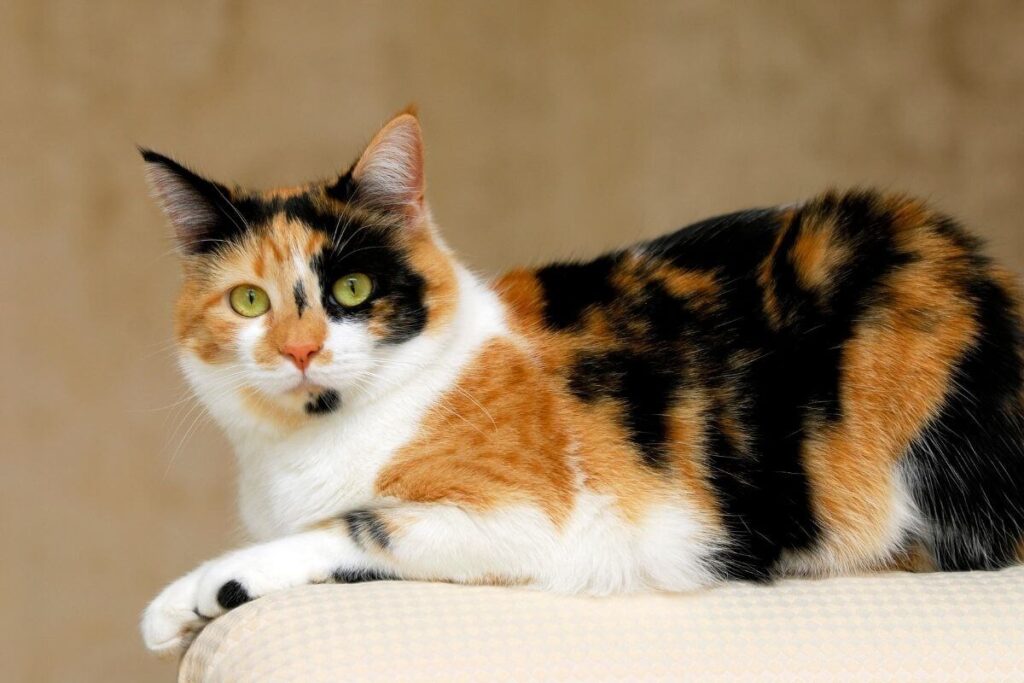
If you have ever seen a cat wearing a patchwork coat of orange, black, and white, you have met a calico cat. With their bold, unmistakable three-color pattern, calico cats are among the most recognizable and beloved felines in the world. But despite what many people assume, a calico cat is not a breed at all — it’s a coloration that can appear in almost any domestic cat. In this guide, we’ll explore everything worth knowing about the calico cat: its fascinating history, the genetics behind its coat, why calico cats are almost always female, and much more.
What Exactly Is a Calico Cat?
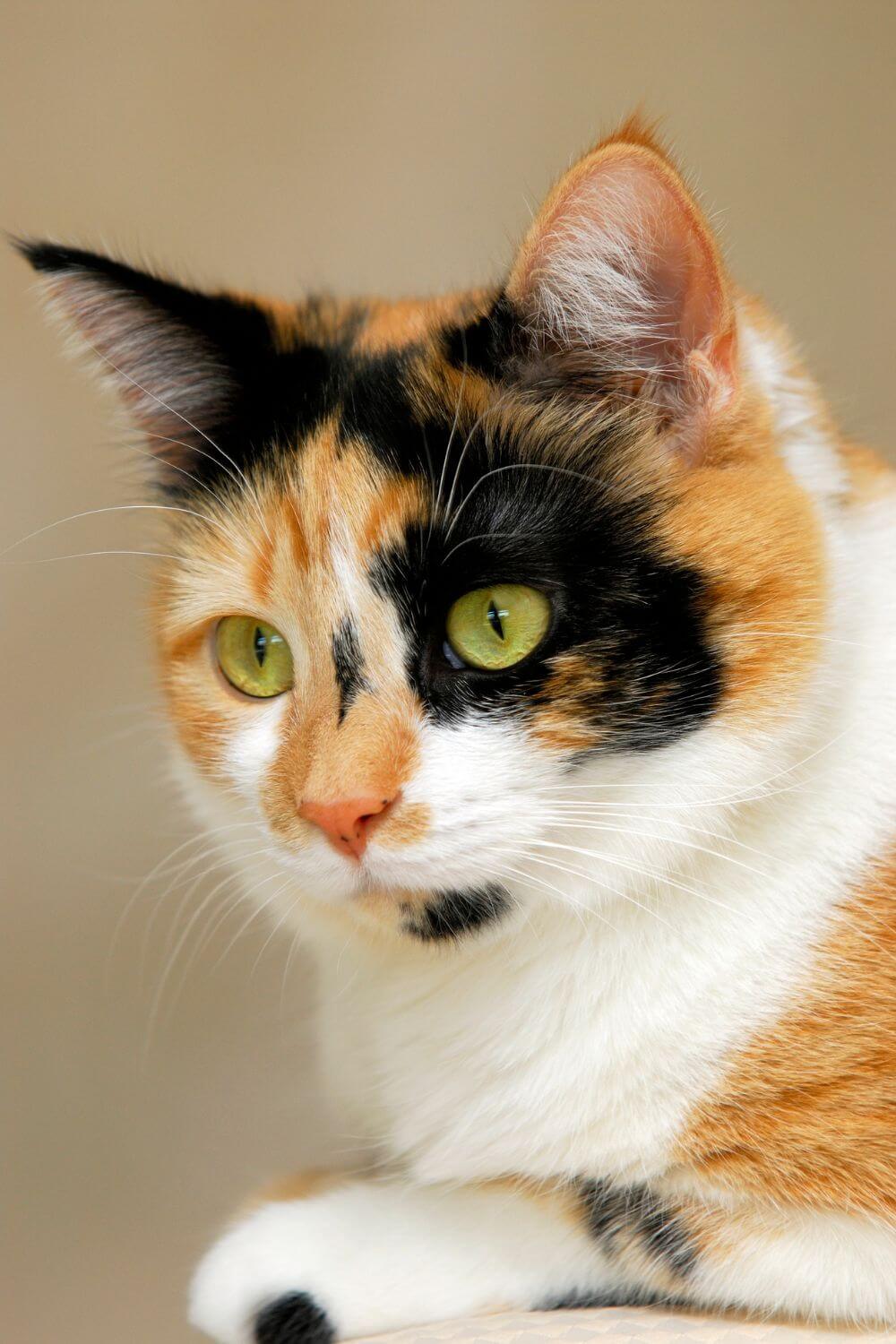
The term “calico” doesn’t describe a breed, a body type, or a personality — it describes a coat pattern. A true calico cat has a coat that is roughly 25% white, with patches of orange (or red) and black (or a diluted version like cream and gray) scattered across the body. The white typically dominates the underside, chest, and paws, while the orange and black patches appear in irregular, mosaic-like blocks across the back, head, and tail.
This is one of the most important facts to understand about the calico cat: it is a domestic cat with a specific coat pattern, not a standalone species or breed. You’ll find the calico pattern in the American Shorthair, the Persian, the Maine Coon, the Manx, the Japanese Bobtail, and countless mixed-breed cats found in shelters everywhere. Any cat — purebred or not — can technically be born calico, as long as it carries the right combination of genes. This is why cat registries like The International Cat Association (TICA) and the Cat Fanciers’ Association (CFA) classify calico as a color and pattern category, not a breed category, when judging cats in shows.
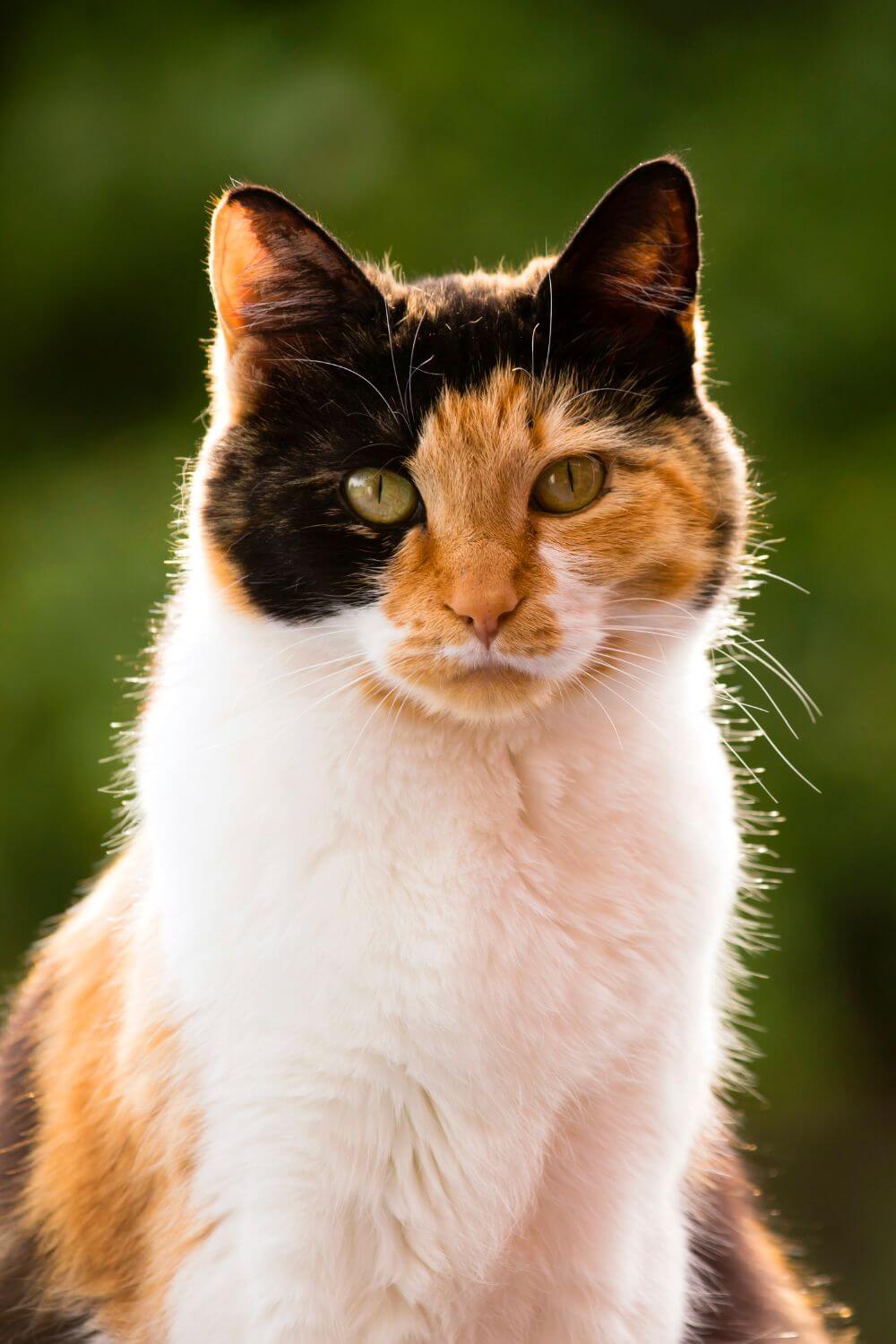
Because the calico pattern can appear in so many different breeds and body types, no two calico cats look exactly alike. Some have large, bold blocks of color; others have a fine, speckled distribution known as “calico tabby” or “caliby,” which combines the calico pattern with tabby striping within the colored patches.
Is Your Cat a Calico?
Not sure whether your cat is truly a calico or has a different coat pattern? Use the quick checker below to compare your cat’s colors and markings. Simply answer a few questions about your cat’s sex and coat colors, and you’ll get an instant result. While this tool can’t replace a professional evaluation, it’s an easy and fun way to learn whether your feline matches the classic calico pattern — or if they may actually be a tortoiseshell, tuxedo, bicolor, or another beautiful color variation.
Can Your Cat Be a Calico?
Select your cat’s characteristics below.
The Calico Cat Origin: A Journey Through History
The calico cat origin story stretches back thousands of years and spans several continents, making it one of the more interesting tales in feline history.
Ancient Beginnings in Egypt
Most historians and geneticists trace the calico cat origin to ancient Egypt, where domestic cats were first widely kept and revered. Genetic mutations responsible for orange and black fur are believed to have appeared naturally in Egyptian cat populations thousands of years ago. As trade routes expanded across the Mediterranean and beyond, cats — including those carrying the calico gene — traveled aboard merchant ships, spreading the pattern to new regions.
Spreading Across Europe and Asia
As domestic cats moved along trade routes into Europe, Asia, and eventually the rest of the world, the calico pattern moved with them. In Japan, the calico pattern became especially significant. The Japanese Bobtail, a breed with an ancient presence in Japan, is frequently seen in calico coloring and is deeply tied to Japanese folklore — more on that below. Calico cats were also documented in maritime records because sailors historically believed they brought good luck and protection from storms, leading many ships to keep a calico cat on board as a “ship’s cat.”
Arrival in America
Calico cats made their way to the United States through European settlers and traders, and the pattern became so associated with early American textiles — specifically the imported, brightly patterned calico fabric from India — that the coat pattern was named after the cloth itself, not the other way around. This is actually where the name comes from: the fabric called “calico,” known for its colorful printed patterns, inspired the naming of the cat’s coat once settlers noticed the resemblance.
This connection to American history became so strong that in 2001, the state of Maryland officially named the calico cat its state cat, largely because the orange, black, and white color scheme mirrors the colors found on the Maryland state flag and the state insect, the Baltimore checkerspot butterfly.
The Science Behind Calico Cat Hair: How the Pattern Forms
Understanding calico cat hair and its coloring requires a quick dive into feline genetics — but don’t worry, it’s easier to follow than it sounds.
The Role of the X Chromosome
The gene responsible for orange and black coloring in cats is located on the X chromosome. This single fact is the key to understanding almost everything about calico cats, including their coat pattern and their overwhelming tendency to be female.
In cats, as in humans, females have two X chromosomes (XX), while males have one X and one Y chromosome (XY). The orange-color gene has two versions, or alleles: one that produces orange/red pigment and one that produces black pigment. A cat can only display one of these colors per X chromosome.
Because a female cat has two X chromosomes, she can inherit one orange-producing allele on one X chromosome and one black-producing allele on the other. Early in embryonic development, a biological process called X-inactivation (sometimes called “lyonization”) randomly shuts down one of the two X chromosomes in each cell throughout the body. Some cells keep the X chromosome carrying the orange gene active, while other cells keep the X chromosome carrying the black gene active. The result is a coat made up of patches of orange and patches of black, distributed in a random, mosaic pattern across the body — this is the biological engine behind the appearance of calico cat hair.
The white portions of the coat come from an entirely separate gene, known as the white spotting gene (S gene), which is unrelated to the X chromosome and simply “masks” pigment production in certain areas, creating white patches, typically on the belly, chest, legs, and face.
Dilute Calicos
Not all calico cats show bold orange and black. A genetic factor called the dilute gene can soften these colors into paler versions — orange becomes cream, and black becomes blue-gray. Cats with this softer coloring are often called dilute calicos, and while their pattern is technically identical to a standard calico, the visual effect is much more muted and pastel.
Calico vs. Tortoiseshell vs. Tabby
People often confuse calico cats with two other coat types:
- Tortoiseshell (“tortie”) cats have the same orange-and-black patchwork as calicos but without significant white patches. Think of a tortoiseshell as a calico minus the white spotting gene.
- Tabby cats have a striped or swirled pattern that can appear within the orange or black patches of a calico coat, creating what’s known as a “caliby.”
So while all three share overlapping genetics, the defining trait of true calico cat hair is the specific combination of white, orange, and black in patches.
Why Are Calico Cats Almost Always Female?
This is one of the most frequently asked questions about the calico cat, and the answer lies directly in the genetics explained above.
Because the orange/black gene lives on the X chromosome, and a cat needs two different X chromosomes (one with the orange allele, one with the black allele) to display both colors, only cats with an XX chromosome pair — genetically female cats — can naturally produce this two-color patchwork.
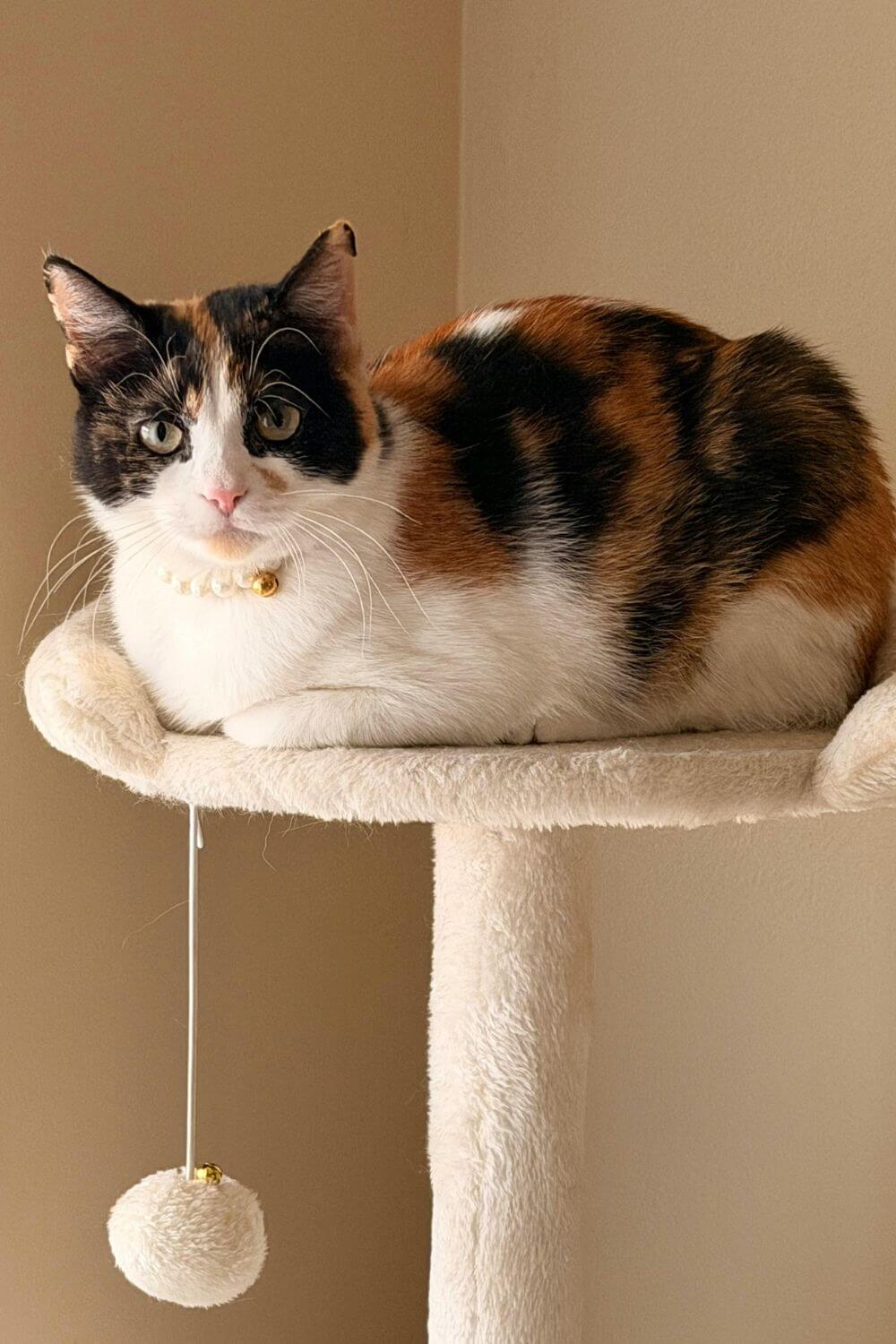
Statistically, roughly 99.9% of all calico cats are female. This isn’t folklore or coincidence; it’s a direct and reliable outcome of feline sex-linked genetics, which is why breeders, veterinarians, and geneticists alike consider the calico coat one of the clearest visual examples of a sex-linked trait in the animal kingdom.
The Rare Male Calico Cat
Male calico cats do exist, but they are extremely rare — occurring in roughly 1 in 3,000 calico cats. For a male cat to display the calico pattern, he must have an extra X chromosome, resulting in an XXY chromosome configuration instead of the typical XY. This condition is known as Klinefelter syndrome, and it occurs due to a chromosomal error during reproduction.
Male calico cats with Klinefelter syndrome are almost always sterile and can sometimes experience minor health complications, though many live otherwise normal, healthy lives. Because of their rarity, male calicos have historically been considered lucky charms in various cultures and can command significant interest from cat breeders and collectors — though reputable breeders emphasize that these cats should be valued as pets first, not novelties.
Calico Cats in Folklore and Culture
Across the world, the calico cat has picked up rich cultural symbolism:
- Japan: The famous “Maneki-neko” (beckoning cat) figurine, often seen in shop windows with a raised paw, is traditionally depicted as a calico. In Japanese culture, calico cats — especially the Japanese Bobtail variety — are considered symbols of good fortune and prosperity.
- United States: Calico cats are sometimes nicknamed “money cats” due to an old folk belief that they bring wealth and good luck to their owners.
- Maritime tradition: Sailors across multiple cultures believed calico cats, especially males, could predict storms and protect ships from bad weather, making them popular good-luck mascots on long sea voyages.
- Ireland and the UK: Calico and tortoiseshell cats have long folk associations with luck, particularly the belief that dreaming of one, or being approached by one, brings good fortune.
These traditions have helped make the calico pattern one of the most culturally celebrated coat types in the feline world, even though — as we’ve established — it isn’t tied to any single breed.
Personality: Is There Really a “Calico Cat Attitude”?
Many cat owners swear that calico cats have a distinct personality, often describing them as feisty, independent, and strong-willed — sometimes jokingly called “calico cat syndrome” or “tortitude” (a term more often used for tortoiseshell cats but frequently applied to calicos too).
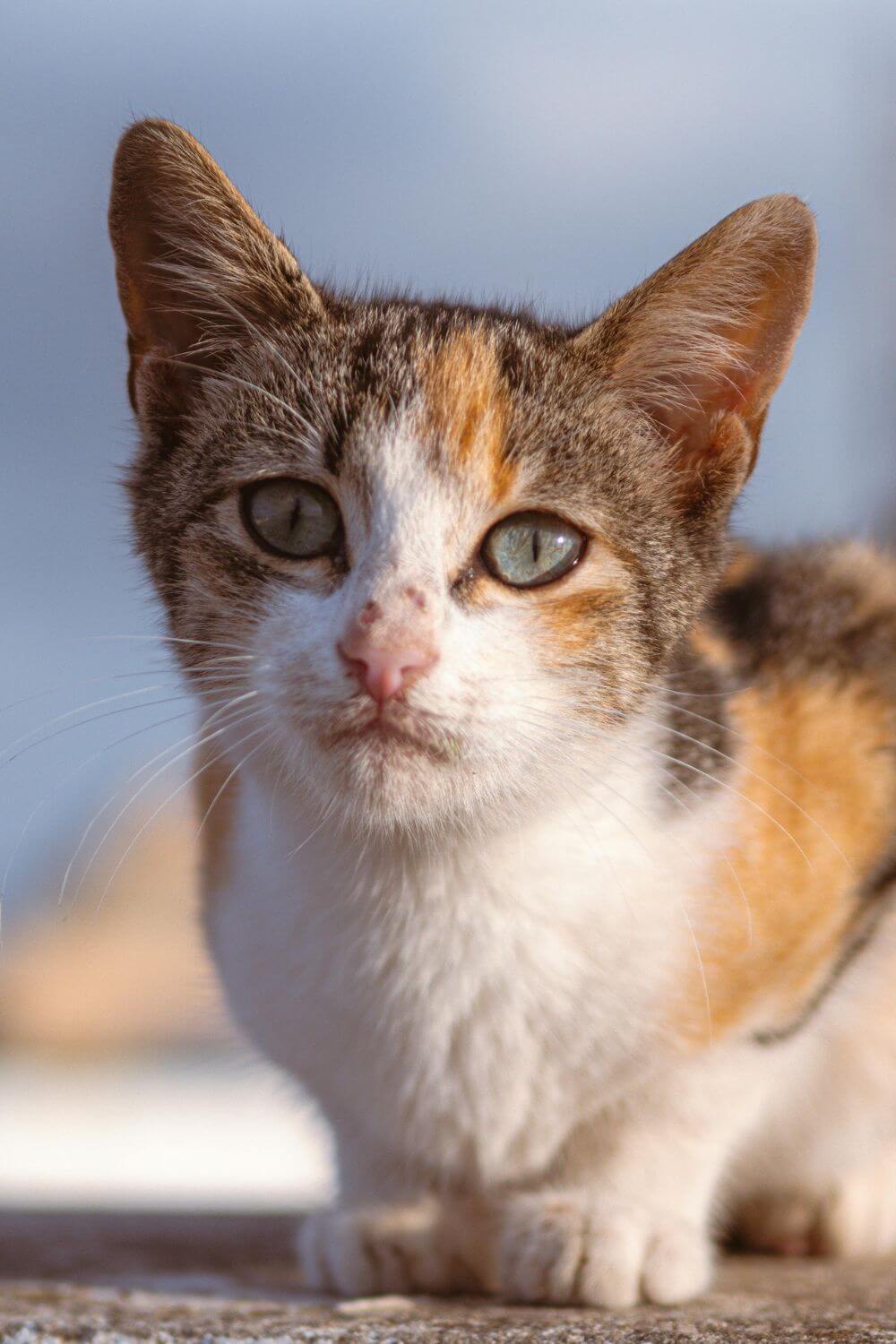
From a scientific standpoint, there’s no formal genetic link between coat color and personality that has been conclusively proven in large-scale studies, though some smaller surveys of cat owners have reported correlations between certain coat colors and behavioral tendencies. Because calico coloring is influenced by the same hormonal and genetic pathways involved in typical female cat development, some researchers speculate a loose connection, but the scientific consensus remains that personality is shaped far more by individual genetics, environment, early socialization, and breed traits than by coat color alone.
What is true is that because calico cats are essentially always a specific genetic combination overlaid on many different breeds, their temperament will typically reflect whatever breed or breed-mix they belong to. A calico Maine Coon will likely be gentle and sociable, just like other Maine Coons, while a calico domestic shorthair may show more of the classic independent-cat streak.
Caring for a Calico Cat
Since a calico cat isn’t a specific breed, there’s no special “calico diet” or “calico grooming routine” — care depends entirely on the cat’s actual breed, coat length, and individual health needs. That said, here are a few general tips:
- Grooming: Short-haired calicos need minimal brushing (once a week is usually sufficient), while long-haired calicos, such as calico Persians, need daily brushing to prevent matting.
- Skin health: Because pigmentation is uneven across a calico’s coat, some owners notice that the pink (unpigmented) skin beneath white fur patches can be more sensitive to sunburn, so calico cats with significant white areas — especially around the ears and nose — should have limited unsupervised sun exposure.
- Veterinary care for male calicos: If you own a rare male calico cat, it’s worth discussing Klinefelter syndrome with your veterinarian, since these cats can occasionally have a higher risk of certain health issues and are typically not suited for breeding.
- General wellness: Like all cats, calicos benefit from a balanced diet, regular veterinary checkups, dental care, and plenty of mental and physical enrichment.
Fun Facts About Calico Cats
- The word “calico” originally referred to a type of cotton fabric imported from Calicut, India, known for its colorful printed patterns — the cat coloring was named after the cloth.
- Maryland’s official state cat is the calico, chosen in 2001 for its color match with the state flag and state insect.
- NASA named a satellite feature “Calico” as a playful nod to the pattern’s mosaic-like randomness, illustrating just how iconic the pattern has become in popular reference.
- A calico’s pattern is completely unique — much like a human fingerprint, no two calico cats have the exact same arrangement of patches, because X-inactivation is a random process.
- Calico cats are found in numerous breeds, but they can also occur in completely mixed-breed cats, making the pattern one of the most democratic and widespread in the feline world.
Final Thoughts
The calico cat is a wonderful example of how genetics can create extraordinary natural beauty. From its likely calico cat origin in ancient Egypt to its symbolic status in Japanese and American culture, the calico pattern has captured human imagination for centuries. Understanding the science behind calico cat hair — the X-inactivation process, the white spotting gene, and the rare chromosomal conditions that occasionally produce a male calico — reveals just how special this coloring really is.
Whether you’re considering adopting a calico cat, already share your home with one, or simply find their patchwork coats endlessly fascinating, one thing is clear: the calico cat isn’t just a pretty pattern. It’s a living demonstration of genetics, history, and culture all wrapped up in one unforgettable coat.