How to Draw Cute Cats: Easy Drawing Ideas for Beginners
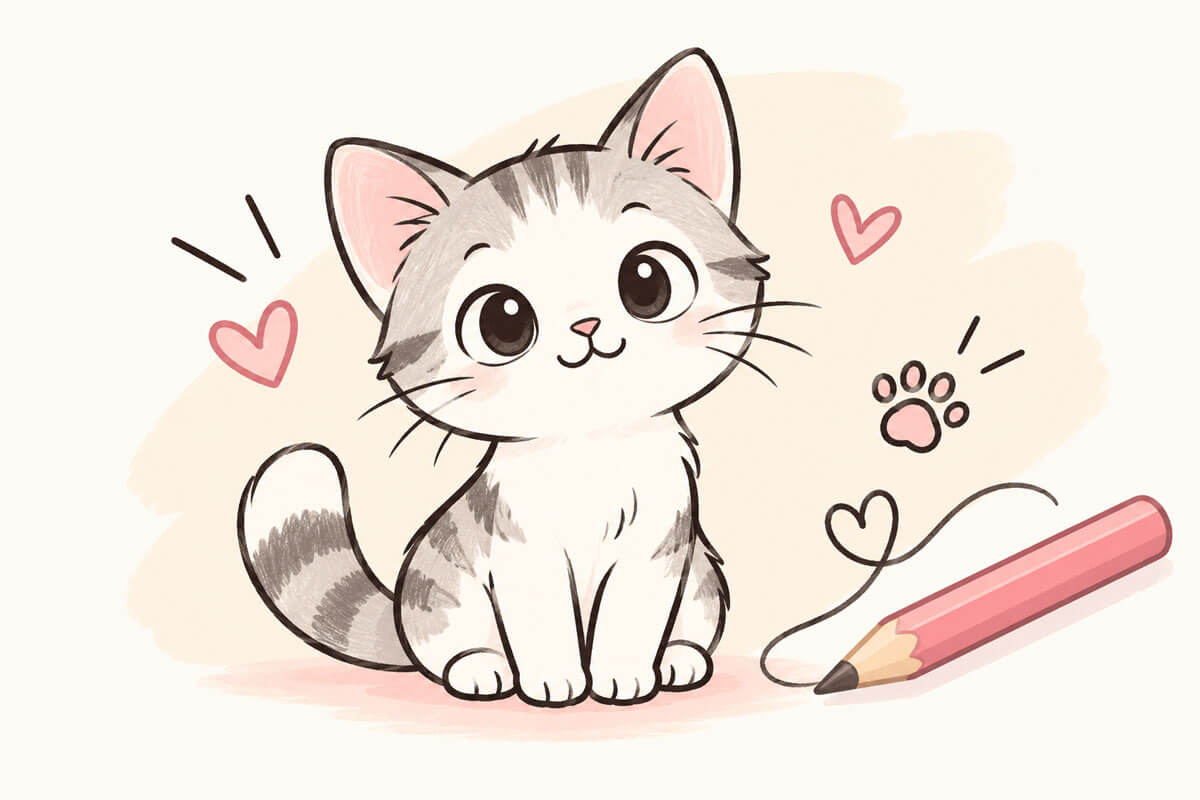
Have you ever scrolled past an adorable cat doodle and thought, “I wish I could draw that”? Good news: you absolutely can, even if you haven’t picked up a pencil since middle school. Cute cat drawings are built from a handful of simple shapes, and once you understand the pattern, you can draw dozens of different cats from memory.
This guide walks you through how to draw cute cats step by step, from choosing your supplies to drawing expressive faces, fluffy bodies, and sweet little details. You’ll also find six beginner-friendly video tutorials you can follow along with, plus a list of common mistakes to avoid and practice ideas to help you improve fast.
Grab a pencil and some paper, and let’s get started.
Why Cats Are the Perfect Subject for Beginners
Cats are one of the best things to draw when you’re just starting out, and there are good reasons for that.
- They break down into basic shapes. Circles, ovals, and triangles are all you need for a head, body, and ears.
- Cute doesn’t mean realistic. Cartoon cats don’t need perfect anatomy. Big heads, tiny bodies, and oversized eyes are features, not flaws.
- Mistakes look charming. A slightly wobbly line often adds personality to a cat doodle.
- There’s endless variety. Sleeping cats, sitting cats, kittens, chubby cats, and cats wearing tiny hats are all fair game.
In short, drawing cute cats is less about talent and more about learning a simple formula and repeating it.
What You Need to Start Drawing Cute Cats
You don’t need expensive art supplies. Here’s a practical starter kit:
Essentials
- A pencil (HB or #2 works perfectly) for light sketching
- A good eraser. A kneaded or white vinyl eraser won’t smudge or tear your paper
- Plain paper or a sketchbook. Basic printer paper is fine for practice
- A black fine-liner or felt-tip pen for clean outlines
Nice to have
- Colored pencils, markers, or watercolors for adding color
- A white gel pen for tiny highlights in the eyes
- A drawing tablet or iPad if you prefer digital art
A quick tip: always sketch lightly first. Light pencil lines are easy to erase, which takes the pressure off and helps you draw more confidently.
The Secret Formula: Draw Cute Cats with Simple Shapes
Almost every cute cat drawing follows the same basic recipe. Once you memorize it, you can adapt it to any pose or style.
1. Start with a wide, rounded head. A circle works, but a slightly flattened oval (wider than it is tall) looks even cuter and gives your cat chubby cheeks.
2. Add two triangle ears. Place them on the upper left and right of the head. Slightly rounded triangles feel softer and friendlier than sharp ones.
3. Place the eyes low and wide apart. This is the single most important trick for cuteness. Eyes positioned in the lower half of the head make a cat look younger and sweeter. This works because we naturally read big foreheads and low, wide-set eyes as “baby-like.”
4. Keep the nose and mouth tiny. A small triangle or oval nose with a little “w” or “3” shape underneath is all you need.
5. Add whiskers last. Two or three short lines on each cheek is plenty.
Here’s the mental checklist: big head, low eyes, small features, simple lines.
Step-by-Step: Your First Cute Cat Face
Let’s put the formula into practice with a simple front-facing cat.
- Draw a wide oval for the head. Don’t worry about making it perfect.
- Sketch a light cross inside the oval: one vertical line down the middle and one horizontal line slightly below the center. These guidelines help you keep the face symmetrical.
- Add two ears on top, angled slightly outward.
- Draw the eyes on the horizontal line, about one eye-width apart from each other. Make them round or oval and leave a small circle unfilled in each for a sparkle.
- Add a tiny nose where the vertical and horizontal lines meet, or just below.
- Draw the mouth as a small “w” shape beneath the nose.
- Add whiskers and inner ears. A few simple lines go a long way.
- Trace over your sketch with a pen, let the ink dry, and erase the pencil lines.
That’s it. You’ve just drawn a cute cat face in under five minutes.
Now it’s time to see the process in action. Watching an artist draw in real time makes every step feel less intimidating.
Tip: Pause the video after each step and copy what you see before moving on. It’s much more effective than watching the whole thing and then trying to draw from memory.
How to Draw a Cute Cat Body
A cute head is only half the picture. The body is where many beginners get stuck, but the trick is to keep it simple and small compared to the head.
For a sitting cat:
- Draw a pear or bean shape below the head, wider at the bottom.
- Overlap the head slightly over the top of the body. This overlap makes your drawing feel more natural.
- Add two small oval front paws at the bottom center, and a curved tail wrapping around the side.
For a standing or walking cat:
- Use an oval for the torso and four short, rounded legs.
- Keep the legs stubby. Long, realistic legs make a cat look less cute.
Pro tip: think “marshmallow with ears.” If your cat looks soft and squishy, you’re on the right track.
Understanding Cute Proportions (The Chibi Approach)
If you’ve ever wondered why anime and kawaii cats look so adorable, it comes down to proportion. Here’s the quick breakdown:
| Feature | Realistic Cat | Cute Cartoon Cat |
|---|---|---|
| Head size | Small compared to body | Large, often as big as the body |
| Eyes | Almond-shaped, medium | Big, round, widely spaced |
| Legs | Long and slender | Short and stubby |
| Body | Elongated | Round and compact |
| Details | Fur texture, muscle definition | Minimal, clean lines |
When in doubt, exaggerate cuteness. Make the head bigger than you think it should be. Shrink the paws. Round every corner. Cute drawing is about simplifying and exaggerating, not copying real life.
Giving Your Cat Personality: Eyes and Expressions
Once you can draw a basic cat, expressions are what bring it to life. The good news is that just a few small changes can completely transform the mood.
Happy cat: Draw the eyes as upside-down “U” shapes (closed, smiling eyes), add rosy cheek circles, and curve the mouth into a wide smile.
Sleepy cat: Use two small horizontal curves for closed eyes and add a few little “z” letters floating nearby.
Surprised cat: Make the eyes extra large with tiny pupils and open the mouth into a small “o.”
Grumpy cat: Slant the eyebrows downward toward the nose and turn the mouth into a slight frown.
Sparkly-eyed cat: Fill the eyes with dark ink, leaving one large and one small white highlight circle. This classic kawaii trick makes any cat look instantly adorable.
Pro tip for beginners: always draw both eyes the same size first. Once you’re comfortable, experiment with slight asymmetry for extra character.
Fun Cute Cat Drawing Ideas to Try
Running out of ideas is the number one reason people stop practicing. Keep this list handy:
- A loaf cat. A cat tucked into a rounded bread-loaf shape, paws hidden. It’s the easiest full-body cat you can draw.
- A sleeping curled-up cat. Just a big donut shape with ears on top.
- A kitten with oversized ears and a tiny body.
- A cat holding a fish, a heart, or a coffee cup.
- A cat peeking over the edge of the page. Only the eyes, ears, and paws are visible.
- A cat in a box. Cats love boxes, and boxes are simple to draw.
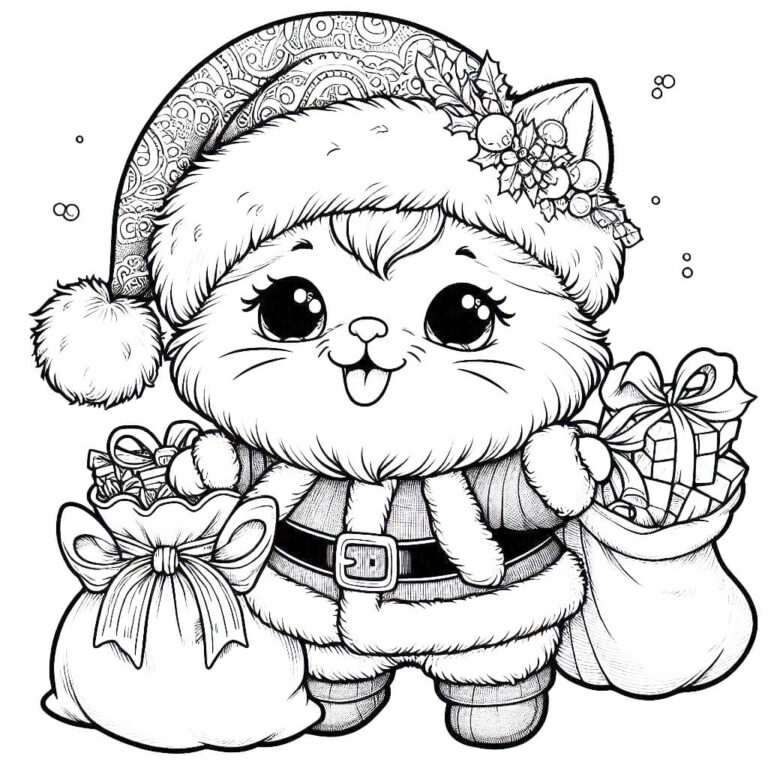
- A seasonal cat. Try a pumpkin-hat cat for fall or a scarf-wearing cat for winter.
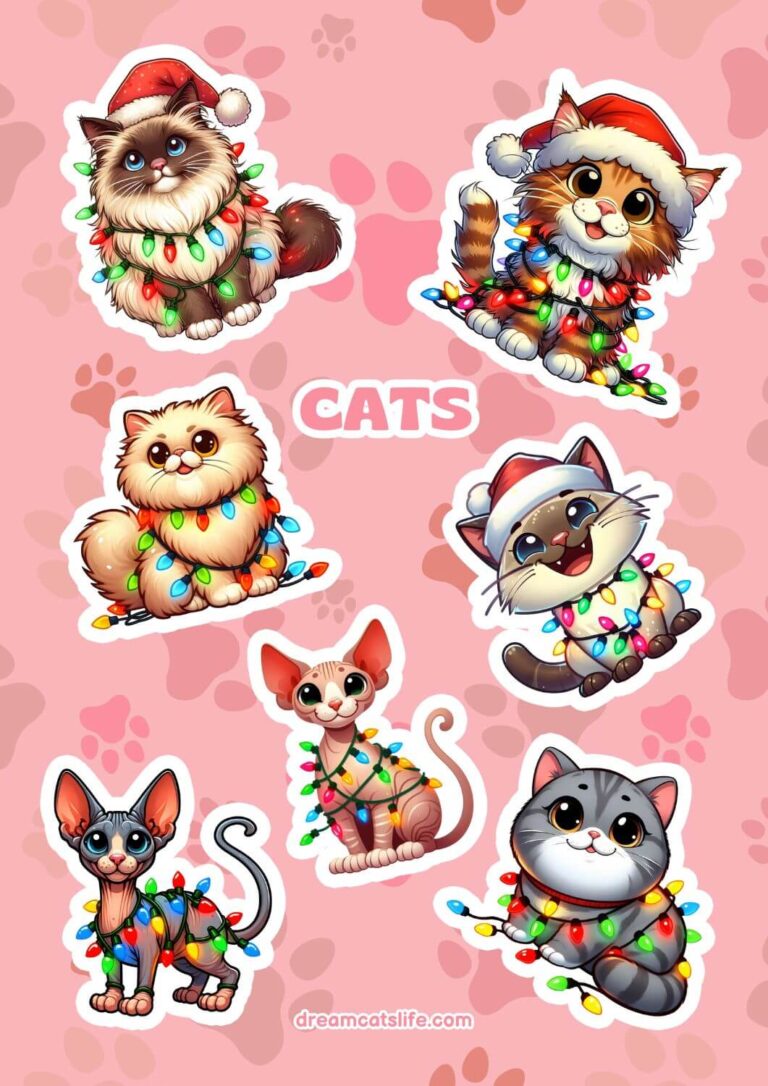
- A cat sticker sheet. Draw 6 to 10 mini cats with different expressions on one page.
- Cat friends. Draw two cats cuddling, with their tails curled together.
Each idea uses the same basic shapes you’ve already learned. You’re simply rearranging the pieces.
Adding Color and Cute Details
Color can turn a simple line drawing into a polished piece of art. You don’t need advanced skills here either.
Choose a simple palette. Cats look great in:
- Soft orange and cream (classic ginger cat)
- Gray and white (cloudy, cozy vibes)
- Black with bright yellow or green eyes (high contrast and striking)
- Pastel pink, lavender, or mint (for fantasy or kawaii styles)
Add easy details that boost cuteness:
- Blush marks on the cheeks, using a pink pencil or marker
- Inner ear color in a soft pink
- Paw pads drawn as tiny beans
- A small shadow under the cat so it feels grounded
- Simple patterns like stripes, spots, or a white belly patch
- A little accessory, such as a bow, bell, or collar
Layering tip: if you’re using colored pencils, start light and build up the color gradually. It’s easier to add than to remove.
Common Mistakes to Avoid When Drawing Cute Cats
Everyone makes mistakes at the beginning. Here are the most common ones, plus how to fix them.
1. Drawing the eyes too high. Eyes placed near the top of the head make the cat look serious or even a bit creepy. Move them lower and farther apart for instant cuteness.
2. Making the head too small. A tiny head on a large body looks realistic but not cute. Go big on the head.
3. Pressing too hard with the pencil. Dark sketch lines are hard to erase and leave marks. Sketch lightly until you’re happy with the shapes.
4. Adding too many details. Detailed fur, realistic noses, and complicated shading can make a cute cat look busy. Less is more.
5. Skipping the guidelines. The cross-shaped guides inside the head help you keep the features balanced. Beginners who skip them often end up with crooked faces.
6. Giving up after the first try. Your first cat probably won’t look like the one in the tutorial. That’s completely normal. Every artist’s early drawings look wobbly.
7. Drawing symmetrical faces by guesswork. If one eye keeps turning out bigger than the other, try drawing both at the same time, alternating between left and right.
8. Copying without understanding. Following a tutorial is great, but also ask why each step works. Understanding the shapes will help you draw cats on your own later.
Tips to Improve Faster
Want to see real progress in weeks rather than months? Try these habits:
- Practice for 10 to 15 minutes a day. Short, consistent sessions beat one long weekly session.
- Fill a page with the same cat face. Draw 20 tiny cat heads in a row. By the tenth one, you’ll notice improvement.
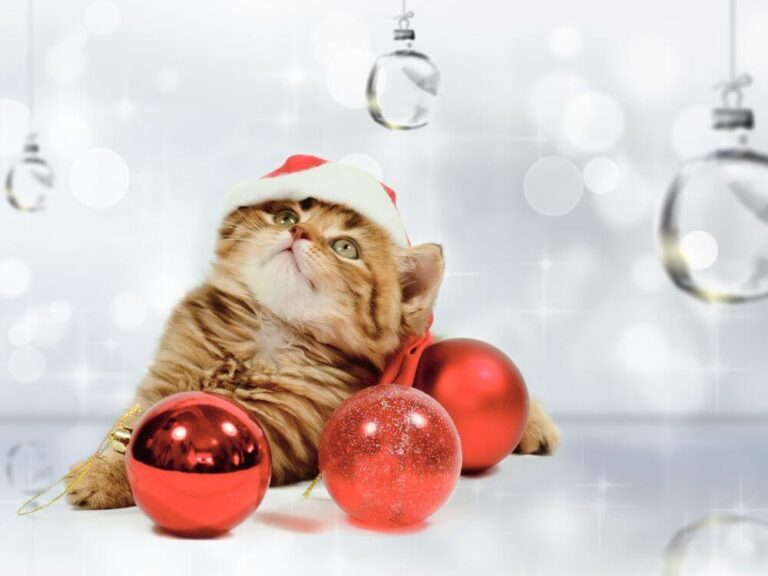
- Draw from reference photos. Look at real cats, then simplify what you see into basic shapes.
- Keep a “cat doodle” page. Use it for experiments, silly faces, and warm-ups.
- Trace, then draw. Tracing a tutorial drawing a couple of times builds muscle memory. Then try it again without tracing.
- Slow down your lines. Quick, scratchy strokes cause wobbles. A slower, steady hand gives smoother curves.
- Rotate your paper. Turn it to a comfortable angle when drawing curves.
- Share your work. Posting your cat drawings online or showing friends can keep you motivated and bring helpful feedback.
- Develop your own style. After practicing a few tutorials, start changing small things: bigger ears, longer whiskers, different eyes. That’s how personal style begins.
Frequently Asked Questions
How do you draw a simple cat for beginners?
Start with a wide oval for the head, add two triangle ears, draw two round eyes low on the face, and finish with a tiny nose, a small mouth, and whiskers. Using basic shapes is the easiest way to draw a simple, cute cat.
What makes a cat drawing look cute?
A large head, big round eyes placed low on the face, tiny facial features, short stubby limbs, and rounded shapes all contribute to cuteness. Simple lines and soft proportions help too.
What are the easiest cats to draw?
The loaf cat, sleeping cat, and sitting cat are the easiest because they use only a few shapes and hide complicated parts such as legs and paws.
What supplies do I need to draw cute cats?
All you need is a pencil, an eraser, and paper. A fine-liner pen and colored pencils or markers are helpful for finishing your drawing, but they’re not required to start.
How long does it take to learn to draw cute cats?
Most beginners can draw a recognizable cute cat within a few practice sessions. Developing a consistent personal style usually takes a few weeks of regular practice.
Can I learn to draw cats if I have no art experience?
Yes. Cute cartoon cats are designed to be simple. With a step-by-step tutorial and a little practice, anyone can learn.
Should I draw digitally or on paper?
Both work well. Paper is cheaper and more forgiving for beginners, while digital tools offer features like undo and layers. Choose whichever feels more comfortable to you.
Final Thoughts: Start Small, Stay Curious
Learning how to draw cute cats isn’t about perfection. It’s about enjoying the process and building confidence one doodle at a time. Remember the key points:
- Use simple shapes as the foundation
- Make the head big and place the eyes low and wide
- Keep details minimal and lines clean
- Practice a little every day
- Follow along with the video tutorials above and then try your own versions
Before long, you’ll have a whole sketchbook full of adorable cats, each with its own personality. So pick up your pencil, choose a video, and draw your first cute cat today. Your future self will be glad you started.