How to Care for Your Cat’s Fur: Tips for a Healthy, Shiny Coat
How to Care for Your Cat’s Fur: Tips for a Healthy, Shiny Coat
Your cat’s fur is more than just a soft, pettable feature — it’s one of the clearest windows into your feline’s overall health. A glossy, tangle-free coat usually means a happy, well-nourished cat, while a dull, greasy, or matted one can be an early warning sign that something isn’t right. The good news is that keeping your cat’s fur in top condition doesn’t require expensive equipment or hours of your time. It just requires the right care routine and knowing what to watch out for.
In this guide, we’ll walk through everything you need to know about cat fur care — from brushing techniques and bathing tips to diet, shedding, and when it’s time to call in a professional groomer. Whether you have a short-haired tabby or a fluffy Maine Coon, these tips will help you keep your cat’s coat shiny, healthy, and mat-free.
Why Your Cat’s Fur Matters So Much
Fur isn’t just decorative. It insulates your cat against temperature changes, protects their skin from sun and injury, and even plays a role in how they communicate (think of a puffed-up tail or flattened ears). Because a cat’s coat requires so much biological “investment,” it’s often one of the first things to suffer when a cat is unwell, stressed, malnourished, or aging.
That’s why regular grooming isn’t just about aesthetics — it’s a health check you perform with your hands. Each brushing session gives you a chance to notice lumps, bumps, parasites, or skin irritation before they become serious problems.
Understanding Your Cat’s Fur Type
Not all cat coats are created equal, and understanding your cat’s specific fur type is the first step toward proper care.
- Short-haired cats (like Siamese, British Shorthair, or domestic shorthairs) have low-maintenance coats that shed less visibly and rarely mat. A weekly brushing session is often enough.
- Long-haired cats (like Persians, Maine Coons, and Ragdolls) have dense, flowing coats that are prone to tangling and matting. These cats typically need daily attention.
- Double-coated breeds (like Norwegian Forest Cats) have a soft undercoat beneath a coarser topcoat, which means they shed heavily during seasonal changes and need specialized detangling tools.
- Hairless breeds (like the Sphynx) don’t need brushing at all, but their exposed skin requires regular wiping to remove oil buildup that fur would normally absorb.
Knowing which category your cat falls into helps you choose the right brush, the right bathing schedule, and the right expectations for shedding.
The Importance of Regular Brushing
If there’s one habit that makes the biggest difference in coat health, it’s brushing. Brushing removes loose and dead hair, prevents painful mats, distributes natural skin oils along the hair shaft, and stimulates blood flow to the skin — all of which add up to a shinier, healthier coat.
For short-haired cats: A once-a-week session with a soft-bristle brush or a rubber grooming mitt is usually plenty. This removes loose fur before it ends up on your couch and gives the coat a light sheen.
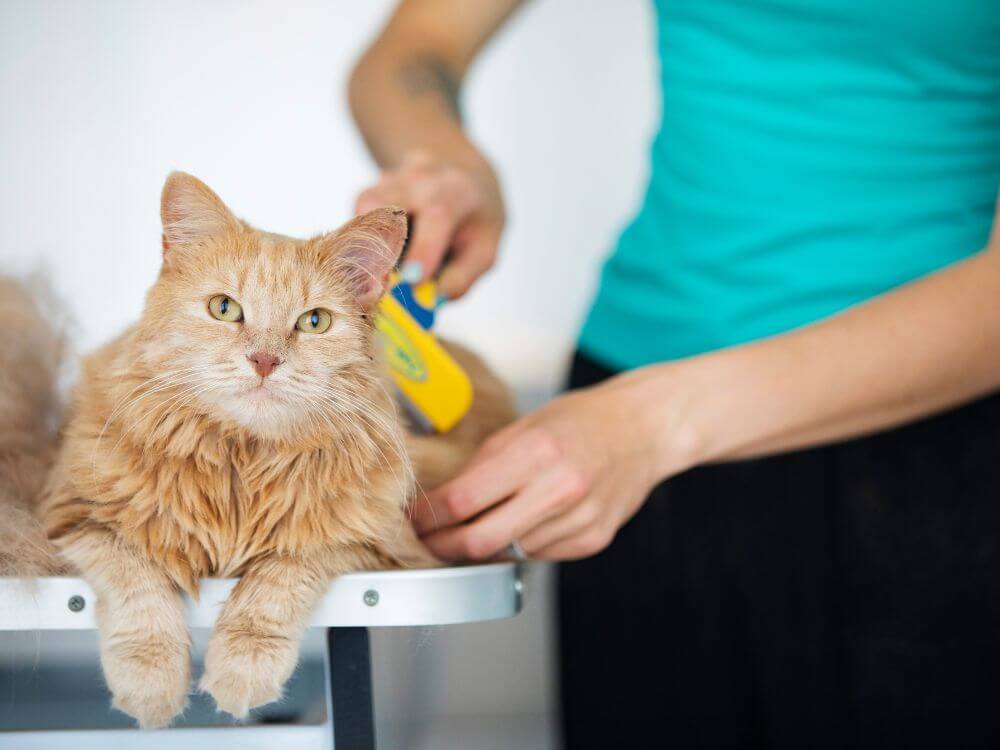
For long-haired cats: Daily brushing is strongly recommended. Start with a wide-toothed comb to work through any tangles, then follow up with a slicker brush to smooth the coat and remove loose undercoat fur. Skipping even a few days can allow small tangles to snowball into painful mats.
A quality grooming kit makes a real difference here — if you’re shopping for one, a set of cat grooming brushes and de-shedding tools on Amazon is a good place to start comparing options for your cat’s specific coat type.
Common mistake to avoid: Brushing too hard or using a brush designed for dogs. Cat skin is more sensitive, and aggressive brushing can cause irritation or even small cuts. Always brush in the direction of hair growth and let your cat set the pace, especially if they’re new to grooming.
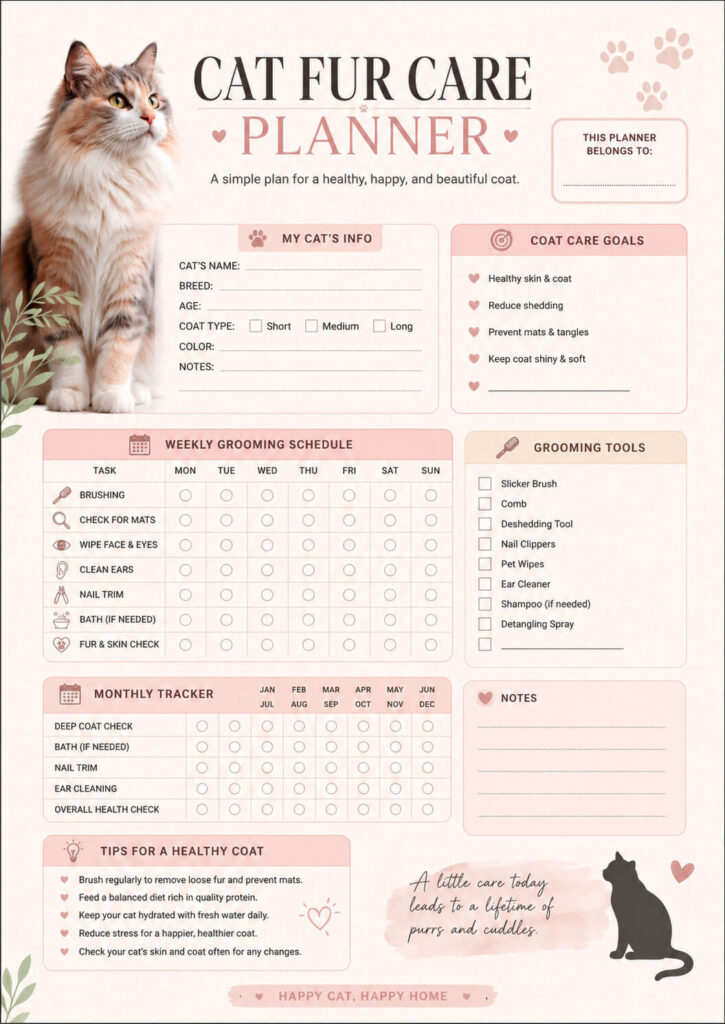
Free Cat Fur Care Planner (Printable)
Keeping your cat’s grooming routine on track is easier with everything in one place. Download our free Cat Fur Care Planner to track brushing, shedding, coat condition, and seasonal grooming tasks. This simple printable helps you build a routine for a healthy, soft, and shiny coat all year long.
Bathing Your Cat: When and How
Cats are famously efficient self-groomers, and most healthy cats never need a bath in their entire life. However, there are situations where a bath becomes necessary — if your cat gets into something sticky, oily, or toxic, has a skin condition your vet recommends treating with medicated shampoo, or is elderly and can no longer groom themselves effectively.
When a bath is required, always use a cat-specific shampoo rather than human shampoo or even dog shampoo, since a cat’s skin pH is different and harsh products can cause dryness or irritation. A gentle, hypoallergenic option — like those found in this selection of cat shampoo on Amazon — is generally a safe starting point, though it’s worth checking with your vet if your cat has known sensitivities.
Step-by-step bathing tips:
- Fill a sink or shallow tub with lukewarm water — never hot or cold.
- Wet your cat gently, avoiding the face, eyes, and ears.
- Apply shampoo and massage it into the coat, working from neck to tail.
- Rinse thoroughly. Leftover soap residue is one of the most common causes of post-bath itching and dandruff, so take your time here.
- Wrap your cat in a warm, absorbent towel and dry them in a draft-free room.
- If your cat tolerates it, a low, quiet blow-dryer setting can speed up drying — but never force this if it causes stress.
Mistake to avoid: Bathing your cat too frequently. Over-bathing strips the coat of its natural oils, leading to dry, brittle fur and irritated skin — the opposite of what you’re trying to achieve.
Addressing Shedding and Hairballs
Shedding is a completely normal, healthy process — but excessive shedding can sometimes point to stress, poor nutrition, allergies, or an underlying medical issue. If your cat’s shedding suddenly increases or is accompanied by bald patches, redness, or scabbing, a vet visit is worth scheduling.
Regular brushing is your best defense against shedding-related mess, since it catches loose fur before your cat swallows it during self-grooming. This is especially important for controlling hairballs, which form when ingested fur accumulates in the digestive tract.
A few practical ways to reduce hairballs:
- Brush more frequently during shedding season (spring and fall)
- Add a hairball-control cat food or treat formula to the diet
- Ensure your cat stays well-hydrated, which helps fur move through the digestive system
- Consider a deshedding tool such as those in this cat hairball and deshedding solutions category on Amazon
Dealing with Mats and Tangles
Mats form when loose fur becomes tightly knotted, usually in high-friction areas like the armpits, belly, and behind the ears. They’re not just unsightly — mats can pull on the skin, restrict movement, and even trap moisture that leads to skin infections.
If you find a small mat, work through it gently using a detangling spray and a mat splitter or wide-toothed comb, starting at the outer edges and working inward. Never attempt to cut a mat out with scissors — cat skin is thin and surprisingly close to the fur, and it’s easy to accidentally cause a serious cut, even with careful hands.
For mats that are large, tight, or close to the skin, it’s safer to let a professional groomer or veterinarian handle the removal, sometimes using clippers designed specifically for this purpose.
The Role of Diet in Fur Health
You really can see the effects of nutrition on the outside of your cat. A diet rich in high-quality protein and omega-3 and omega-6 fatty acids is one of the most effective ways to support a shiny, healthy coat from the inside out.
Look for cat food where a named animal protein (like chicken or salmon) is the first ingredient, and consider foods formulated specifically for skin and coat health. Many owners also add a fish oil supplement to support coat shine — options like this fish oil supplement for cats on Amazon are widely used, though it’s always best to check dosing with your vet before introducing anything new.
Signs your cat’s diet may not be supporting healthy fur:
- A dull, brittle, or greasy-looking coat
- Excessive shedding unrelated to season
- Flaky or dry skin
- Slow regrowth after shaving or grooming
Recognizing and Treating Skin Issues
Sometimes a poor coat isn’t a grooming problem at all — it’s a skin problem. Dry or flaky skin, redness, excessive scratching, or bald patches can signal allergies, fleas, mites, or fungal infections like ringworm. Because grooming sessions put your hands directly on your cat’s skin, they’re often the first place these issues get noticed.
If you spot anything unusual during a brushing session — a scab, an odd odor, or a patch of skin that looks different from the rest — don’t wait it out. A quick vet visit can catch treatable issues early, before they affect your cat’s coat (and comfort) more seriously.
Managing Seasonal Coat Changes
Most cats — even strictly indoor ones — go through seasonal shedding cycles, typically shedding more heavily in spring and fall as they transition between lighter and denser coats. Stepping up your brushing frequency during these transition periods can dramatically reduce loose fur around the house and help prevent the mats that tend to form when old undercoat gets left behind.
A dedicated undercoat rake can be especially useful during these heavier shedding windows, particularly for double-coated breeds.
Professional Grooming: When to Seek Help
Home grooming covers most cats’ needs, but there are times when a professional groomer is worth the investment:
- Your cat has a long, dense coat that’s difficult to manage alone
- Mats have become widespread or are close to the skin
- Your cat is elderly, overweight, or arthritic and struggles to self-groom
- You want a full grooming package that includes nail trimming, ear cleaning, and a sanitary trim
A professional groomer has the tools and experience to handle difficult mats safely and can also spot early warning signs of skin or health issues you might miss at home.
Common Fur Care Mistakes to Avoid
To wrap up the practical side of things, here are a few mistakes worth steering clear of:
- Using a dog brush or dog shampoo on a cat — their skin and coat needs are different.
- Skipping brushing sessions for long-haired cats, which allows small tangles to become large, painful mats.
- Bathing too often, which strips natural oils and dries out the skin.
- Ignoring sudden changes in shedding, texture, or skin condition, which can delay diagnosis of an underlying issue.
- Cutting out mats with scissors instead of using safer detangling tools or professional help.
Conclusion: Keeping Your Cat’s Fur Healthy
Caring for your cat’s fur is a small, consistent investment that pays off in a big way — both in how your cat looks and how they feel. By understanding your cat’s specific fur type, brushing regularly, managing shedding and mats, feeding a coat-supporting diet, and staying alert to skin issues, you’ll keep that coat shiny, soft, and healthy for years to come.
And beyond the practical benefits, grooming is one of the simplest ways to bond with your cat. Every brushing session is a quiet, hands-on moment of connection — one that keeps your feline friend comfortable, your furniture cleaner, and your bond a little stronger. With the right care routine in place, a beautiful coat isn’t just possible — it’s practically guaranteed.