Cat Corner Ideas: The Ultimate Guide to Creating a Purr-fect Feline Sanctuary at Home
If you share your home with a cat, you already know the truth: your living space isn’t entirely yours. Cats claim their territory with confidence, and the best thing you can do as a pet owner is lean into it — thoughtfully. Cat corner ideas have exploded in popularity over the past few years, and for good reason. A dedicated feline space keeps your cat mentally stimulated, physically active, and emotionally secure, all while keeping the rest of your home organized and cat-scratch-free.
Whether you live in a studio apartment or a sprawling house, this guide will walk you through everything you need to know to design the perfect cat corner — from functional essentials to stylish, space-saving solutions.
Why Your Cat Needs a Dedicated Corner
Before diving into design, it’s worth understanding the why. Cats are territorial animals with strong instincts for climbing, hiding, scratching, and perching at elevated heights. When those needs aren’t met, they find their own solutions — usually your furniture, curtains, or bookshelves.
A well-designed cat corner addresses all of these natural behaviors in one concentrated area:
- Climbing satisfies a cat’s need to survey their environment from above
- Hiding spots provide safety and reduce stress, especially in multi-pet households
- Scratching surfaces redirect destructive behavior away from your couch
- Cozy resting areas give cats a sense of ownership and routine
- Play stations keep indoor cats mentally engaged and physically healthy
In short, investing in cat corner ideas is an investment in your cat’s wellbeing — and your sanity.
🐱 What’s Your Cat’s Style?
Answer these quick questions to discover your cat’s personality and the perfect cat corner setup.
Choosing the Right Location
Location is everything. The best cat corner is one your cat will actually use, and that starts with placement.
Consider your cat’s personality. Social cats who love being in the middle of the action do well in living rooms or near busy hallways. Shy or anxious cats benefit from a quieter corner in a bedroom or home office — somewhere they can retreat without feeling exposed.
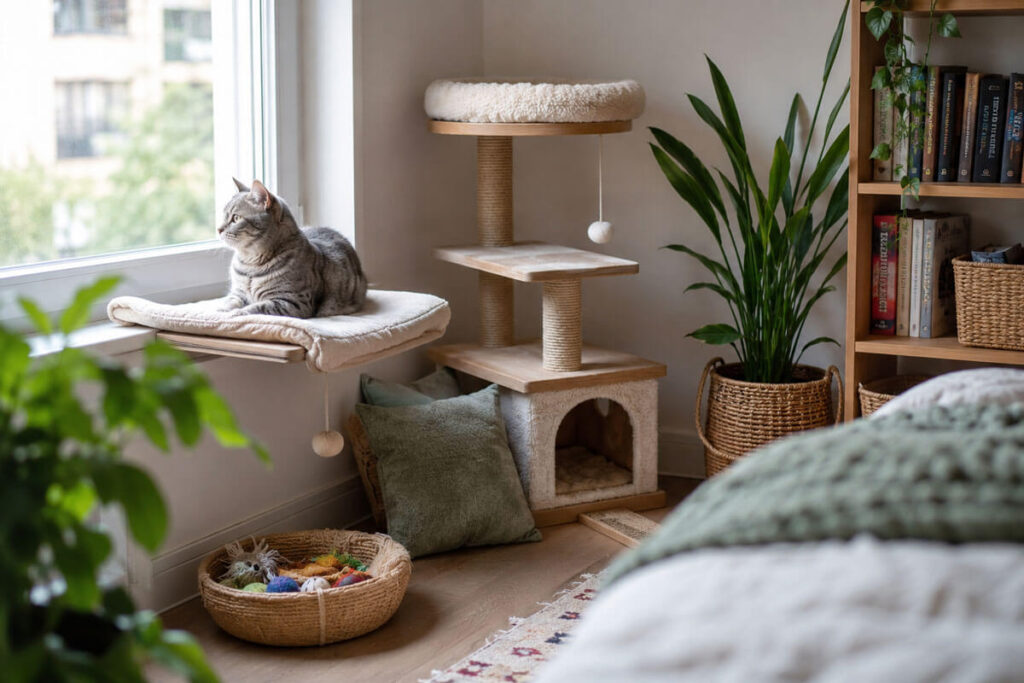
Look for natural vantage points. Cats instinctively seek high-up spots where they can observe their surroundings. Placing a cat corner near a window is one of the smartest moves you can make. Window perches give indoor cats a front-row seat to birds, squirrels, and the outside world — a form of environmental enrichment that many owners underestimate.
Avoid high-traffic zones and loud appliances. Washing machines, blenders, and vacuum storage areas can startle cats and make them avoid the space entirely, no matter how well-designed it is.
Think about sunlight. Cats are notorious sun-seekers. A corner that catches the afternoon light will be far more attractive to your cat than one tucked in permanent shadow.
Cat Corner Ideas by Space Size
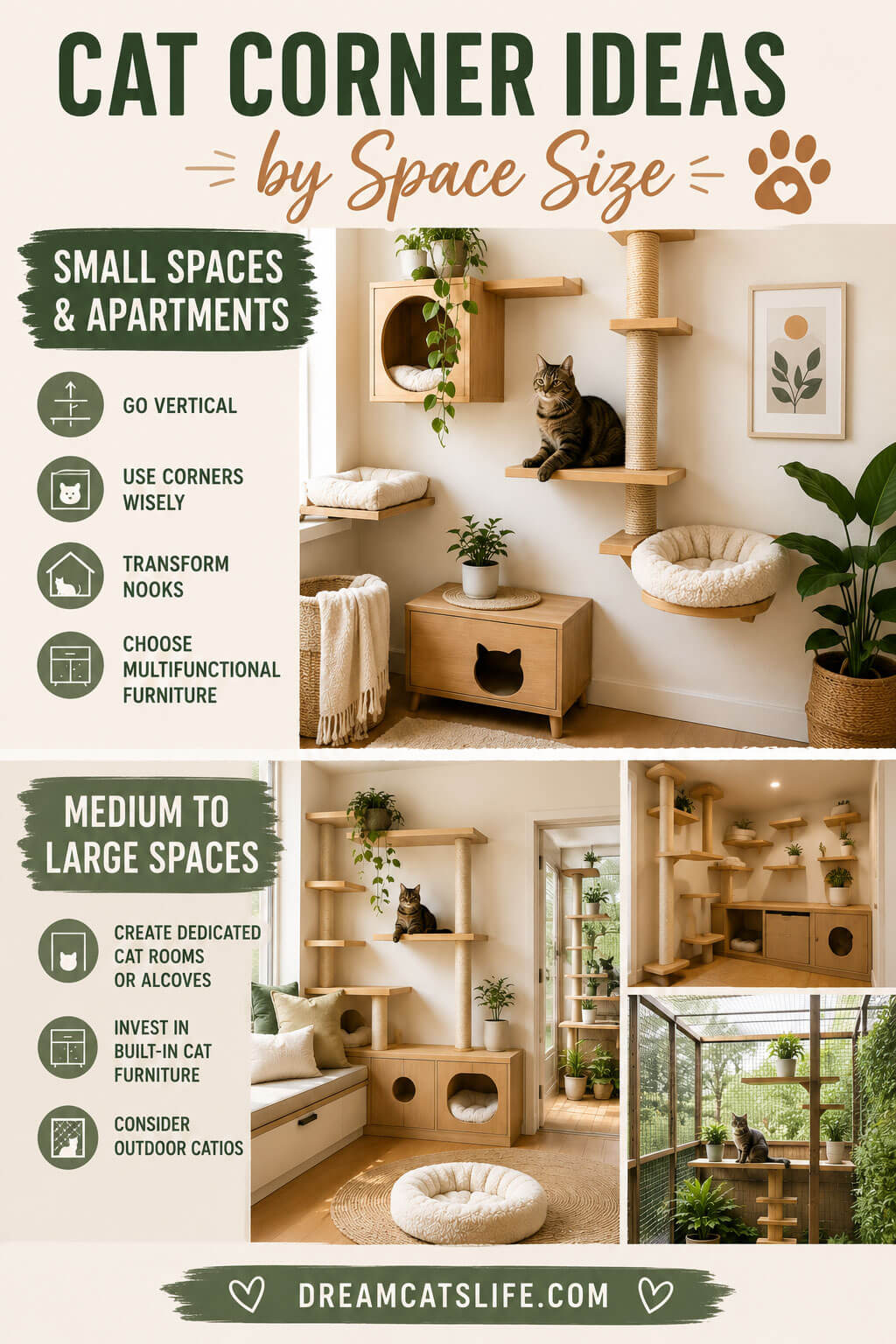
Small Spaces and Apartments
Living in a compact space doesn’t mean your cat has to miss out. Some of the most creative cat corner ideas are born out of space constraints.
Vertical is your best friend. When floor space is limited, build upward. Wall-mounted cat shelves and floating cat trees allow you to create a full climbing environment without taking up any floor footprint. Install shelves at varying heights to create a “cat highway” — a series of connected perches your cat can travel across the wall.
Corner shelving units are especially effective in small apartments. A corner-mounted shelf system with integrated hiding cubes, hammocks, and scratching posts can pack a lot of functionality into a few square feet.
Under-the-stairs nooks are a goldmine if you have them. This underutilized space makes a perfect enclosed cat sanctuary — add a cozy bed, a small litter box cabinet, and a scratching pad, and you have a complete setup that barely impacts your living space.
Multifunctional furniture is worth its weight in gold for small spaces. Look for ottomans with built-in cat beds, TV stands with integrated litter box enclosures, or side tables with hidden compartments that double as cat dens.
Medium to Large Spaces
With more room to work with, you can go bigger and bolder.
Dedicated cat rooms or alcoves are the dream scenario. Even a large closet with the door removed can become a fully outfitted cat zone, complete with floor-to-ceiling cat trees, feeding stations, litter box enclosures, and a full wall of climbing shelves.
Built-in cat furniture elevates the aesthetic of any space. Consider having a carpenter build shelving or window seats with integrated cat features — hidden litter boxes inside cabinetry, built-in tunnels between rooms, or custom climbing structures that match your home’s style.
Outdoor access catios are worth considering if your cat has access to a patio or yard. A catio (cat patio) is an enclosed outdoor structure that gives cats safe access to fresh air and nature. Even a small window-mounted catio can dramatically improve an indoor cat’s quality of life.
Essential Elements of a Great Cat Corner
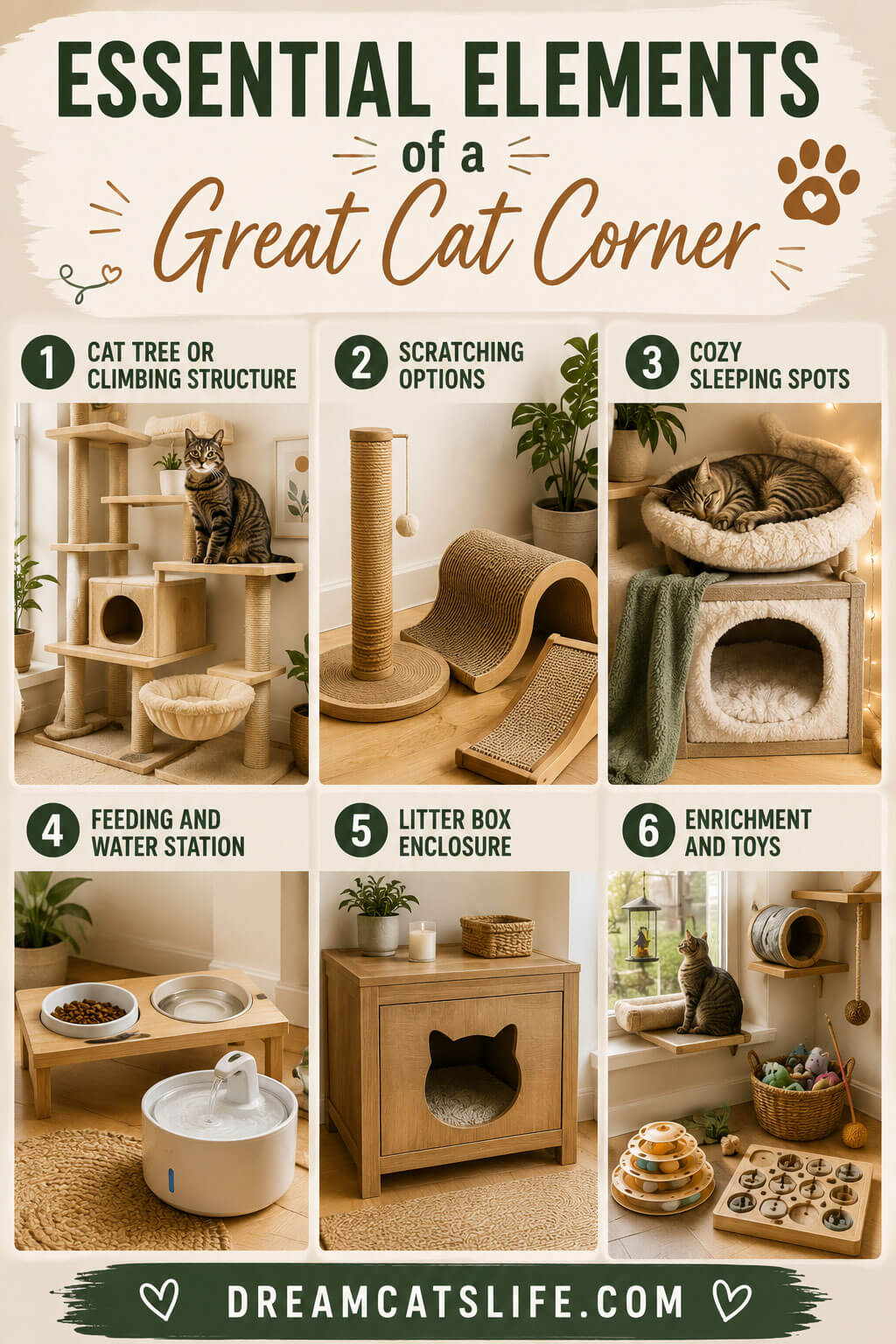
1. Cat Tree or Climbing Structure
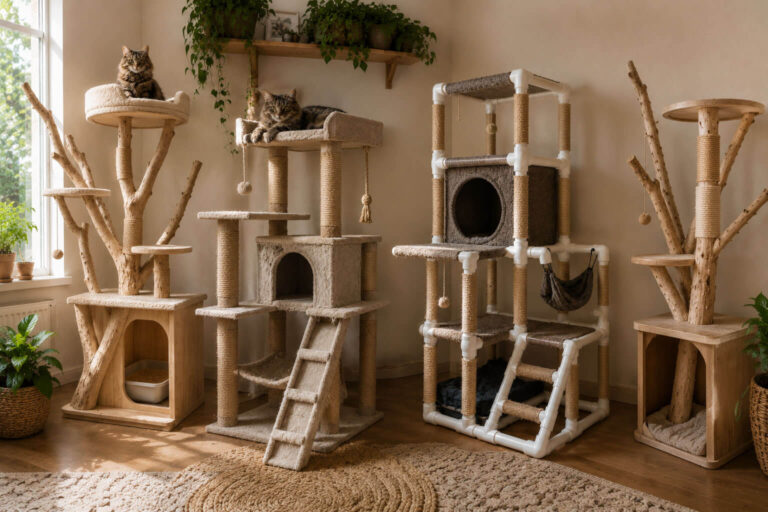
A cat tree is the anchor of most cat corner ideas. Look for one that suits your cat’s size and activity level. Kittens and active cats benefit from tall, multi-tiered trees with lots of platforms and toys. Senior or less mobile cats may prefer a shorter, sturdier tree with wide, low platforms that are easy to access.
What to look for:
- Sturdy base that won’t tip over (especially important for large cats)
- Multiple levels at different heights
- Sisal-wrapped posts for scratching
- At least one enclosed or semi-enclosed space for hiding
- Soft, washable plush covers on platforms
2. Scratching Options
Scratching is non-negotiable for cats — it’s how they maintain their claws, mark their territory, and stretch their muscles. Every cat corner should include at least one scratching option.
Offer variety: a vertical sisal post, a horizontal corrugated cardboard scratcher, and an angled scratcher cover most cats’ preferences. Place them prominently within the cat corner — scratchers tucked in corners no one uses tend to be ignored.
3. Cozy Sleeping Spots
Cats sleep 12–16 hours a day, so their sleeping area deserves serious attention. Offer multiple options at different heights and levels of enclosure. Some cats love open hammocks and elevated perches; others prefer enclosed cubbies or covered beds where they feel completely hidden and safe.
Pro tip: Add a used t-shirt or blanket with your scent to new sleeping spots. It makes the space feel familiar and safe to your cat much faster.
4. Feeding and Water Station
If space allows, incorporate a dedicated feeding station into your cat corner. This creates a routine territory for mealtime and makes cleanup much easier.
Consider a raised feeding station — elevated bowls are better for a cat’s posture and digestion, especially for larger or older cats. Keep the water source separate from the food bowl, ideally in a different spot within the corner, as cats instinctively prefer not to drink near where they eat (a holdover from wild behavior, where water near prey could be contaminated).
A pet water fountain is an excellent addition — many cats prefer moving water and will drink significantly more from a fountain than a static bowl, which benefits kidney health.
5. Litter Box Enclosure
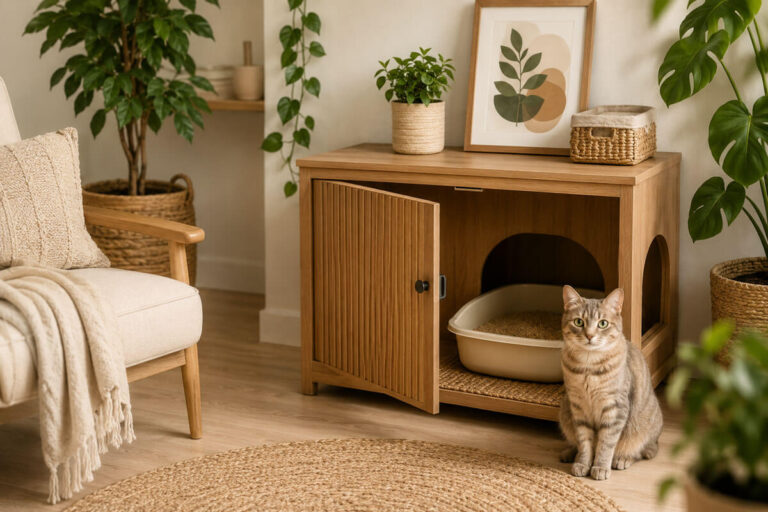
If your cat corner includes a litter box, concealment is key for both aesthetics and your cat’s privacy. Furniture-style litter box enclosures that look like end tables or cabinets are widely available and blend seamlessly into most home decor styles.
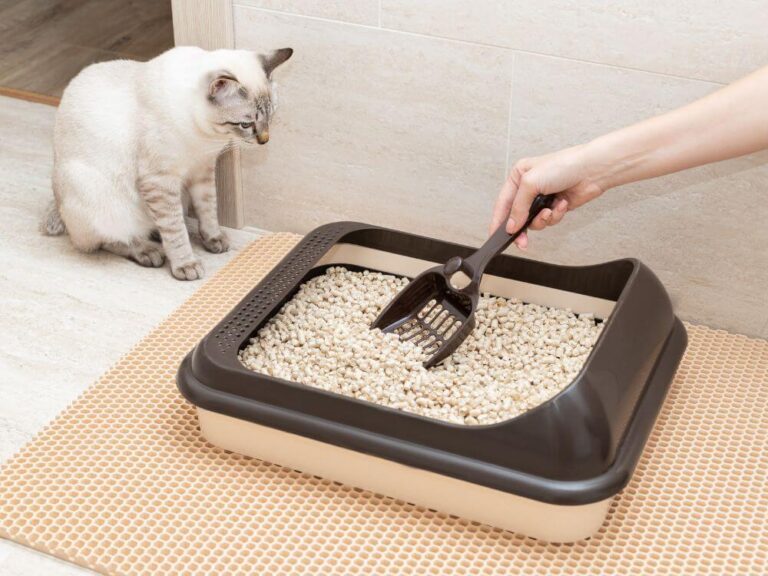
Ventilation matters — make sure any enclosed litter box has adequate airflow to prevent odor buildup, and never place the litter box directly adjacent to the food and water station.
6. Enrichment and Toys
A great cat corner keeps your cat mentally engaged even when you’re not home. Build in enrichment features:
- Window perches with bird feeders placed outside for natural “cat TV”
- Interactive puzzle feeders that dispense treats when manipulated
- Hanging toys attached to shelves or structures for solo play
- Tunnels and hiding tubes integrated into the layout
- Rotating toy baskets to keep novelty high without constantly buying new toys
Design Tips: Making It Look Good
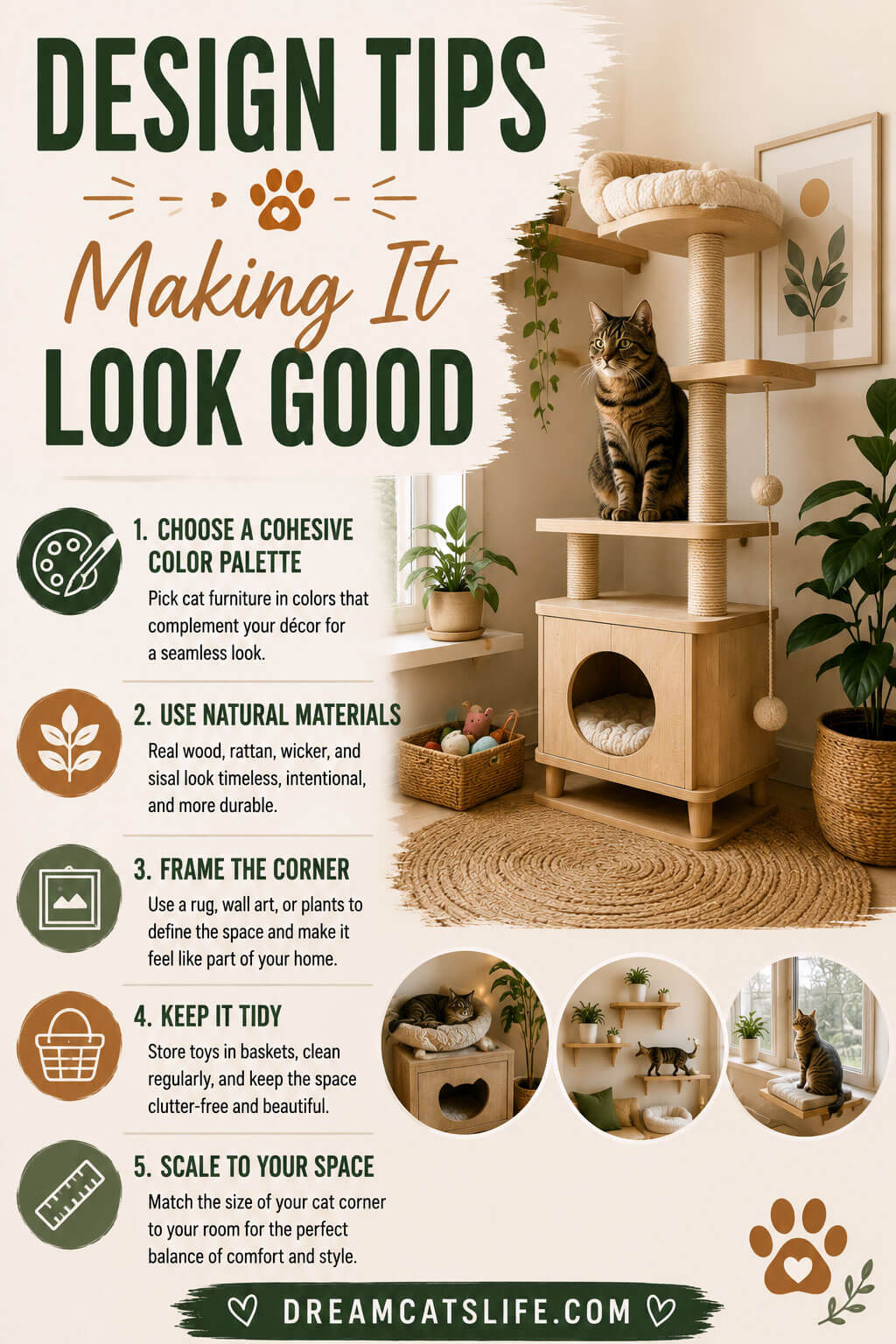
The best cat corners are ones that feel intentional — like they belong in your home, not like an afterthought. Here’s how to make your cat corner both functional and stylish.
Choose a cohesive color palette. Select cat furniture in colors that complement your existing décor. If your living room is neutral, a natural wood and cream cat tree will blend far better than a bright purple one. Many modern cat furniture brands now offer minimalist, Scandinavian-inspired designs that look as good as regular furniture.
Incorporate real wood and natural materials. Rattan, wicker, solid wood, and natural sisal look more intentional and upscale than synthetic alternatives. They also tend to be more durable.
Frame the corner visually. Use a small rug, a piece of wall art, or a plant (non-toxic to cats, of course) to define the cat corner as its own zone within the room. This subtle framing makes the space feel designed, not just functional.
Keep it tidy. A cat corner with toys strewn everywhere looks chaotic. Add a small basket or bin to store toys when not in use, and clean the area regularly. A tidy cat corner photographs beautifully and keeps your home feeling organized.
Scale to your space. A towering 6-foot cat tree in a small apartment can overwhelm a room. Conversely, a tiny desktop scratcher in a large home feels token and inadequate. Match the scale of your cat corner to the room size.
Plants and Cat Safety
Many popular houseplants are toxic to cats, including lilies, pothos, snake plants, and aloe vera. If you want to incorporate greenery near your cat corner, stick to cat-safe options like:
- Cat grass or catnip (a natural enrichment plant your cat can nibble)
- Spider plants (mildly attractive to cats but non-toxic)
- Areca palms
- Boston ferns
- Calathea
Always verify plant safety at the ASPCA’s toxic plant database before placing any greenery within reach of your cat.
Common Mistakes to Avoid
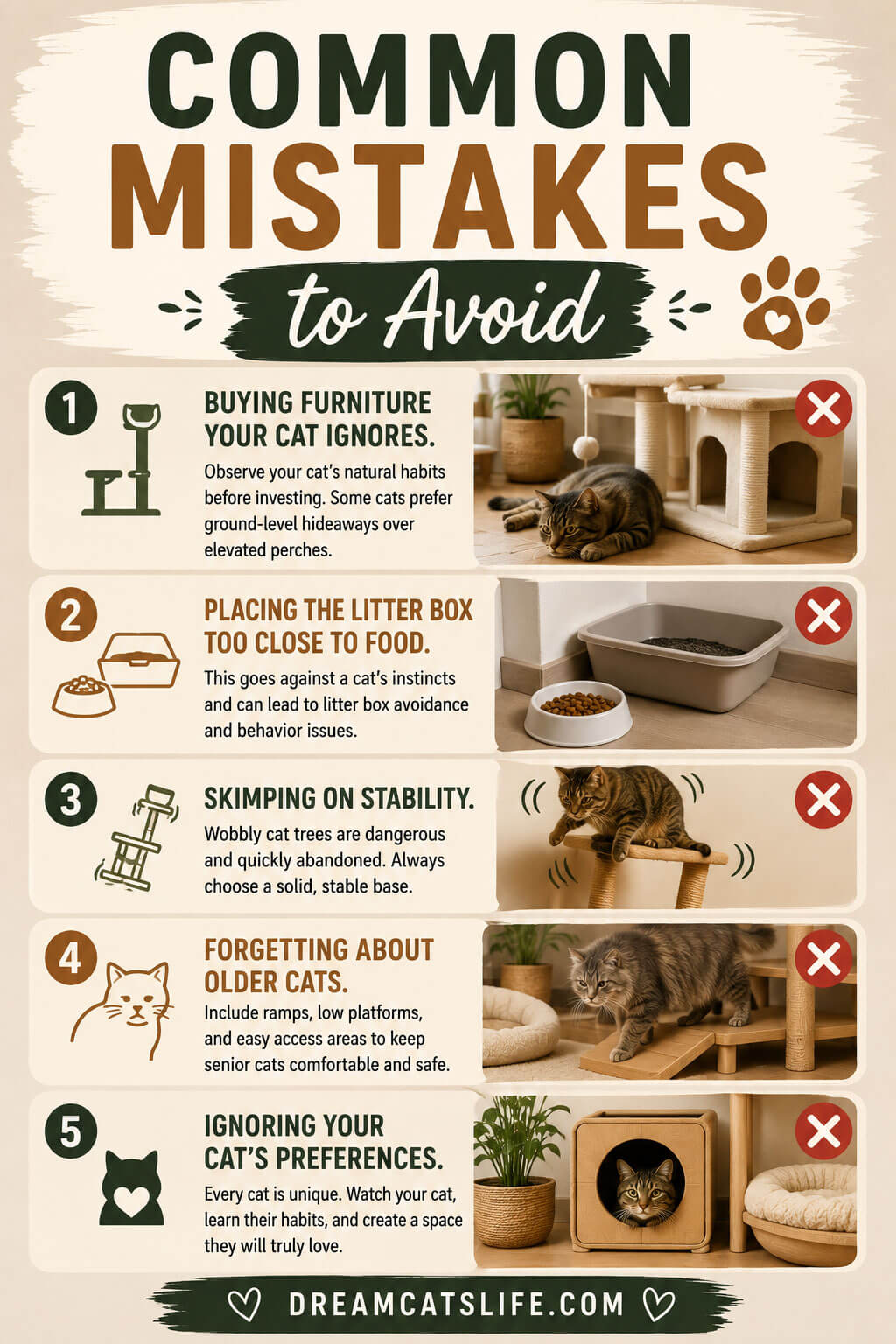
Buying furniture your cat ignores. Cats can be picky. Before investing in an expensive cat tree, make sure your cat is actually a climber. Some cats prefer ground-level hideaways over elevated perches. Observe your cat’s natural habits first.
Placing the litter box too close to food. This violates a cat’s instincts and can lead to litter box avoidance — one of the most common behavior problems in indoor cats.
Skimping on stability. Wobbly cat trees are dangerous and quickly abandoned. Always prioritize a solid, stable base over visual appeal.
Forgetting about older cats. Senior cats may develop arthritis or joint pain that makes climbing difficult. Include low-to-the-ground ramps and wide, easily accessible platforms in any setup shared with an aging cat.
Ignoring your cat’s preferences. Not every cat wants the same thing. Some love high perches; others prefer enclosed ground-level dens. Pay attention to where your cat naturally gravitates and design around that.
Budget Considerations
Cat corners don’t have to be expensive. Here’s a rough breakdown of what you can achieve at different budget levels:
Budget-friendly (under $100): A basic cat tree, a corrugated cardboard scratcher, a window perch, and a cozy bed cover the fundamentals. DIY shelving with floating shelves from a hardware store can create a wall-mounted cat highway for very little cost.
Mid-range ($100–$400): Quality cat trees with multiple platforms, furniture-style litter box enclosures, and a pet water fountain. This tier also opens up matching, aesthetically designed sets from specialty cat furniture brands.
Premium ($400+): Custom built-in cat furniture, catios, high-end Scandinavian or Japanese-designed cat trees, and full modular wall systems. These are long-term investments that genuinely add to your home’s character.
💰 Cat Corner Budget Calculator
Select the items you’d like to include and estimate the cost of your perfect cat corner.
Final Thoughts
The best cat corner ideas are the ones that are tailored to your cat’s unique personality, your home’s layout, and your own sense of style. Start with the essentials — climbing, scratching, sleeping, eating, and playing — and build from there as you learn what your cat loves most.
A well-designed cat corner isn’t just a nice-to-have luxury. It’s one of the most impactful things you can do for your indoor cat’s physical health, mental wellbeing, and overall happiness. And when your cat is happy, your furniture — and your sanity — tends to stay in much better shape too.
Take it one element at a time, observe what your cat gravitates toward, and don’t be afraid to rearrange and experiment. The perfect cat corner is a living space that evolves with your cat — and that’s what makes it so rewarding to create.