Cat Breeds: An Exploration of Feline Diversity
Walk into any cat show, and you’ll see an astonishing range of felines: fluffy giants, sleek and elegant shorthairs, wrinkled hairless cats, and kittens with ears that curl backward or fold forward. Yet every one of them belongs to the same species, Felis catus, the domestic cat. So how did a single species, descended from a small desert hunter, split into dozens of recognized breeds? And how many cat breeds are there, really?
This guide answers those questions. You’ll learn how many cat breeds exist, how breeds are classified, when they emerged, how cats were domesticated, and what separates a purebred from the everyday domestic cat curled up on millions of sofas worldwide. Whether you’re a prospective owner, a curious reader, or a longtime cat lover, this overview will help you see the big picture of cat breeds.
How Many Cat Breeds Are There?
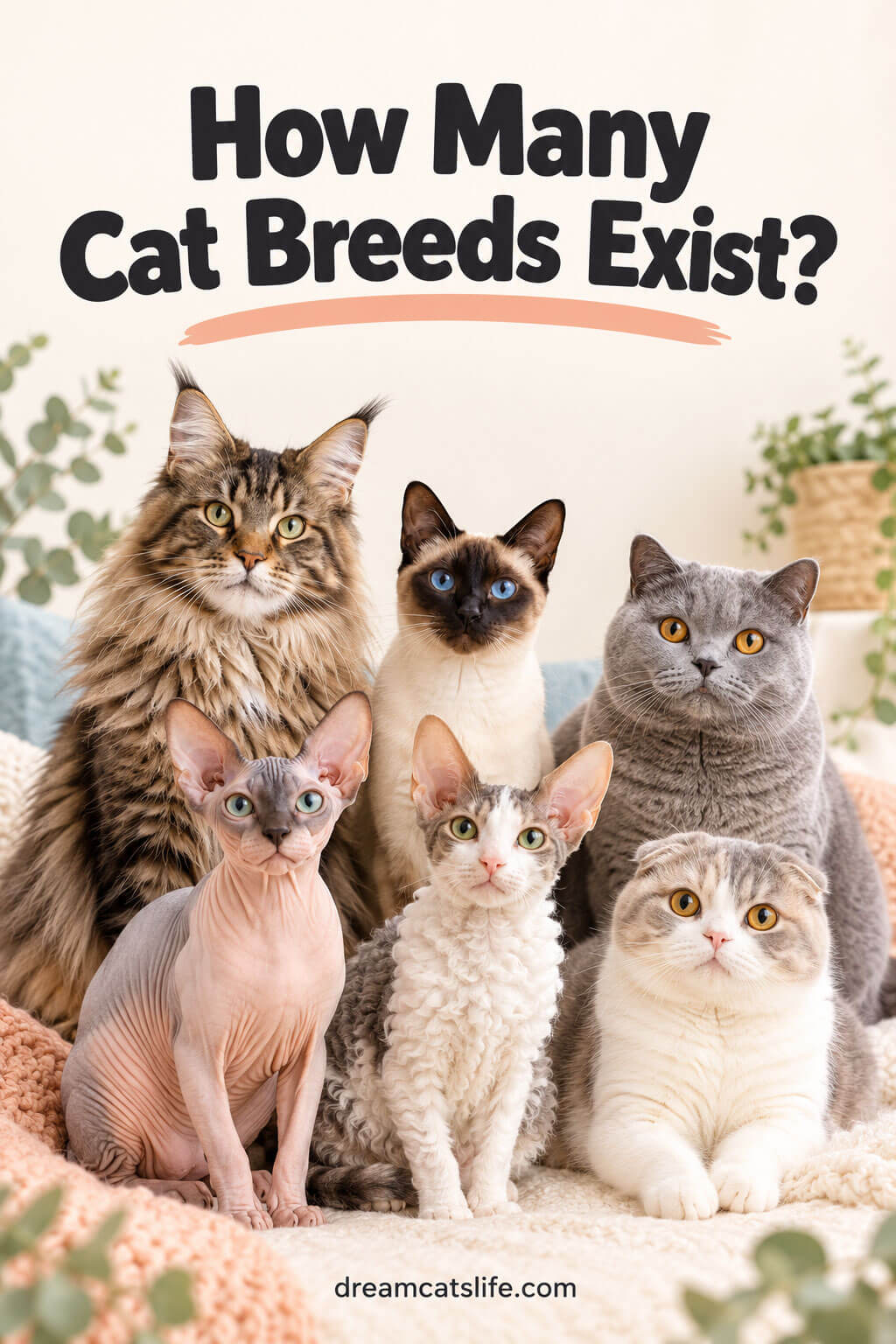
The honest answer is: it depends on who you ask. Unlike dogs, which have a single dominant international body (the FCI) that recognizes roughly 350 breeds, the cat world has no universal authority. Instead, several independent cat registries each decide which breeds they accept, and their lists differ.
Here is a rough comparison of the major registries:
| Registry | Founded | Region | Approximate number of recognized breeds |
|---|---|---|---|
| The International Cat Association (TICA) | 1979 | Worldwide, strong in the U.S. | About 70 or more |
| Cat Fanciers’ Association (CFA) | 1906 | United States | About 45 |
| Fédération Internationale Féline (FIFe) | 1949 | Europe and beyond | About 50 |
| Governing Council of the Cat Fancy (GCCF) | 1910 | United Kingdom | About 40 to 45 |
| World Cat Federation (WCF) | 1988 | Europe and beyond | About 60 or more |
These figures shift as registries grant new recognition, so treat them as ballpark numbers. In total, somewhere between 45 and 75 cat breeds are widely recognized, and if you count every experimental and developing breed, the number climbs higher still. That is far fewer than dogs, and there is a good reason for it: cats were never bred for dramatically different jobs. Dogs herded, hunted, guarded, and pulled sleds. Cats mostly did one thing, catch mice, and they did it well without any human help.
The Domestication Story: How Wild Cats Became Housecats
To understand cat breeds, you first have to understand where cats came from. The story begins roughly 10,000 years ago in the Fertile Crescent, the region of the Near East where humans first started farming.

A Cat That Domesticated Itself
As early farmers began storing grain, they attracted rodents. Rodents, in turn, attracted a small wild predator: the Near Eastern wildcat (Felis silvestris lybica). The bolder, more tolerant cats found an easy food supply near human settlements, and people tolerated them because they kept pests under control. Scientists call this the commensal pathway, and it is why many researchers say that cats essentially domesticated themselves. Humans did not capture and tame them so much as accept them.
The oldest widely cited evidence of a close bond comes from Cyprus, where a cat was buried alongside a human roughly 9,500 years ago. Because wildcats are not native to the island, people must have brought the cat there by boat, which suggests an early and genuine relationship.
Egypt and the Spread Across the World
Ancient Egypt elevated cats to extraordinary status. They were associated with the goddess Bastet, appeared throughout Egyptian art, and were mummified by the thousands. A major 2017 study of ancient cat DNA found that domestic cats spread from the Near East in at least two waves: one with Neolithic farmers moving into Europe, and a second, later wave involving Egyptian cats that traveled along trade routes and aboard ships during the Classical era. Cats were valued shipboard pest controllers, and that is how they reached ports across the Mediterranean, Europe, and beyond.
The Romans carried cats throughout their empire. By the Middle Ages, cats were common across Europe and Asia, and travelers brought them to the Americas with European settlement.
Barely Changed From the Wild
Here is a surprising fact: domestic cats are genetically very close to their wild ancestors. Compared with dogs, cats show relatively modest genetic changes from domestication, mainly in genes linked to behavior, tameness, and coat color. This is one reason the average housecat still stalks, pounces, and hunts with the instincts of a wild predator.
Landraces and Natural Breeds: The First “Breeds”
For thousands of years, nobody was breeding cats on purpose. Instead, isolated regions developed natural breeds, also called landraces: cat populations that adapted to a local climate and diverged through geographic isolation and natural selection rather than human design.
Examples of natural breeds include:
- Maine Coon: a large, shaggy-coated cat from the harsh winters of Maine, now the state cat.
- Norwegian Forest Cat: a thick-coated cat from Scandinavia, built for snow.
- Siberian: a hardy, triple-coated cat from Russia.
- Turkish Van and Turkish Angora: ancient cats from the region of modern Turkey.
- Egyptian Mau: a naturally spotted cat that resembles those in ancient Egyptian art.
- Siamese and Korat: cats from Thailand, documented in old manuscripts.
- Japanese Bobtail: a short-tailed cat with a long history in Japan.
- Manx: the tailless cat of the Isle of Man, a product of island isolation.
These cats looked and behaved the way they did because their environment shaped them. Many of today’s most beloved breeds began as local cats that people simply admired and eventually preserved.
The Birth of the Cat Fancy
The idea of deliberately breeding and showing cats is surprisingly recent. The modern cat fancy, the hobby of breeding, exhibiting, and appreciating pedigreed cats, began in Victorian Britain.
In July 1871, the first organized cat show took place at the Crystal Palace in London, arranged by artist and writer Harrison Weir. Weir wrote the first standards describing ideal cats, and he is often called the father of the cat fancy. Visitors were fascinated, and cat shows quickly spread.
The movement soon crossed the Atlantic. A show in New York’s Madison Square Garden in 1895 drew American crowds, and the Cat Fanciers’ Association was founded in 1906. Britain’s GCCF followed in 1910, FIFe in 1949, and TICA in 1979. Each registry wrote its own breed standards, which is why the lists of recognized breeds differ today.
Importantly, most of the breeds we know did not exist in their modern form until the 20th century. Early shows featured simple categories, mainly longhairs and shorthairs. As interest grew, breeders began refining specific looks, and new breeds appeared, often from chance mutations that caught someone’s eye.
How Cat Breeds Are Classified
There is no single, official way to sort cat breeds, but experts and registries commonly group them using a few key criteria. Understanding these categories makes the long list of breeds much easier to navigate.
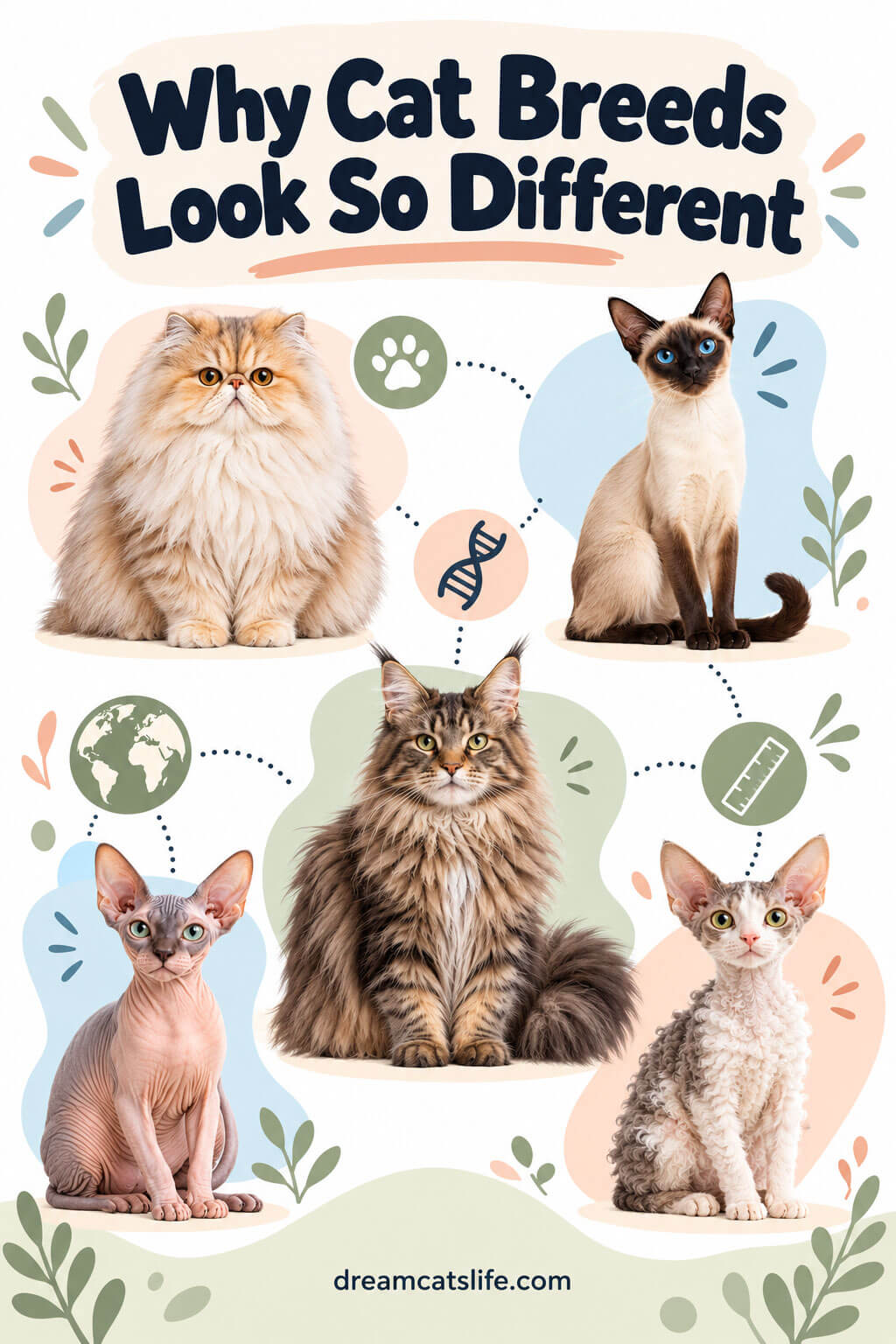
1. By Origin: Natural, Mutation, Hybrid, and Man-Made
Breed historians often sort cats by how the breed came to exist:
- Natural breeds developed on their own in a region, such as the Maine Coon or Turkish Angora.
- Mutation breeds began with a spontaneous genetic mutation that breeders then preserved. The Scottish Fold (folded ears, first found in Scotland in 1961), the American Curl (curled ears, California, 1981), the Sphynx (hairless, Toronto, 1966), and the Cornish Rex (curly coat, England, 1950) all fit here.
- Hybrid breeds come from crossing domestic cats with wild species. The Bengal (Asian leopard cat crosses) and the Savannah (serval crosses) are the best-known examples.
- Man-made or crossbred breeds were designed by combining existing breeds. The Ragdoll, developed in California in the 1960s, and the Ocicat, created in the 1960s by crossing Siamese and Abyssinian lines, are examples.
2. By Coat Length and Type
The simplest and most common classification is by coat:
- Longhair breeds, such as the Persian, Maine Coon, Ragdoll, and Birman.
- Semi-longhair breeds, such as the Norwegian Forest Cat and Turkish Angora.
- Shorthair breeds, such as the British Shorthair, American Shorthair, and Abyssinian.
- Curly-coated breeds, such as the Cornish Rex, Devon Rex, and Selkirk Rex.
- Hairless or nearly hairless breeds, such as the Sphynx and Peterbald.
3. By Body Type
Many registries and judges classify cats by body conformation, ranging from round and stocky to long and elegant:
- Cobby: compact, rounded, and heavy-boned, like the Persian and Exotic Shorthair.
- Semi-cobby: sturdy and muscular but less extreme, like the British Shorthair.
- Semi-foreign: balanced and moderate, like the Abyssinian and Egyptian Mau.
- Foreign: lean, fine-boned, and graceful, like the Russian Blue.
- Oriental: long, angular, and slender with large ears, like the Siamese and Oriental Shorthair.
- Large and substantial: big, rugged cats such as the Maine Coon and Norwegian Forest Cat.
4. By Registry Status
Breeds also move through stages of recognition. A new breed typically starts as an experimental or “new breed” category, advances to preliminary or provisional status, and finally earns championship status, which allows it to compete for top honors in shows. This is why you may see a breed recognized by one registry but still developing in another.
5. By Genetic Relationship
Modern DNA research offers a fifth perspective. Genetic studies of cat breeds have found that many breeds cluster into broad groups that reflect their geographic origins, such as European, Mediterranean, and Asian lineages, with some breeds clearly sharing recent ancestry. The research also shows that many pedigreed breeds are genetically young, often founded by a small number of cats within the last century.
A Tour of the Major Cat Breed Groups
To bring the classifications to life, here is a quick tour of the main groups, with historical highlights.
Ancient and Natural Breeds
The Siamese is one of the most historically documented breeds. Illustrations of Siamese-type cats appear in old Thai manuscripts, and the breed reached Britain in the 1880s, where it caused a sensation. The Persian, with its long coat and flat face, was imported to Europe from the Middle East in the 1600s and became the most popular show cat of the Victorian era. The Abyssinian carries a ticked, wild-looking coat, and its exact origins remain debated, though it was developed largely in Britain in the 19th century.
Rugged Northern Longhairs
The Maine Coon, Norwegian Forest Cat, and Siberian share thick, water-resistant coats, tufted paws, and sturdy builds. These cats evolved to survive cold climates, and they are some of the largest domestic cat breeds, with male Maine Coons often weighing 15 to 18 pounds or more.
Classic Shorthairs
The British Shorthair and American Shorthair descend from working cats that traveled with Europeans and kept ships and barns free of rodents. They are known for stocky builds, dense coats, and easygoing temperaments. The American Shorthair’s ancestors reportedly arrived on early ships to North America, which is why the breed is considered a symbol of cats’ working-class heritage.
Oriental and Foreign Types
Slender, vocal, and social, the Siamese, Oriental Shorthair, Burmese, Tonkinese, and Balinese share Southeast Asian roots or ancestry. Many modern Burmese cats trace back to a single female, Wong Mau, brought from Burma to the United States in the 1930s.
Curly, Hairless, and Unusual Breeds
Some of the most eye-catching breeds came from spontaneous mutations. The Sphynx is hairless (though its skin still needs regular care). The Cornish Rex and Devon Rex have soft, wavy coats, while the Scottish Fold has distinctive folded ears and the American Curl has ears that curve backward. The Manx and the American Bobtail have shortened or absent tails.
Hybrid Breeds
The Bengal was developed starting in the 1960s through crosses between domestic cats and the Asian leopard cat, with the goal of producing a domestic cat with a wild-looking coat. After several generations of breeding, Bengals are now fully domestic and are among the most popular breeds worldwide. The Savannah, a cross with the African serval first produced in the 1980s, is larger and more controversial, and some regions restrict early-generation hybrids.
Purebred Cats vs. Domestic Cats
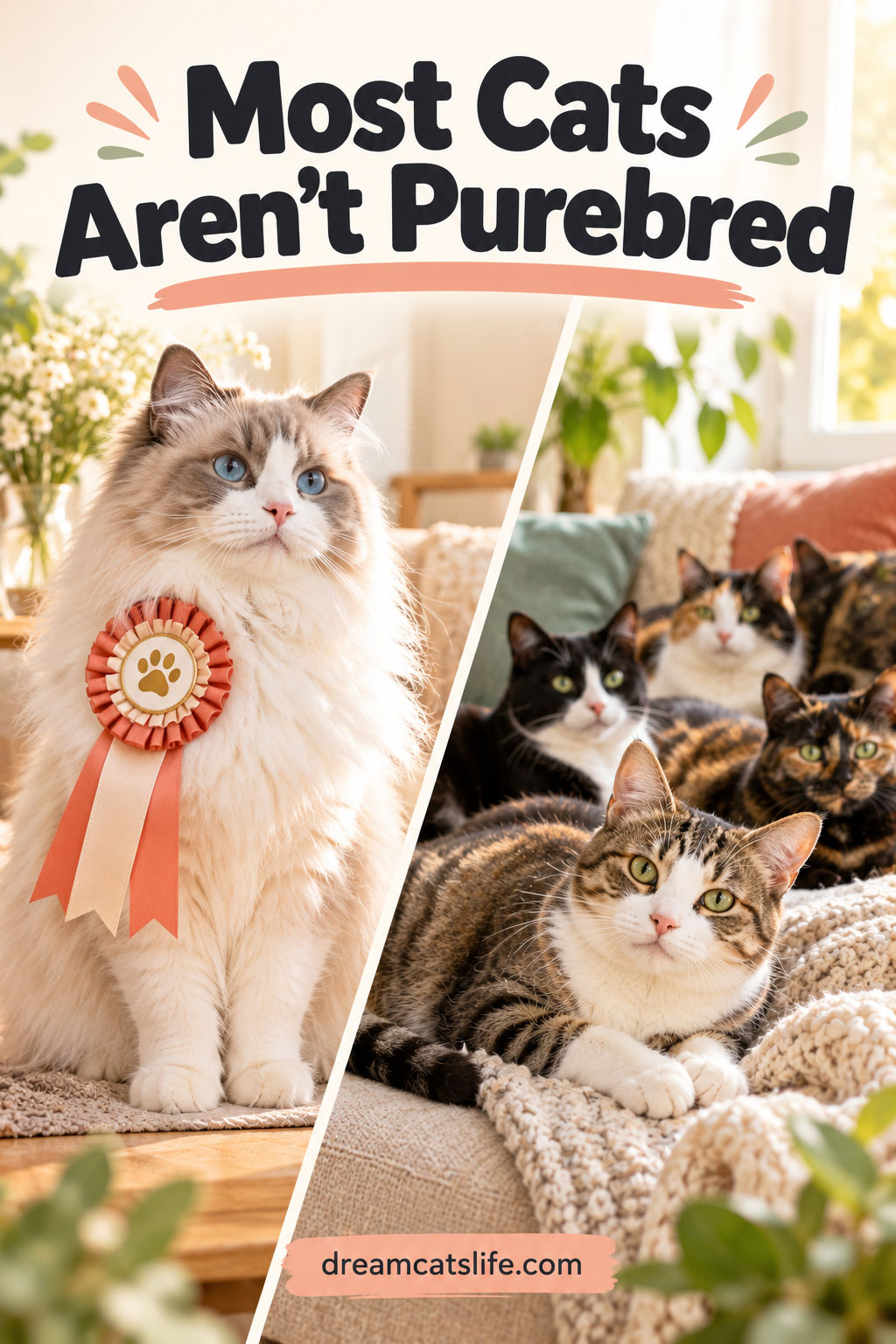
Here is something many people are surprised to learn: the vast majority of the world’s cats are not purebred. Most pet cats are domestic shorthairs, domestic mediumhairs, or domestic longhairs, terms that simply describe coat length in mixed-breed cats. Pedigreed cats are a small minority, often estimated at around 5 percent or less of the pet cat population.
That doesn’t make everyday cats any less special. Domestic cats come in every coat pattern imaginable, including tabby, tuxedo, calico, tortoiseshell, and solid colors, and they often make wonderful companions. Many shelters are full of them, and adopting a mixed-breed cat is a great choice for most households.
A purebred cat does offer one advantage: predictability. If you choose a Ragdoll, you can reasonably expect a large, docile, affectionate cat. If you choose a Siamese, you can expect a talkative, social one. Temperament and size in a domestic cat are harder to forecast.
Health and Ethics in Cat Breeding
Selective breeding can concentrate both beautiful traits and health problems. Responsible owners and breeders pay attention to several well-known concerns:
- Flat-faced breeds such as the Persian and Exotic Shorthair can have breathing difficulties, tear-duct problems, and dental crowding.
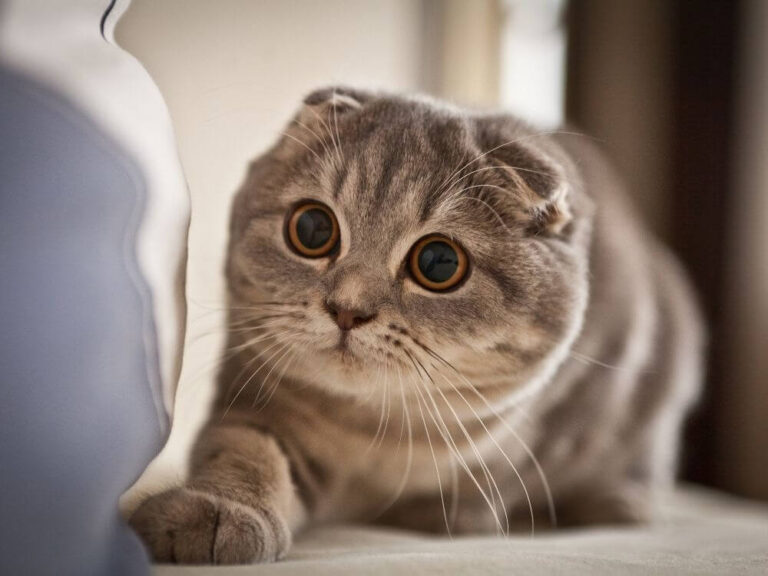
- Scottish Folds carry a gene that affects cartilage, which can cause painful joint disease. For this reason, some countries and registries restrict or discourage folded-ear breeding.
- Hypertrophic cardiomyopathy (HCM), a heart condition, appears in several breeds, including the Maine Coon, Ragdoll, and Sphynx. Genetic testing and heart screening help reduce risk.
- Polycystic kidney disease (PKD) is a known issue in Persians and related breeds, and a DNA test is available.
If you want a purebred cat, look for a reputable breeder who health-tests breeding cats, raises kittens in the home, and is transparent about family history. Also consider breed-specific rescues, which often have adult purebred cats in need of homes.
How to Choose the Right Cat Breed for You
When picking a breed, think beyond looks. A few practical questions can guide your decision:
- How much grooming can you handle? Longhaired cats like Persians and Maine Coons need regular brushing. Short-coated cats like the British Shorthair are easier.
- How active do you want your cat to be? Bengals, Abyssinians, and Siamese are energetic and need plenty of play. Ragdolls, Persians, and British Shorthairs are typically calmer.
- How social is the cat? Some breeds, such as the Siamese and Burmese, crave constant company. Others are more independent.
- Do you have allergies? No cat is truly hypoallergenic, but some people tolerate certain breeds, such as the Siberian, better than others.
- How much space do you have? Large breeds like the Maine Coon appreciate room to roam and climb.
Remember that individual personality always matters. Even within a breed, no two cats are alike, so spend time with a cat before committing.
Frequently Asked Questions About Cat Breeds
How many cat breeds are there in the world?
Between roughly 45 and 75 breeds are officially recognized, depending on the registry. The Cat Fanciers’ Association recognizes about 45, while TICA recognizes 70 or more. Counting experimental breeds raises the total further.
What is the oldest cat breed?
No one can say for certain, but natural breeds with long documented histories include the Egyptian Mau, Siamese, Persian, Turkish Angora, and Japanese Bobtail. All cats trace back to the same wildcat ancestor roughly 10,000 years ago.
What is the most popular cat breed?
Popularity varies by registry and year, but the Ragdoll, Maine Coon, Exotic Shorthair, British Shorthair, and Persian consistently rank near the top in registrations.
When were cats domesticated?
Evidence points to about 10,000 years ago in the Near East, with the Cyprus burial of about 9,500 years ago offering some of the earliest evidence of a human-cat bond.
Are mixed-breed cats healthier than purebreds?
Often, because they come from a larger gene pool, mixed-breed cats are less likely to carry inherited breed-specific conditions. However, any cat can develop health problems, so regular veterinary care matters for all.
What is the difference between a breed and a registry?
A breed is a group of cats with consistent, heritable traits. A registry is an organization that keeps pedigrees, sets breed standards, and decides which breeds are officially recognized.
Final Thoughts: One Species, Many Faces
The world of cat breeds is a story of adaptation, chance, and human fascination. It began with a small wildcat that wandered into early farming villages, spread across continents on trade routes and ships, adapted to local climates, and was finally shaped by Victorian-era enthusiasts and modern breeders into the diverse family we know today.
With dozens of recognized breeds, several competing registries, and millions of beloved mixed-breed companions, there is no single answer to what makes a cat a cat. But whether you share your home with a sleek Siamese, a fluffy Maine Coon, or a charming domestic shorthair from the local shelter, you are living with a creature whose story stretches back 10,000 years. That is something worth appreciating every time your cat curls up beside you.