How to Protect Your Cat’s Paws in Winter
When the first snow falls, it is easy to think of winter as a purely cozy season for cats, full of sunny windowsills, warm blankets, and a lap that is available at all hours. For cats that spend any time outdoors, though, and even for indoor cats that dash onto a snowy porch or ride in a carrier across an icy parking lot, winter can be surprisingly hard on their feet. Learning how to protect your cat’s paws in winter is one of the simplest ways to keep your cat comfortable, healthy, and free from the cracked pads, chemical burns, and frostbite that cold weather can cause.
In this guide, we will walk through exactly what snow, ice, and road salt do to a cat’s paws, which warning signs deserve your attention, and which habits make the biggest difference. You will find a simple post-outdoor routine, advice on balms and gear, a list of common mistakes to avoid, and clear guidance on when it is time to call your veterinarian.
Quick answer
To protect your cat’s paws in winter, limit time outdoors in freezing weather, wipe your cat’s paws with a warm damp cloth every time they come inside, and avoid letting them walk on salted or chemically treated surfaces. Keep the fur between the toes trimmed, check the pads regularly for cracks or redness, and call your vet if you see limping, bleeding, swelling, or pale, cold skin.
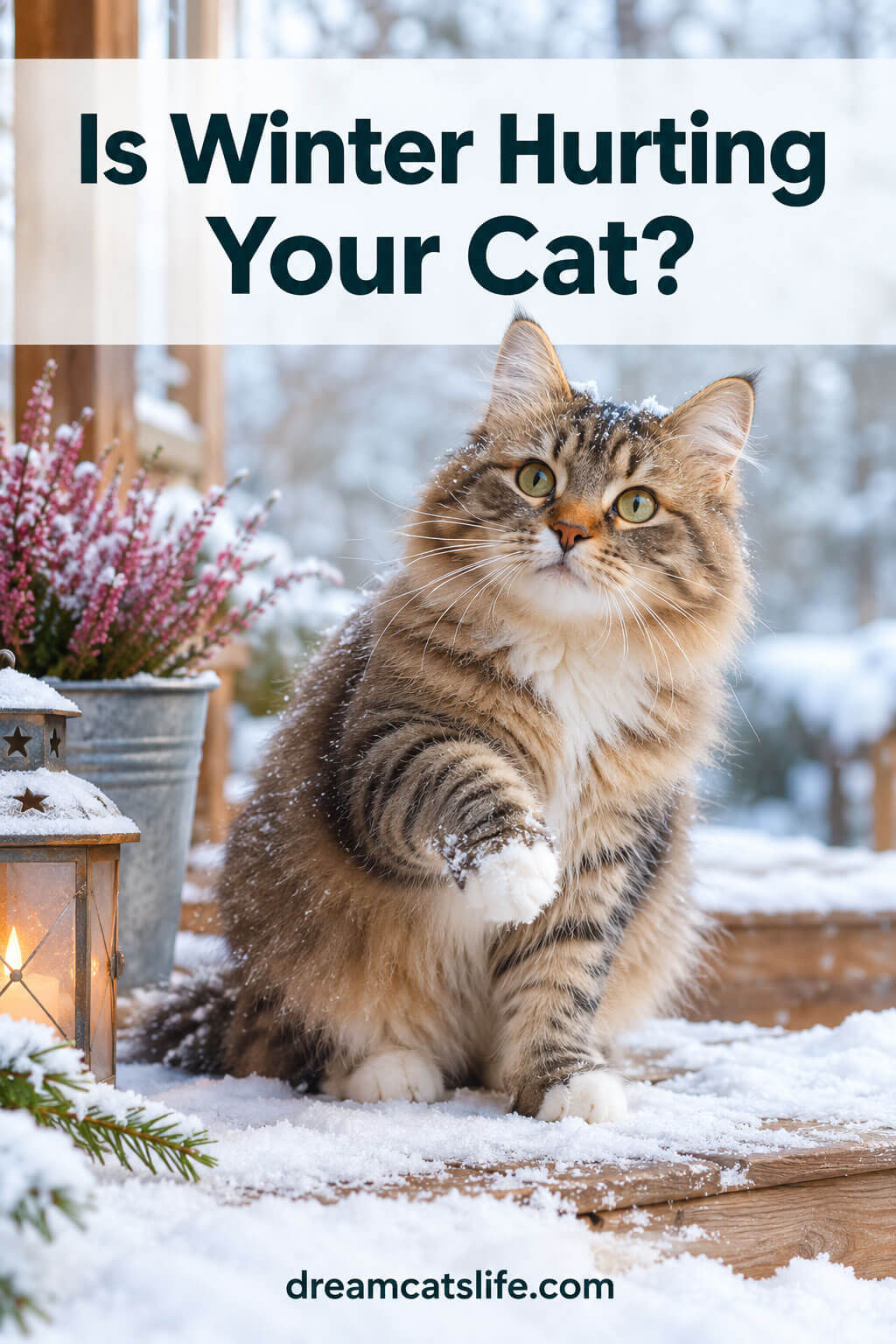
Why Winter Is Tough on a Cat’s Paws
A cat’s paw pads are remarkable pieces of natural engineering, designed to cushion every landing, muffle footsteps, and provide grip on almost any surface. They are made of thick, fatty tissue covered by a tough outer layer, which gives the impression that they can handle anything. In reality, paw pads are sensitive, contain sweat glands and nerve endings, and have no fur to insulate them, so they react strongly to extreme temperatures and harsh substances.
Winter attacks the paws from several directions at once. Freezing temperatures and dry air pull moisture out of the pad surface, which can lead to dryness and cracking. Ice and crusted snow can be rough or sharp enough to cause small cuts, and wet snow can pack into the fur between the toes and form painful ice balls. On top of that, the salt and chemical de-icers used on sidewalks, driveways, and roads can irritate or even burn the skin, and because cats are meticulous groomers, anything that sticks to their paws is likely to end up in their mouths.
The Main Winter Hazards for Cat Paws
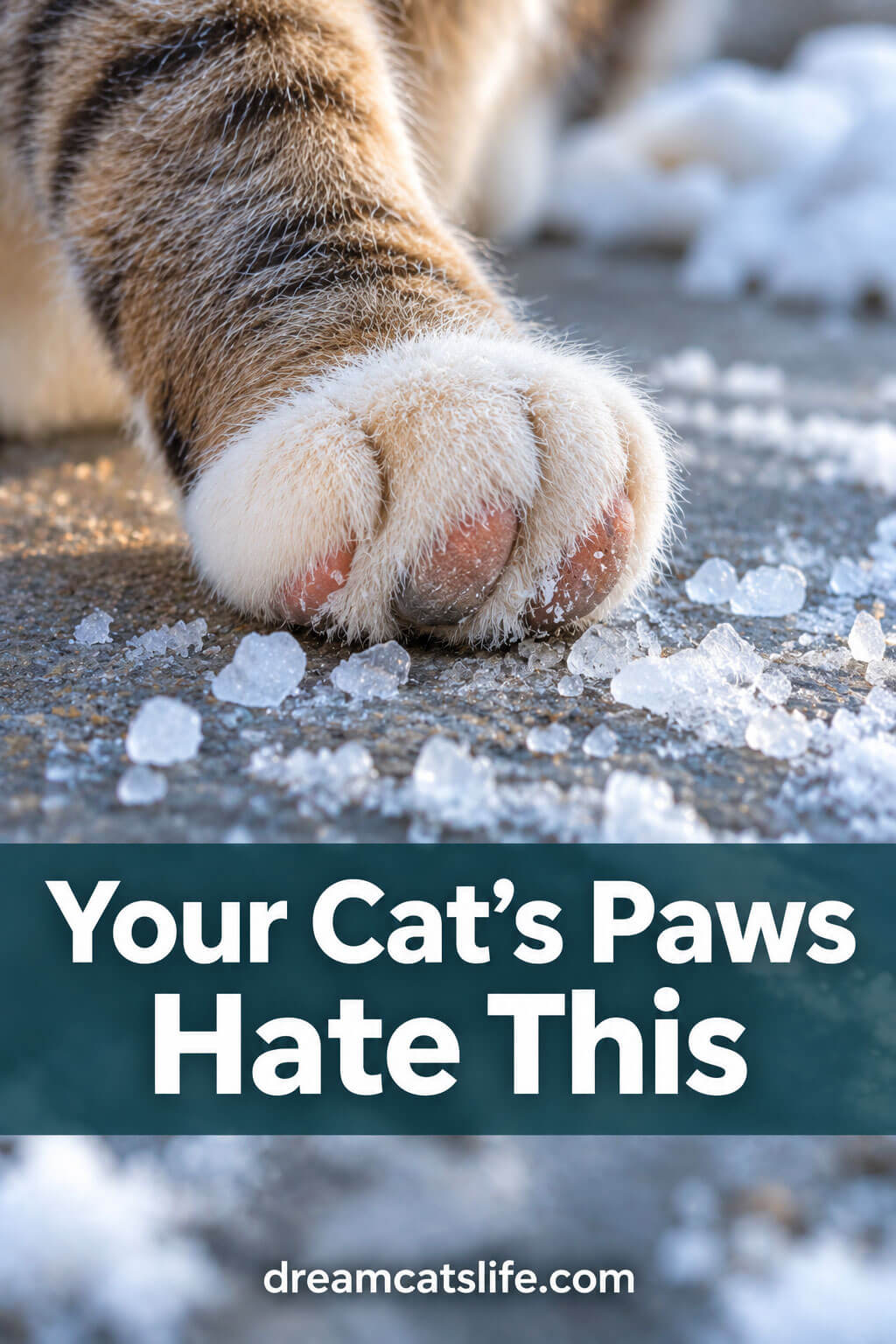
Snow and Ice
Fresh, fluffy snow is usually gentle, but the real trouble begins when it melts a little and refreezes. Crusted snow and icy patches can scratch the pads and leave tiny cuts, and snow that clumps between the toes can turn into hard ice balls that pull on the fur and make walking uncomfortable. Long-haired cats and breeds with fluffy toe tufts, such as Maine Coons and Norwegian Forest Cats, are especially prone to this, although any cat with fur between the toes can be affected.
Road Salt and Chemical De-Icers
Salt is one of the most common winter paw problems, and it is also one of the easiest to overlook. Rock salt and many commercial ice melts can dry out and irritate the pads, cause redness and small sores, and sting if they reach a cut. The larger concern is what happens next: when your cat grooms, they swallow whatever is on their paws. Small amounts may only upset the stomach, but larger amounts of salt or certain chemical de-icers can cause more serious problems, which is why a quick wipe-down after every trip outside is so valuable.
Antifreeze and Other Winter Chemicals
Antifreeze deserves a special mention because it is one of the most dangerous winter substances for cats. Some products contain ethylene glycol, which has a sweet taste that can attract animals and is highly toxic even in small amounts. A cat that walks through a puddle of leaked coolant and then licks their paws can be seriously poisoned. If you ever suspect your cat has contacted or swallowed antifreeze, treat it as an emergency and contact a veterinarian or an animal poison control hotline immediately, because early treatment makes a major difference.
Frostbite
Frostbite happens when skin and the tissue beneath it are damaged by extreme cold, and in cats it most often affects the paws, ear tips, and tail. Early on, the skin may look pale, bluish, or gray and feel unusually cold or hard. As the area warms up, it can become red, swollen, painful, or blistered, and in more severe cases the skin may darken over the following days. Wet fur and wind make frostbite much more likely, so a cat that gets soaked by slushy snow in below-freezing weather is at higher risk than one that quickly returns inside.
Warning Signs Your Cat’s Paws Are Struggling
Because cats are skilled at hiding discomfort, it pays to watch for subtle changes after your cat spends time outdoors or after a winter of frequent short trips. Some of the most common signs include:
- Excessive licking or chewing at the paws, which often means something is stinging, itching, or stuck between the toes.
- Limping, holding a paw up, or walking carefully, especially right after coming inside.
- Red, swollen, or cracked pads, or flaky, rough skin that looks very dry.
- Visible cuts, bleeding, or small sores on the pads or between the toes.
- Pale, gray, or very cold skin on the paws, ears, or tail, which can suggest frostbite.
- Drooling, vomiting, or unusual tiredness after being outside, which may point to swallowed salt or chemicals.
Your Simple After-Outdoors Paw Care Routine
The single most effective winter paw protection is a consistent routine that takes place every time your cat comes inside. It does not need to be elaborate, and cats that get used to it from a young age often accept it as a normal part of the day, especially if a treat is waiting at the end.
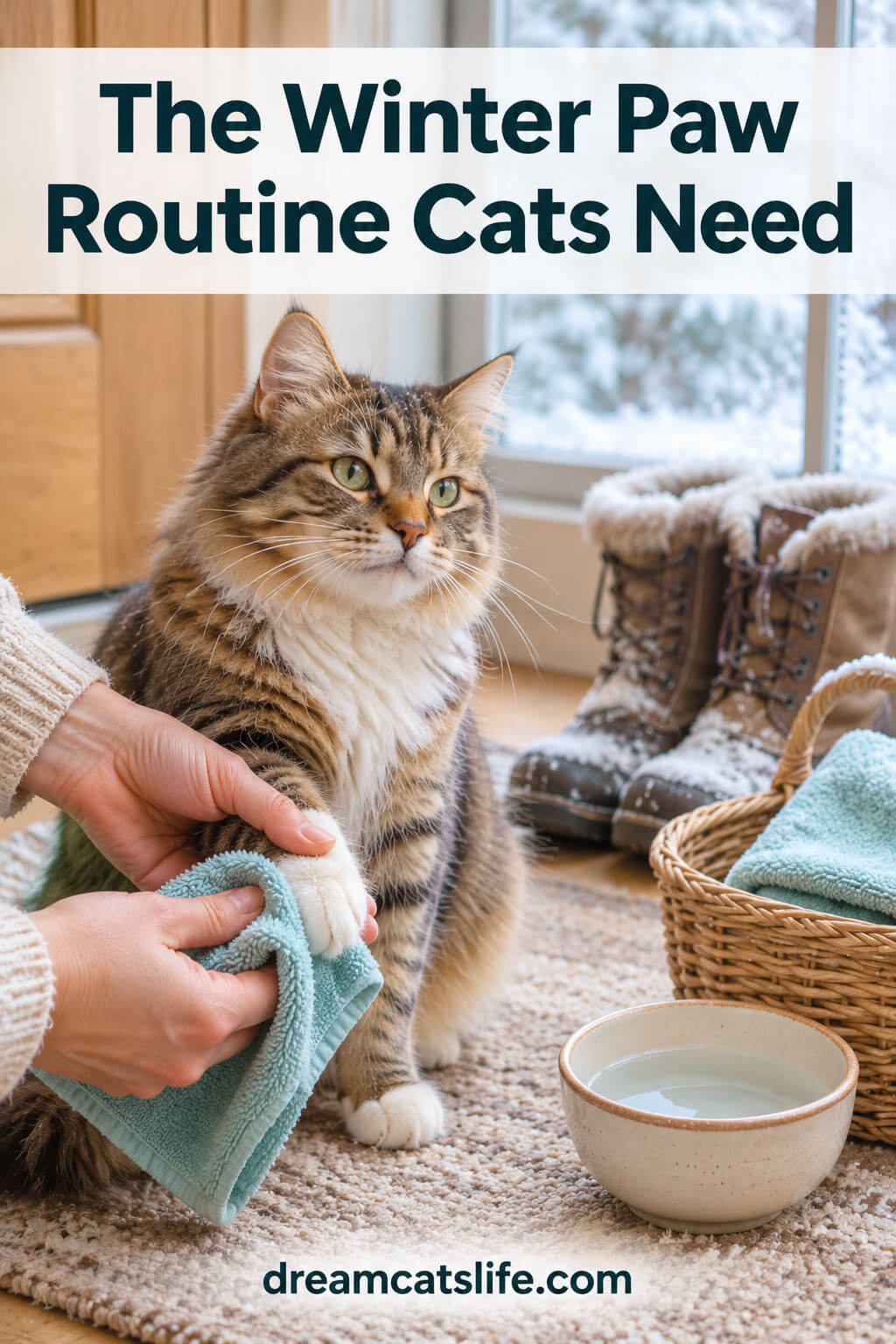
- Dry off any snow right away. Use a clean, absorbent towel to blot your cat’s paws and legs before the snow melts into the fur, since damp paws lose heat quickly and encourage cracking.
- Wipe each paw with a warm, damp cloth. Gently clean the pads and between the toes to remove salt, grit, and chemical residue, rinsing the cloth as needed. Plain warm water is perfectly fine, and some owners prefer unscented, pet-safe paw wipes because they are quick to grab and easy to keep by the door.
- Check for ice balls, cuts, and redness. Look between the toes, where snow and salt tend to hide, and remove any ice by letting it melt in your hands or with a warm cloth rather than pulling it from the fur.
- Dry thoroughly. Leftover moisture can irritate the skin, so pat the paws dry, especially if your cat has long fur.
- Offer a warm place to settle. A blanket away from drafts lets your cat recover from the cold while you finish the routine.
Pro tip: Keep a small basket by the door with a towel, a few soft cloths, and a bowl of lukewarm water. When the routine is quick and convenient, you are far more likely to stick with it on busy, cold mornings.
Protecting Paws Before They Go Outside
Trim the Fur Between the Toes
For long-haired cats, one of the best preventive steps is keeping the fur between the toes neatly trimmed. Shorter fur gives snow less to cling to, which means fewer ice balls and less trapped salt. Use small, blunt-tipped grooming scissors or a pet trimmer, work slowly, and trim only the fur that sticks out past the pads.
Consider a Pet-Safe Paw Balm
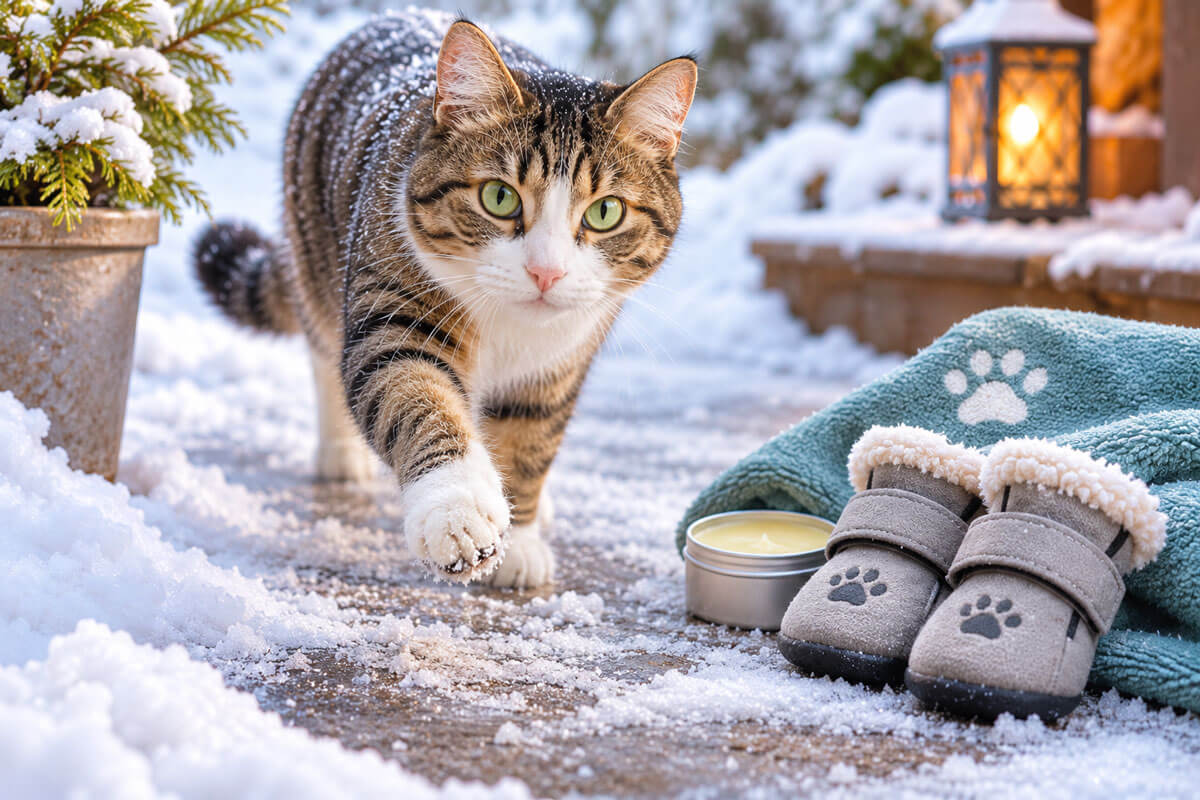
A protective balm can add a thin barrier against dryness and light irritation, which is useful for cats that spend regular time outside or have pads that crack easily in winter. If you decide to try one, choose a product made specifically for pets, such as a lick-safe paw balm for cats, and read the ingredients carefully. Apply only a very thin layer, and distract your cat with a treat or a bit of play for a few minutes afterward so they do not lick it all off right away. Balms are a helpful extra, but they do not replace wiping salt off after being outside.
Think Twice About Boots
Boots are often recommended for dogs, but most cats react to them with comical but determined resistance, such as high-stepping, freezing in place, or flopping over dramatically. A few cats do learn to tolerate soft, well-fitted booties, particularly if they are introduced gradually indoors with plenty of treats. For the majority, however, a short outdoor visit followed by a good wipe-down is more practical, and forcing boots on a stressed cat can be more upsetting than the cold itself.
Keep Your Own Surfaces Cat-Safe
Much of the winter chemical exposure your cat faces comes from places you can actually control, starting with your own steps and driveway. If you use ice melt, look for a product labeled pet-safe, such as a pet-safe ice melt for walkways, and apply it sparingly according to the directions. Keep in mind that “pet-safe” does not mean “safe to eat”, so it is still wise to wipe your cat’s paws and to store the container where curious pets cannot reach it. Shoveling promptly and using sand or traction grit for part of the job can also reduce how much de-icer you need in the first place.
Common Winter Paw Care Mistakes to Avoid

Even attentive cat owners can fall into a few habits that make winter harder on their cats than it needs to be. Here are the most common ones, along with easy fixes:
- Skipping the wipe-down on “just a quick trip.” Even a few minutes on a salted path can leave residue, so wipe paws every time, no matter how short the outing.
- Using human lotions or petroleum-based products. Cats lick their paws, and many human products are not meant to be swallowed, so stick to balms made for pets.
- Using harsh soaps, alcohol, or scented wipes. These can dry or irritate already stressed pads, so warm water or a gentle unscented pet wipe is best.
- Warming a cold cat with direct heat. Hot water, heating pads, or hair dryers can burn numb skin, so warm your cat gradually with blankets and a comfortable room temperature.
- Ignoring ice balls or tugging them out. Pulling can hurt and tear fur, while letting them melt in warm hands or with a warm cloth is far kinder.
- Assuming a thick coat means a cat is fine. Fur protects the body, but not the pads, ears, or tail tips, and wet fur loses most of its insulating power.
- Letting cats roam in dangerous weather. Freezing rain, deep snow, and extreme wind chill are risky for any cat, and winter is a good time to keep outings short and supervised.
Special Cases: Which Cats Need Extra Care?
Not every cat faces the same level of winter risk, and adjusting your approach for your cat’s age, health, and lifestyle makes your care more effective. Kittens, senior cats, and cats with arthritis, diabetes, or kidney disease have a harder time regulating their body temperature and recovering from cold exposure, so they should spend very little time outdoors in winter, if any. Short-haired and hairless breeds, such as Siamese, Devon Rex, and Sphynx cats, lose heat faster and may need to stay inside completely when temperatures drop near freezing.
Indoor cats need winter paw care too, although it looks a little different. Dry indoor air from heating systems can leave pads rough, and a cat that sprints outside through a door or rides in a carrier across a salted sidewalk will pick up the same residues as any outdoor cat. Make a habit of wiping paws after vet trips and any time your cat has been exposed to a wet, salted surface, and consider keeping a warm blanket in the carrier for cold days.
How Cold Is Too Cold for Cats?
Owners often want a clear temperature cutoff, but the truth is that tolerance varies with coat type, age, health, wind, moisture, and how long a cat stays out. As a general guideline, temperatures near or below freezing are risky for most cats, particularly when it is windy or wet, and the risk rises as the temperature falls. Healthy adult cats with thick coats may handle brief outings, while kittens, seniors, and thin-coated cats may struggle even in milder cold.
When to Call the Vet
Mild dryness or a bit of redness often improves with consistent wiping and gentle care, but certain signs should never be waited out. Contact your veterinarian promptly if you notice persistent limping, bleeding, deep cracks, swelling, pus, a bad smell, or blistered or discolored skin, since these can indicate infection or frostbite. If your cat has pale, cold skin after being outside, warm them gently with blankets and a warm room and call the clinic right away rather than rubbing the area, which can cause more damage.
Seek urgent help if your cat shows signs of swallowing de-icing chemicals or antifreeze, including drooling, vomiting, stumbling, unusual sleepiness, or excessive thirst. With antifreeze in particular, time matters, and a call to your vet or an animal poison control service should happen as soon as you suspect contact, even if your cat seems fine at the moment.
Frequently Asked Questions
Can cats get frostbite on their paws?
Yes. Paws, ear tips, and tails are the most vulnerable areas because they have less insulation and a limited blood supply in the cold. Skin that looks pale, gray, or feels very cold and later turns red, swollen, or blistered is a reason to warm your cat gently and call a veterinarian.
Is road salt dangerous for cats?
It can be. Salt can irritate and dry out the pads, and cats often swallow residue while grooming. Wipe your cat’s paws after outdoor time, and contact a veterinarian if you notice drooling, vomiting, lethargy, or excessive thirst.
Should I put boots on my cat in winter?
Boots are optional, and most cats dislike them. Wiping paws after outdoor time, trimming the fur between the toes, and limiting time outside are usually more practical ways to protect your cat.
Is it safe to use human lotion on cat paws?
It is best to avoid it, because cats lick their paws and can swallow whatever is on them. Choose a balm labeled safe for pets and use only a thin layer.
Final Thoughts
Winter does not have to be a hard season for your cat’s feet, because a few simple habits go a long way. Keep outdoor time short, wipe the paws every time your cat comes inside, trim the fur between the toes, and choose pet-safe products for your steps and your cat’s care. Pair those habits with a weekly paw check and a clear plan for when to call the vet, and you will be well prepared for whatever the weather brings.
Most importantly, pay attention to how your cat behaves, because they will usually tell you when something is off if you know what to look for. With a little preparation and a lot of patience, your cat can enjoy the quiet beauty of winter from a warm, safe spot, and their paws will be ready for spring.
This article is for general informational purposes and is not a substitute for professional veterinary advice. If you are worried about your cat’s health, or you suspect frostbite or poisoning, contact your veterinarian or an animal poison control service right away.