Do Cats Get Cold? 9 Signs Your Cat Is Feeling Chilly and How to Help
If you have ever watched your cat park herself on a heating vent, burrow under a pile of laundry or squeeze into a sunbeam the size of a coaster, you have probably wondered, do cats get cold? The short answer is yes, and often sooner than we do. Cats evolved from desert-dwelling ancestors, so they are happiest in warm, steady temperatures, and a house that feels perfectly comfortable to you in a sweater can feel noticeably chilly to a cat who is wearing nothing but her fur.
The tricky part is that cats are naturally quiet about discomfort, which means a chilly cat rarely complains in an obvious way. Instead, she gives small hints through her posture, her habits and even the way her ears feel when you pet her. In this guide, you will learn nine clear signs that your cat is feeling cold, which cats are most at risk, simple ways to warm your home up for them, the mistakes that can make things worse and the situations in which a trip to the vet is the smartest next step.
Quick answer
Yes, cats get cold, especially kittens, seniors, short-haired cats and cats with health problems. Common signs include seeking heat, curling into a tight ball, shivering, cold ears and paws, and sleeping more than usual. Most healthy cats are comfortable at about 65–78°F indoors, and you can help by providing warm, draft-free beds and avoiding unsafe heat sources.
Do Cats Really Get Cold?
Cats absolutely get cold, and understanding why makes it much easier to spot the signs. A cat’s normal body temperature is higher than ours, usually around 100.5 to 102.5°F, and she has to burn energy to keep it there. Because cats are small, they lose heat quickly compared with larger animals, and a thin layer of fur only goes so far when the air around them drops.
Most healthy adult cats feel comfortable when the room sits in the mid-60s to upper 70s Fahrenheit, though individual cats vary a lot. Several factors change how much cold a cat can handle. Coat type matters, but so do age, body weight, overall health, and whether the cat is used to cooler temperatures. A cat who has spent her whole life in a heated apartment will feel a sudden drop much more than a barn cat who has adjusted to the seasons over time.
9 Signs Your Cat Is Feeling Chilly
No single sign proves that your cat is cold, because many of these behaviors can also have other causes. What you are looking for is a pattern, particularly one that appears when the temperature drops or in the cooler rooms of your home.
1. She Keeps Seeking Out Warm Spots
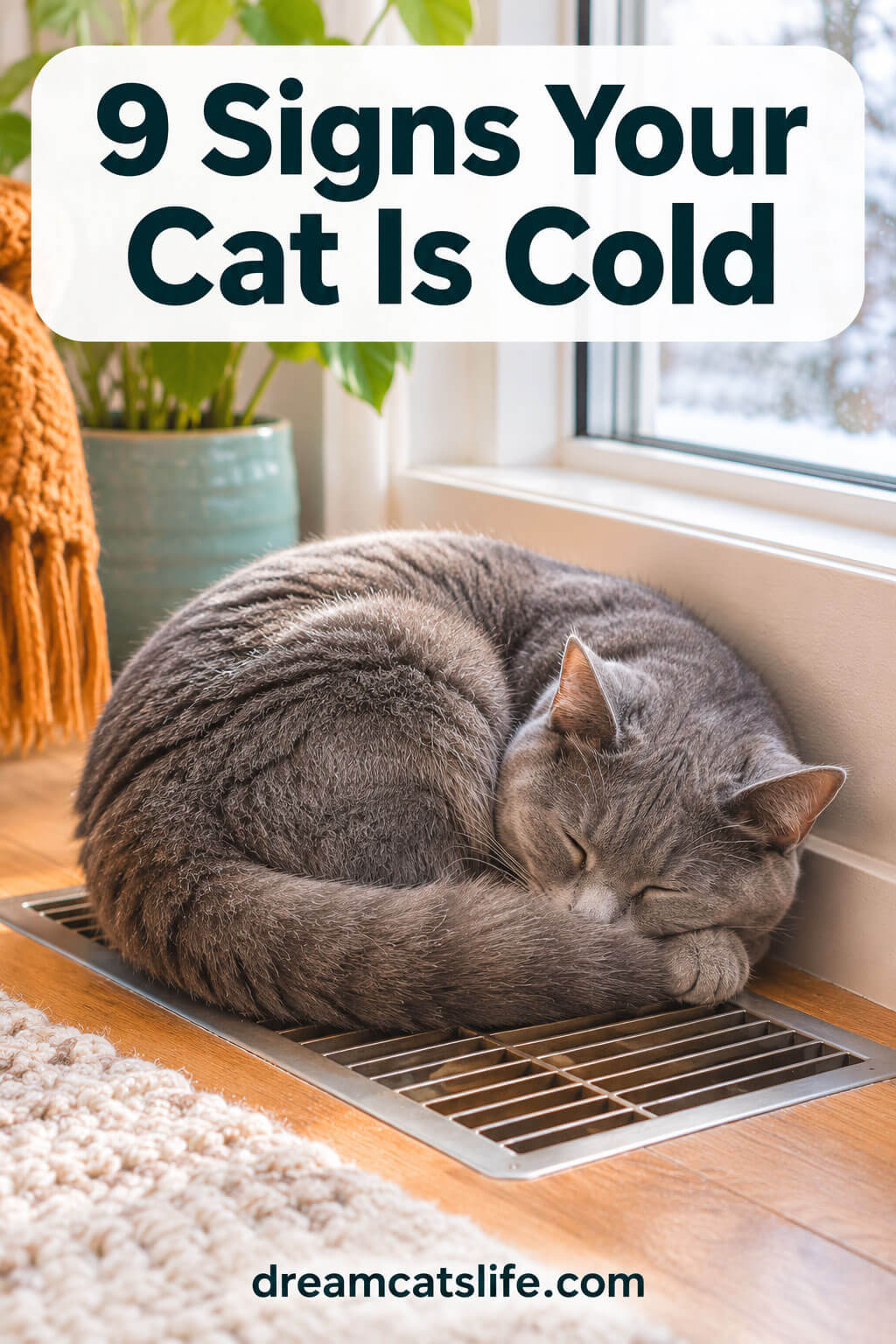
The most obvious clue is a sudden devotion to anything warm. If your cat is camped out on top of the radiator, sleeping on your laptop, hogging the spot over the heating vent or wedging herself against your legs on the couch, she is probably telling you that the rest of the room is not warm enough. A cat who has always loved sunbeams is simply being a cat, but a cat who suddenly follows heat sources around the house deserves a little extra attention.
2. She Curls Into a Tight Ball
Posture is one of the most reliable indicators of body temperature. When a cat is comfortable, she often sprawls out, stretches long or lies on her back with her belly exposed. When she is cold, she tucks her nose into her tail and pulls her legs underneath her, which reduces the amount of exposed surface area and helps her hold on to body heat. If your normally sprawling cat has turned into a neat little donut, take note of the room temperature.
3. You Notice Shivering or Trembling
Shivering is a cat’s muscles contracting rapidly to generate heat, and it is a clear signal that she is working hard to stay warm. Mild shivering after coming in from the cold or sitting near a drafty window can be resolved by simply warming her up. Persistent or intense shivering, however, can also point to pain, fear or illness, so if it continues once she is warm, it is worth mentioning to your vet.
4. Her Ears, Paws and Tail Feel Cold
Because cats have little fur on their ear tips and paw pads, these extremities are the first places to cool off. Gently touch her ears and toes when she is relaxed. If they feel noticeably cool compared with her body, she is likely losing heat faster than she would like. Do not rely on this test alone, since cats’ ears naturally run slightly cooler than the rest of the body, but a very cold ear tip combined with other signs is a helpful clue.
5. She Burrows Under Blankets and Into Hidden Spaces
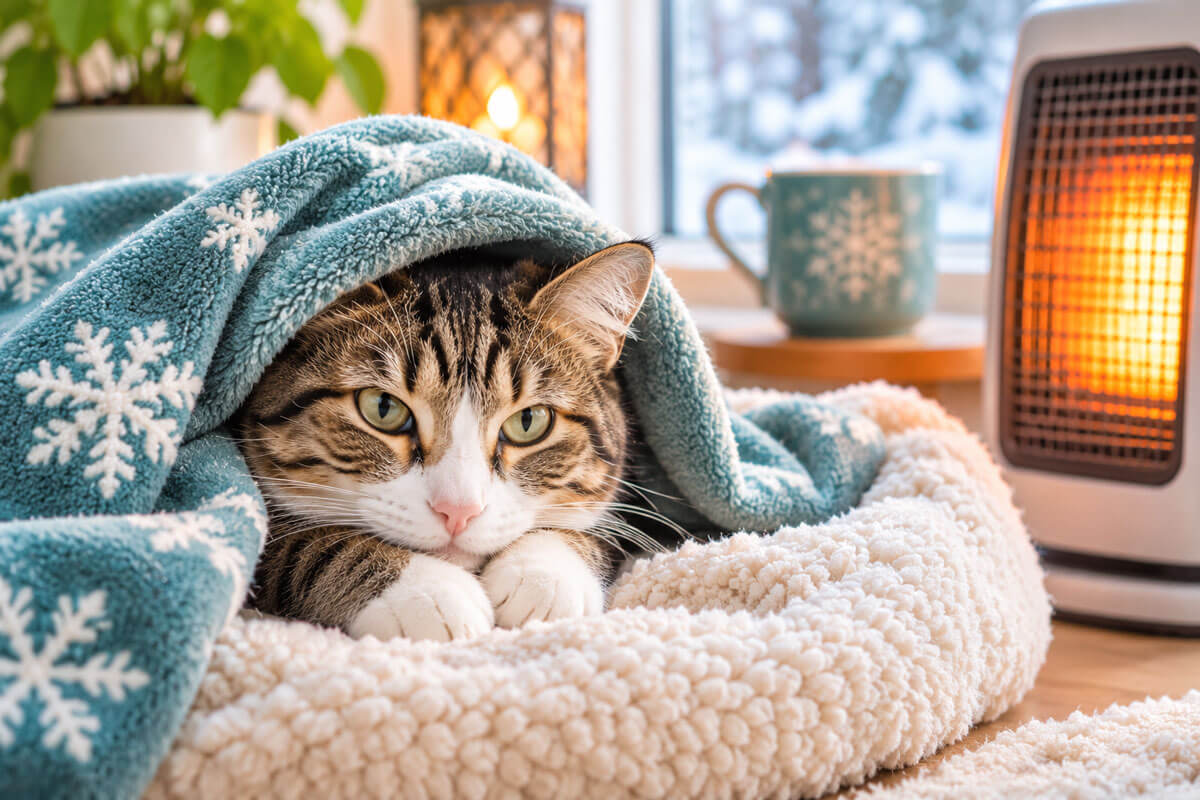
Cats love a good hiding place, but a sudden increase in burrowing is often about warmth rather than privacy. You may find her inside a dresser drawer, underneath the comforter, in a cardboard box lined with a towel or even inside a pile of clean laundry. Tight, enclosed spaces trap body heat, which is exactly why cats seek them out when the house is cool.
6. She Sleeps More and Moves Less
Cats already sleep somewhere between 12 and 16 hours a day, so extra naps can be hard to notice. Still, cold weather often makes cats less playful and more inclined to conserve energy, because moving around in a cold room burns calories without much reward. If your usually energetic cat has turned into a lump of fur who only leaves her bed for meals, the temperature may be part of the explanation.
7. Her Fur Looks Puffed Up
You may notice your cat looking fluffier than usual in winter. Cats can raise their fur, a reflex called piloerection, to trap a layer of warm air against the skin. Many cats also grow a slightly thicker coat as the days shorten, but if she looks puffy while sitting in a cool room and also showing other signs on this list, it is her built-in insulation at work.
8. She Sits in a “Loaf” With Her Paws Tucked Away
The classic loaf position, in which all four paws are hidden beneath the body, is common when cats are relaxed, but it is also a good way to keep the paw pads off cold floors. If she only loafs on tile or hardwood and rarely does so on carpet or a soft bed, the floor surface may simply be too cold for her. Offering a warm mat or a rug in that spot is an easy fix.
9. She Seems Stiff or Reluctant to Move
Cold temperatures can make joints feel achy, which is why older cats and those with arthritis often become more stiff and hesitant to jump when it is chilly. You may notice that she stops leaping onto the couch, takes the stairs more slowly or sleeps in the same low spot all day. Because arthritis is very common in senior cats but frequently goes unnoticed, a cat who seems stiff in the cold should get a checkup rather than just an extra blanket.
Which Cats Get Cold the Fastest?
While every cat can feel a chill, some are far more vulnerable than others, and these cats need extra attention when the temperature drops. Kittens cannot regulate their body temperature well during their first weeks of life, and even older kittens lose heat quickly because of their tiny size. Senior cats tend to have less muscle and body fat to keep them warm, and their circulation may not be as efficient as it once was.
Breeds and coat types play a part as well. Hairless cats such as the Sphynx, along with thin-coated breeds like the Cornish Rex and Devon Rex, have very little insulation and often need warm clothing or heated resting spots even in an ordinarily comfortable home. Short-haired and very slim cats also feel the cold more than a thick-coated Maine Coon or Norwegian Forest Cat, whose double coats were developed for harsh winters.
Finally, cats with medical conditions such as hyperthyroidism, kidney disease, diabetes, heart problems or anemia may struggle to maintain body heat. If your cat suddenly starts feeling cold all the time without a change in your home’s temperature, a veterinary visit is a good idea to rule out an underlying health issue.
How to Keep Your Cat Warm and Comfortable
The good news is that keeping a cat warm rarely requires anything dramatic. A few thoughtful adjustments around the house can make a big difference, and most of them also make your home cozier for you.

Start With the Room Temperature
The simplest step is to avoid letting your home get too cold, especially when you are away. Many cat owners lower the thermostat dramatically during the workday, but that can leave a cat alone for eight hours in a chilly house. Try keeping the temperature above 65°F during the day and consider a slightly warmer setting if you have a kitten, a senior or a hairless cat.
Give Her a Warm, Cozy Bed
A good bed is one of the best investments you can make for a cat who feels the cold. Look for something with raised sides or a hooded design, because these hold in warmth better than a flat cushion. A self-warming cat bed uses reflective material to bounce your cat’s own body heat back to her, so it needs no electricity and carries almost no risk. Place it somewhere quiet and draft-free.
Consider a Pet-Safe Heating Pad
For particularly cold nights or for a senior cat with stiff joints, gentle heat can be a real comfort. If you choose an electric option, look for a low-voltage heated cat pad with a chew-resistant cord that is designed specifically for pets and warms only to a mild temperature. Always cover it with a blanket, make sure your cat can move off it whenever she wants, and unplug it if you will be away for a long time. Never use a human heating pad in place of one made for animals, because these can get far too hot.
Add Soft Layers and Block the Drafts
Fleece blankets, thick towels and old sweaters can turn any corner into a cozy nest. A soft, washable fleece cat blanket is easy to move from room to room and simple to clean when it gets covered in fur. At the same time, look for cold spots in your home, such as gaps under doors, single-pane windows or tile floors, and address them with draft stoppers, window film or a rug. Getting your cat’s bed off the floor, onto a shelf or a chair, can also help, since cold air tends to settle at floor level.
Common Mistakes to Avoid When Warming Up a Cat
It is easy to make well-meaning mistakes when you are trying to keep a cat warm, and some of them can be dangerous. Keeping the following points in mind will keep your cat safe while she cozies up.
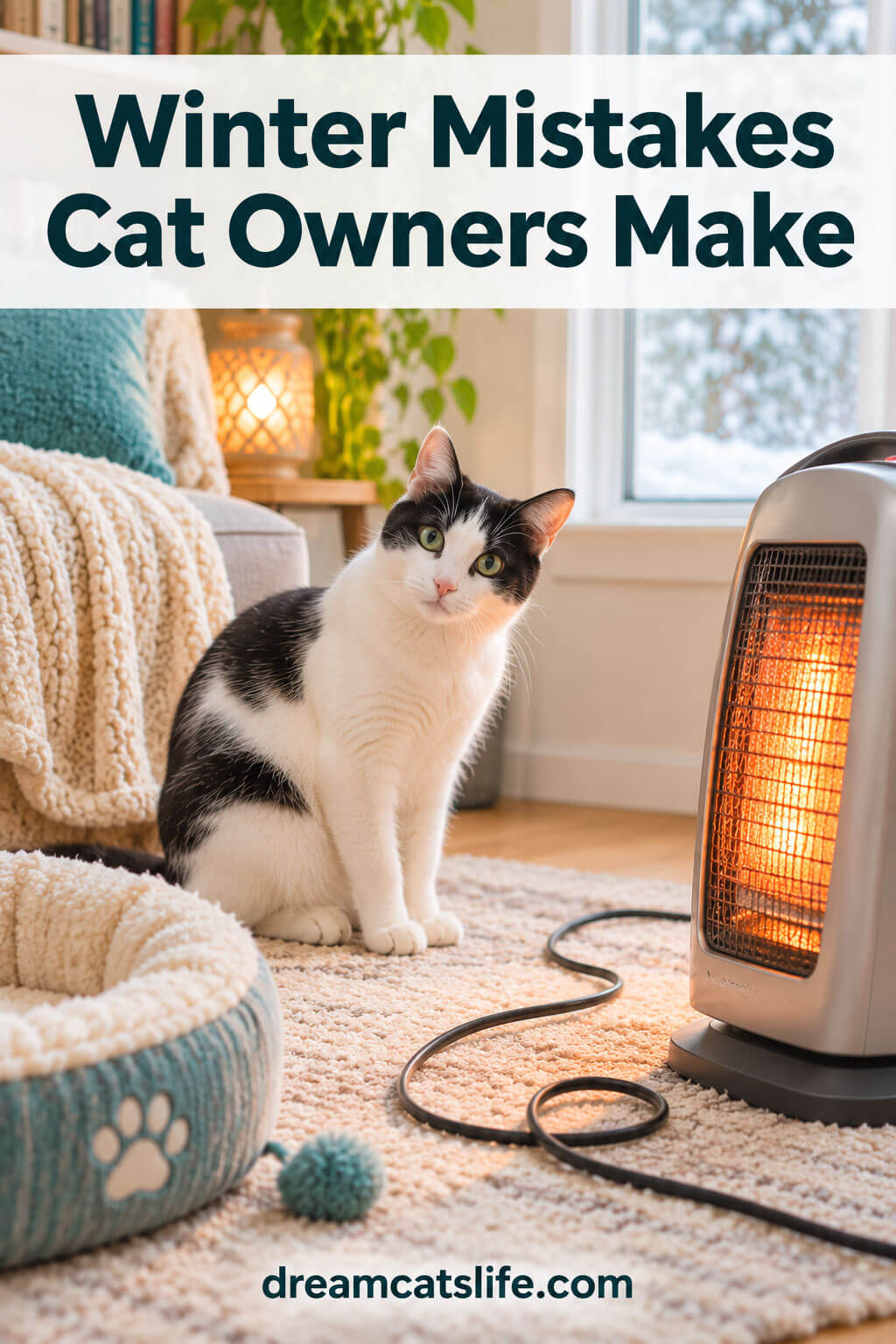
- Using space heaters carelessly. Cats can knock over a heater, singe their whiskers or burn their fur by getting too close. If you use one, choose a model with automatic tip-over shutoff and keep it out of her reach.
- Leaving a heating pad on a cat for hours. Cats can burn without realizing it, and the risk is higher for sleepy seniors or kittens. Stick with low-temperature pads made for pets and give her a way to move off.
- Putting a cat in a wet or damp environment. A damp cat loses heat much faster, so dry her thoroughly with a towel if she gets wet and keep her away from drafts until she is completely dry.
- Forcing clothes on a cat who hates them. A stressed cat is not a comfortable cat, and a poorly fitted sweater can restrict movement or become a tangle hazard.
- Assuming fur is enough. Even a fluffy cat can feel chilly when the temperature drops, especially if she is older or unwell.
What About Outdoor and Barn Cats?
Cats who spend time outside face a different set of challenges, and their needs change quickly once winter arrives. As a general rule, the safest place for a pet cat in freezing weather is indoors. Frostbite can affect the ear tips, tail and paw pads, and cats that crawl into car engines for warmth risk serious injury when the engine starts, so it is a good idea to bang on the hood of your car before driving on cold mornings if neighborhood cats are around.
When to Call the Vet
Mild chilliness is normal and easily fixed, but extreme cold can lead to hypothermia, which is a medical emergency. Contact your veterinarian immediately if your cat shows intense shivering followed by a sudden stop, unusual drowsiness, weakness, difficulty walking, pale gums, slow or shallow breathing or a body that feels cold to the touch. Wrap her in a dry blanket while you call, and warm her gradually rather than using very hot water or direct heat.
You should also see your vet if your cat seems cold all the time, even in a warm home, or if the chilly behavior comes with weight loss, lowered appetite or hiding, since early detection gives her the best outcome.
Frequently Asked Questions
What temperature is too cold for indoor cats?
Most healthy indoor cats are comfortable in a home kept between about 65°F and 78°F. Many cats start seeking extra warmth below 65°F, and seniors, kittens, short-haired cats and hairless breeds may need more warmth even sooner. If your cat is shivering, hiding under blankets or has cold ears and paws, your home is probably too cool for her.
Do cats get cold at night when sleeping?
Yes, they can. Body temperature and activity levels drop during sleep, so cats often look for warmer spots at night, such as your bed, a covered cat cave or a heated pad. Leaving a cozy option available overnight is especially helpful for older and short-haired cats.
Can cats catch a cold from being cold?
Being chilly does not directly cause a cold, because upper respiratory infections are caused by viruses and bacteria. However, prolonged cold stress can weaken the immune system and make it easier for an infection to take hold, so keeping your cat warm is still a smart way to support her health.
How can I tell if my cat has hypothermia?
Hypothermia often shows up as intense shivering that later stops, extreme sleepiness, weakness, shallow breathing and a body that feels cold. This is an emergency, so wrap your cat in a dry blanket and call a veterinarian right away.
Final Thoughts
So, do cats get cold? Absolutely, and learning to recognize the signs is one of the kindest things you can do for your companion. Watch for heat-seeking behavior, a tightly curled posture, shivering, cold ears and paws, extra burrowing, more sleep and stiffness, and remember that kittens, seniors and short-haired or hairless cats feel the cold the most.
With a draft-free bed, a few soft blankets, a comfortable room temperature and safe sources of gentle heat, you can keep almost any cat cozy all winter long. Stay alert for the warning signs of hypothermia or a hidden health problem, and do not hesitate to call your vet when something seems off. A warm cat is a relaxed, happy cat, and she will likely thank you with a purr from her new favorite spot.
This article is for general informational purposes only and is not a substitute for professional veterinary advice. If you are concerned about your cat’s health or body temperature, please consult your veterinarian.