American Curl Cat: Personality, Care, Lifespan, and More
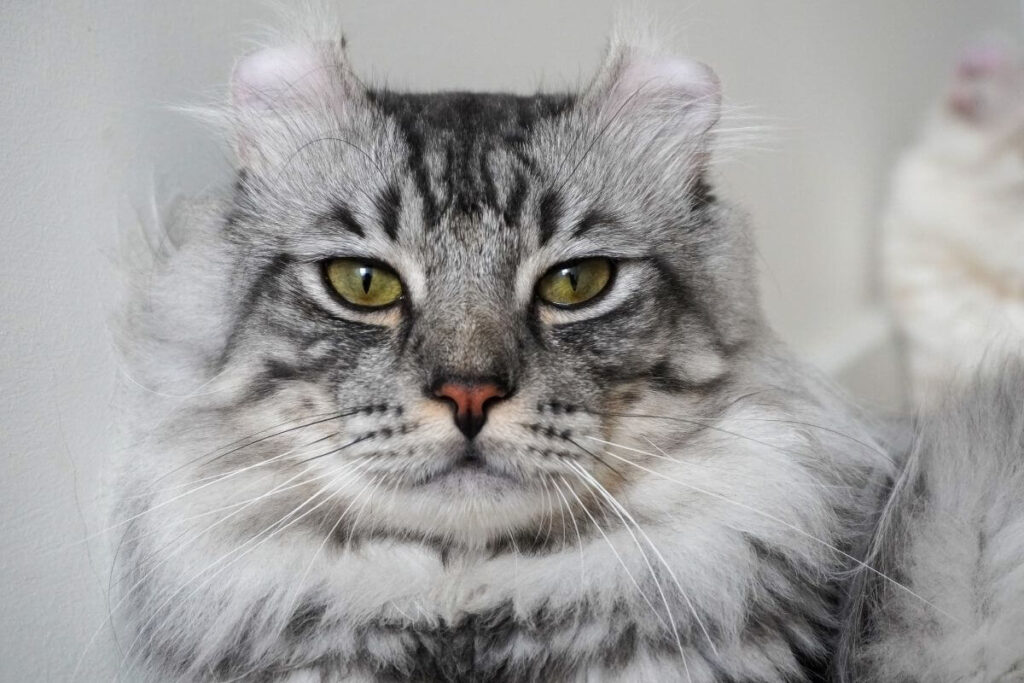
If you’ve ever spotted a cat with ears that curl backward like tiny scrolls, you’ve likely encountered one of the most distinctive and charming breeds in the feline world: the American Curl. Equal parts elegant and whimsical, this breed has won over cat lovers across the globe with its unique appearance, warm temperament, and surprisingly low-maintenance nature. Whether you’re thinking about adding one to your family or simply curious about what makes this breed special, here’s everything you need to know.
Origins: A Lucky Mutation
The American Curl’s story begins in Lakewood, California, in 1981. A stray longhaired black cat with unusually curled ears showed up at the doorstep of Joe and Grace Ruga. They named her Shulamith, and she became the founding mother of the entire breed. Within months, Shulamith gave birth to a litter, and several of the kittens inherited those distinctive backward-curling ears — confirming that the trait was genetic.
The Rugas began working with breeders and geneticists to understand and develop this new breed. By 1986, the Cat Fanciers’ Association (CFA) granted the American Curl championship status — an unusually fast recognition for a new breed, reflecting just how captivating and consistent the cats were. Today, the American Curl is recognized by all major cat registries, including TICA (The International Cat Association).
The gene responsible for the curled ears is autosomal dominant, meaning only one copy of the gene is needed to produce the trait. Importantly, this also means breeders can cross American Curls with straight-eared domestic cats to maintain genetic diversity — a practice that keeps the breed healthy and robust.
The Signature Ears: What You Need to Know
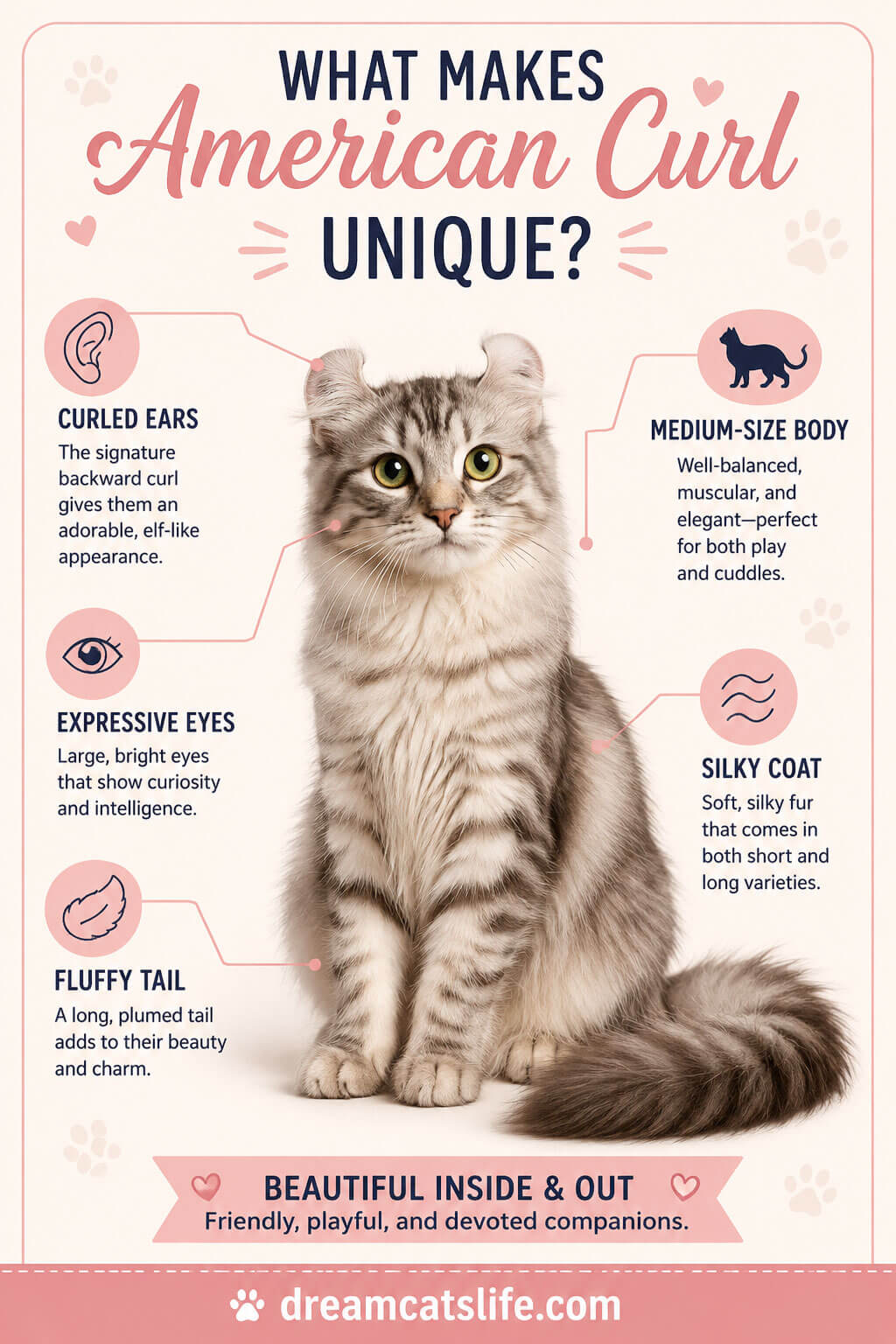
The most immediately recognizable feature of the American Curl is, of course, its ears. But not all curls are created equal. Kittens are born with straight ears, and the curling begins within the first few days of life. By 16 weeks, the ears have settled into their permanent position, and breeders can assess the degree of curl.
The CFA classifies curls into three degrees:
First degree — a slight curl, barely noticeable. These cats are considered pet quality.
Second degree — a moderate curl that gives the ears a graceful arc. These may qualify for showing in some categories.
Third degree — a full, dramatic curl that turns the ear tips back toward the center of the skull, creating a crescent shape. This is the show-quality standard.
Despite looking like they might be uncomfortable, the curled ears cause no pain or hearing problems. The cartilage is firm — not floppy — and the ears function perfectly well. One important note for owners: American Curl ears require gentle, regular cleaning because the unusual shape can trap wax and debris more easily than standard ears. A weekly wipe with a cotton ball and an appropriate ear-cleaning solution is all that’s needed.
Never bend or manipulate the ears forcefully. The cartilage can crack if handled roughly, especially during kittenhood when it’s still forming.
Appearance Beyond the Ears
Remove those signature curled ears from the picture, and you’d still have a strikingly beautiful cat. The American Curl is a medium-sized breed with a well-muscled, semi-foreign body — neither as lean as a Siamese nor as cobby as a Persian. It has a rectangular silhouette, with males typically weighing between 7 and 10 pounds and females slightly lighter.
The head is a modified wedge shape, neither flat-faced nor extreme, with large walnut-shaped eyes that come in a wide variety of colors. The coat adds another dimension of variety: the American Curl comes in both longhaired and shorthaired versions. The longhaired variety has a silky, flowing coat with a minimal undercoat, while the shorthaired version has a plush, resilient coat that lies close to the body. Neither variety mats easily — a welcome trait for owners.
As for color and pattern, the American Curl is one of the most diverse breeds out there. It comes in virtually every coat color and pattern imaginable: solid, tabby, tortoiseshell, colorpoint, bicolor, and more. This variety is largely a result of the breed’s hybrid development with domestic cats of many backgrounds.
Personality and Temperament
American Curl Personality
If the American Curl’s appearance is what catches your eye, its personality is what will keep you devoted for life. This is a breed that combines genuine affection with a playful, curious spirit that persists well into old age — earning it the nickname “the Peter Pan of cats.“
Sociable and people-oriented
American Curls are not independent, aloof cats. They genuinely enjoy human company and will often follow their owners from room to room, not demanding attention but simply wanting to be present. They’re known to greet guests at the door, something that surprises visitors expecting typical feline indifference.
Gentle and adaptable
This breed tends to be calm without being lethargic. They’re gentle enough to live happily with children and patient enough to tolerate the presence of other pets, including dogs, when properly introduced. Their adaptable nature means they typically adjust well to new homes and changing routines.
Curious and intelligent
American Curls are alert, perceptive cats with a genuine interest in their surroundings. They’ll investigate anything new in the house, enjoy puzzle toys and interactive games, and quickly learn to open doors, turn on faucets, and find hidden treats. Mental stimulation is just as important as physical exercise for this breed.
Playful at any age
Unlike some breeds that become sedentary as they age, the American Curl tends to retain its kitten-like energy and curiosity throughout its life. Even senior cats of this breed often enjoy a good game of chase or a feather wand session.
Quiet communicators
American Curls are not particularly vocal. When they do speak, it’s usually in soft trills and chirps rather than loud meows — making them a good choice for apartment dwellers or those who prefer quieter pets.
Living With an American Curl
Activity and Play
American Curls are moderately active cats. They appreciate having space to explore and climb, so investing in a good cat tree or wall-mounted shelves will keep them happy. Daily interactive play sessions of 10 to 15 minutes — with wand toys, laser pointers, or puzzle feeders — are ideal for keeping them mentally and physically engaged.
They also enjoy having a companion, whether feline or human, so families or multi-pet households tend to suit them well. While they can adapt to being alone during work hours, they should not be left in isolation for extended periods on a regular basis.
Grooming
One of the American Curl’s most appealing traits is how easy it is to maintain. The longhaired variety has a coat that resists tangling and matting, typically requiring brushing only once or twice a week. The shorthaired variety needs even less attention — an occasional brush to remove loose fur is usually sufficient. During shedding seasons in spring and fall, more frequent grooming helps manage loose hair.
Beyond coat care, routine grooming includes:
- Ear cleaning — weekly, using a vet-approved solution. Be gentle and never probe deep into the ear canal.
- Nail trimming — every two to three weeks.
- Dental hygiene — brushing teeth regularly or providing dental treats helps prevent periodontal disease.
- Eye wiping — occasional gentle cleaning with a damp cloth to remove discharge.
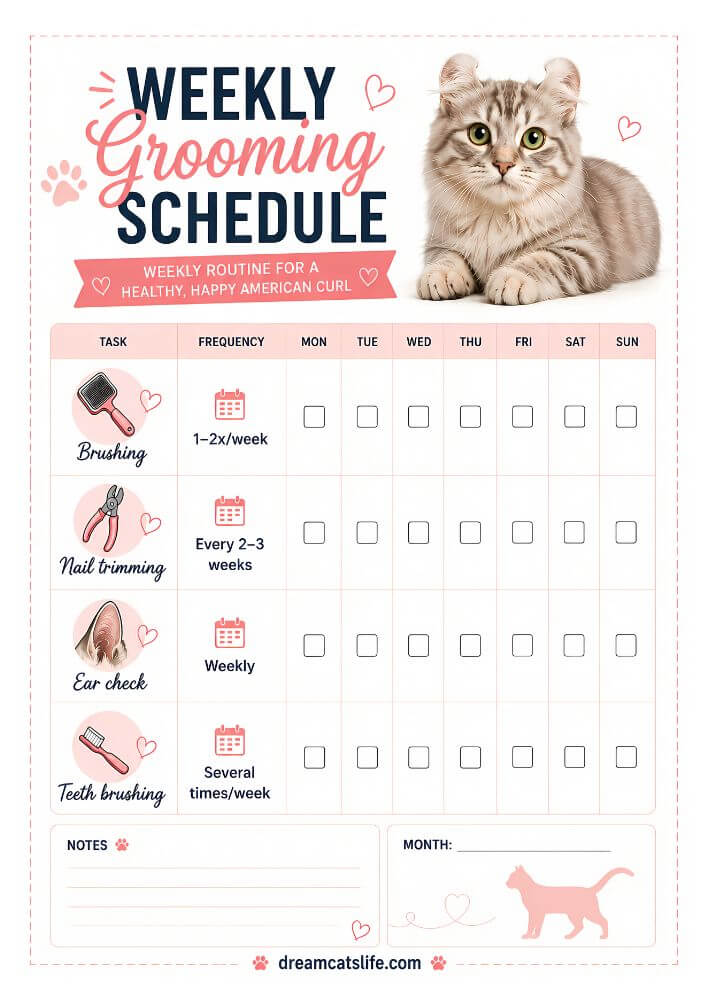
Download Your Free Weekly Grooming Schedule
Stay on top of your cat’s grooming routine with this printable A4 checklist. Track brushing, nail trimming, ear checks, and teeth brushing—all in one easy-to-use planner.
Diet and Nutrition
Like all cats, American Curls are obligate carnivores and thrive on high-quality protein. A diet based on animal protein — whether through premium commercial kibble, wet food, or a balanced raw diet — supports lean muscle mass and overall vitality.
Obesity is a concern in domestic cats of all breeds, and the American Curl is no exception. Free feeding is generally not recommended; scheduled meals with appropriate portion control help maintain a healthy weight. Fresh water should always be available, and wet food is beneficial for hydration, especially for cats prone to urinary issues.
Consult your veterinarian to determine the best diet for your cat’s age, weight, and health status.
Health and Lifespan
The American Curl is generally a healthy, hardy breed. One of its greatest strengths is genetic diversity, thanks to the practice of outcrossing with domestic cats. This has helped prevent the accumulation of the heritable diseases that plague some purebred populations.
Lifespan: American Curls typically live between 12 and 16 years, though many reach their late teens with proper care. Their longevity is considered above average for domestic cats.
Ear health is the most breed-specific concern. The tight curl of the ear canal can restrict airflow and trap debris, making regular cleaning essential to prevent infections. Watch for signs of ear problems including head shaking, scratching at the ears, odor, or visible discharge.
Joint health is something to monitor in senior cats, as arthritis becomes more common with age. Regular veterinary check-ups can catch early signs.
Hypertrophic cardiomyopathy (HCM), the most common heart disease in cats, can affect American Curls as it can any breed. Annual wellness exams and cardiac screenings in older cats are prudent.
Routine veterinary care — including vaccinations, parasite prevention, and annual bloodwork as the cat ages — is the most effective strategy for maximizing health and lifespan.
Is the American Curl Right for You?
The American Curl is a wonderful choice for a wide range of households. It’s an excellent family cat, a good companion for seniors, a friendly fit for apartment living, and a suitable breed for first-time cat owners thanks to its gentle temperament and manageable grooming needs.
This breed may be especially well-suited for you if:
- You want an affectionate cat that stays engaged and playful throughout its life.
- You’re looking for a cat that interacts well with children and other pets.
- You prefer a quieter, less demanding companion that still craves connection.
- You want a visually distinctive cat without the health complications that sometimes accompany extreme physical traits in other breeds.
On the other hand, the American Curl may not be the best fit if you’re away from home frequently for long stretches, as these cats genuinely enjoy company and can become bored or lonely without sufficient interaction.
American Curl vs. Similar Cat Breeds: Appearance, Personality & Care Comparison
| Breed | Appearance | Personality | Energy Level | Grooming | Best For |
|---|---|---|---|---|---|
| American Curl | Distinctive backward-curled ears, medium-sized body, silky coat, expressive eyes | Affectionate, playful, intelligent, social | High | Moderate | Families, first-time owners, active households |
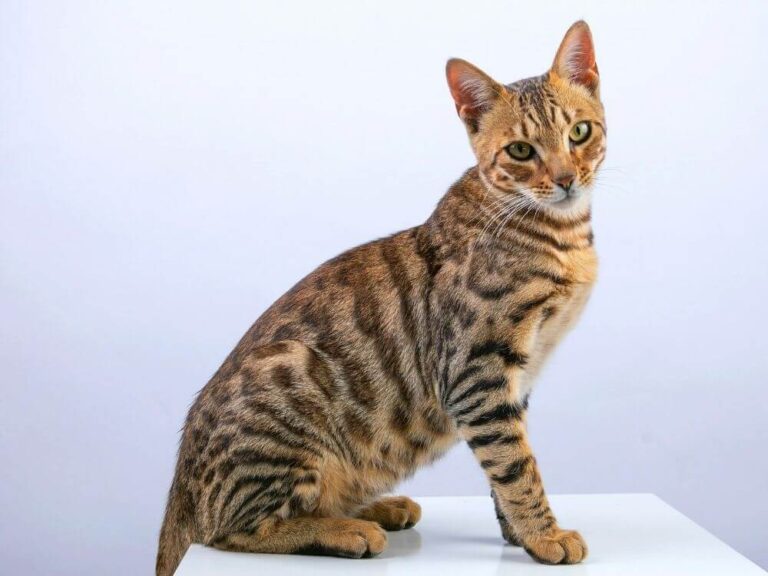
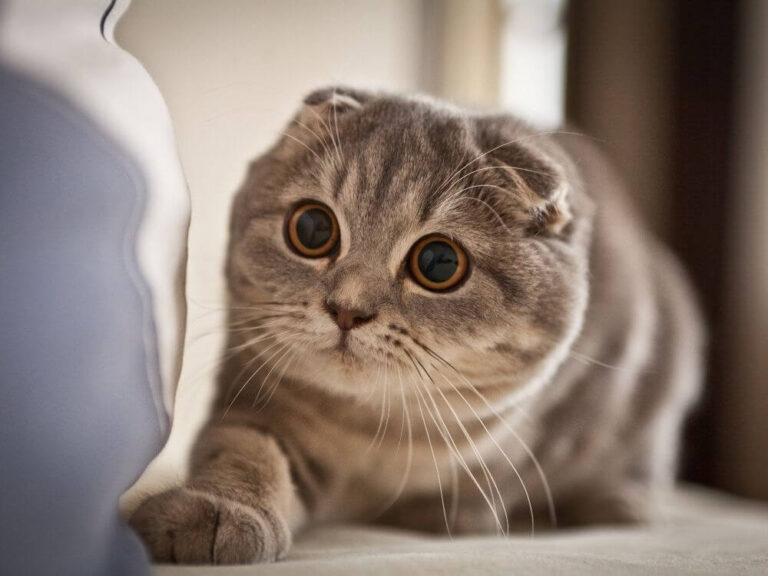
| Scottish Fold | Folded forward ears, round face, plush coat, large eyes | Gentle, calm, sweet, adaptable | Moderate | Moderate | Quiet homes, families, apartment living |
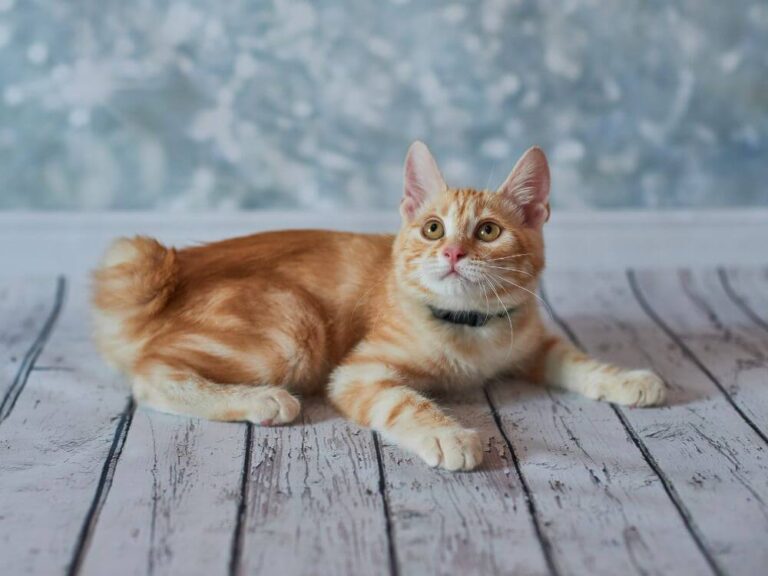
| Highlander Lynx | Curled ears, muscular body, wild appearance, often bobtail | Curious, energetic, confident, interactive | Very High | Low–Moderate | Experienced owners, active families |
| Highlander | Back-curled ears, athletic build, wildcat look, large paws | Outgoing, playful, fearless, affectionate | Very High | Low–Moderate | Active owners, families with children |
| Maine Coon | Very large body, shaggy coat, tufted ears, bushy tail | Gentle giant, friendly, intelligent, easygoing | Moderate | High | Families, homes with space |
| British Shorthair | Round face, dense plush coat, sturdy build | Calm, independent, loyal, quiet | Low–Moderate | Low | Apartment living, busy owners |
| Ragdoll | Large, semi-long coat, blue eyes, fluffy tail | Extremely affectionate, relaxed, gentle | Low | Moderate–High | Indoor families, cuddly companions |
| American Shorthair | Medium-large muscular body, short dense coat, classic appearance | Friendly, adaptable, easygoing, playful | Moderate | Low | Families, beginners, multi-pet homes |
Which Cat Breeds Are Most Similar to the American Curl?
| Breed | Appearance Similarity | Personality Similarity |
|---|---|---|
| Highlander | ⭐⭐⭐⭐⭐ | ⭐⭐⭐⭐☆ |
| Highlander Lynx | ⭐⭐⭐⭐⭐ | ⭐⭐⭐⭐☆ |
| Scottish Fold | ⭐⭐⭐⭐☆ | ⭐⭐⭐⭐☆ |
| American Shorthair | ⭐⭐⭐⭐☆ | ⭐⭐⭐⭐☆ |
| British Shorthair | ⭐⭐⭐☆☆ | ⭐⭐⭐☆☆ |
| Ragdoll | ⭐⭐⭐☆☆ | ⭐⭐⭐⭐☆ |
| Maine Coon | ⭐⭐☆☆☆ | ⭐⭐⭐⭐☆ |
Finding an American Curl
If you’ve decided this is the breed for you, take your time finding a reputable source. Responsible breeders prioritize health testing, socialization, and ethical practices over profit. Look for breeders who:
- Are registered with recognized organizations such as the CFA or TICA.
- Allow you to visit and meet the kittens and their parents in person.
- Provide health guarantees and veterinary records.
- Are willing to answer your questions and stay in contact after purchase.
Expect to pay anywhere from $800 to $2,000 or more for a kitten from a reputable breeder, depending on lineage, coat type, and degree of ear curl.
Adoption is also worth exploring. While American Curls are less common in shelters than mixed-breed cats, breed-specific rescue organizations and general cat rescues occasionally have them available. Adult cats can make wonderful companions and often come already spayed or neutered and up to date on vaccinations.
Final Thoughts
The American Curl is proof that the most remarkable things sometimes arrive quietly, on your doorstep, without warning — just as Shulamith did in 1981. What began as a single stray cat with unusual ears has grown into one of the most beloved and distinctive breeds in the world. With their enchanting appearance, warm personality, and robust health, American Curls offer a truly special kind of companionship. For those lucky enough to share their lives with one, the experience is nothing short of extraordinary.