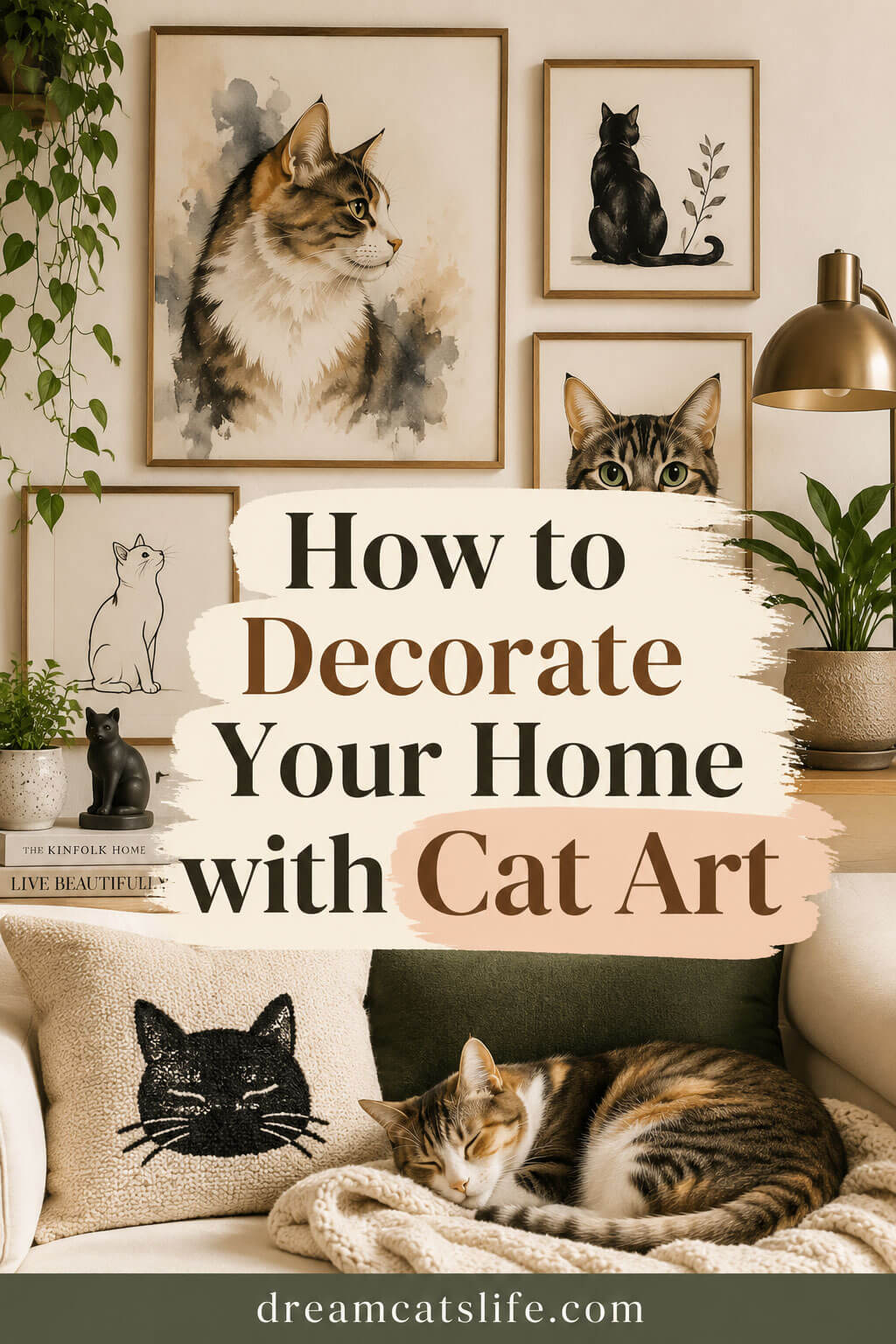
How to Decorate Your Home with Cat Art
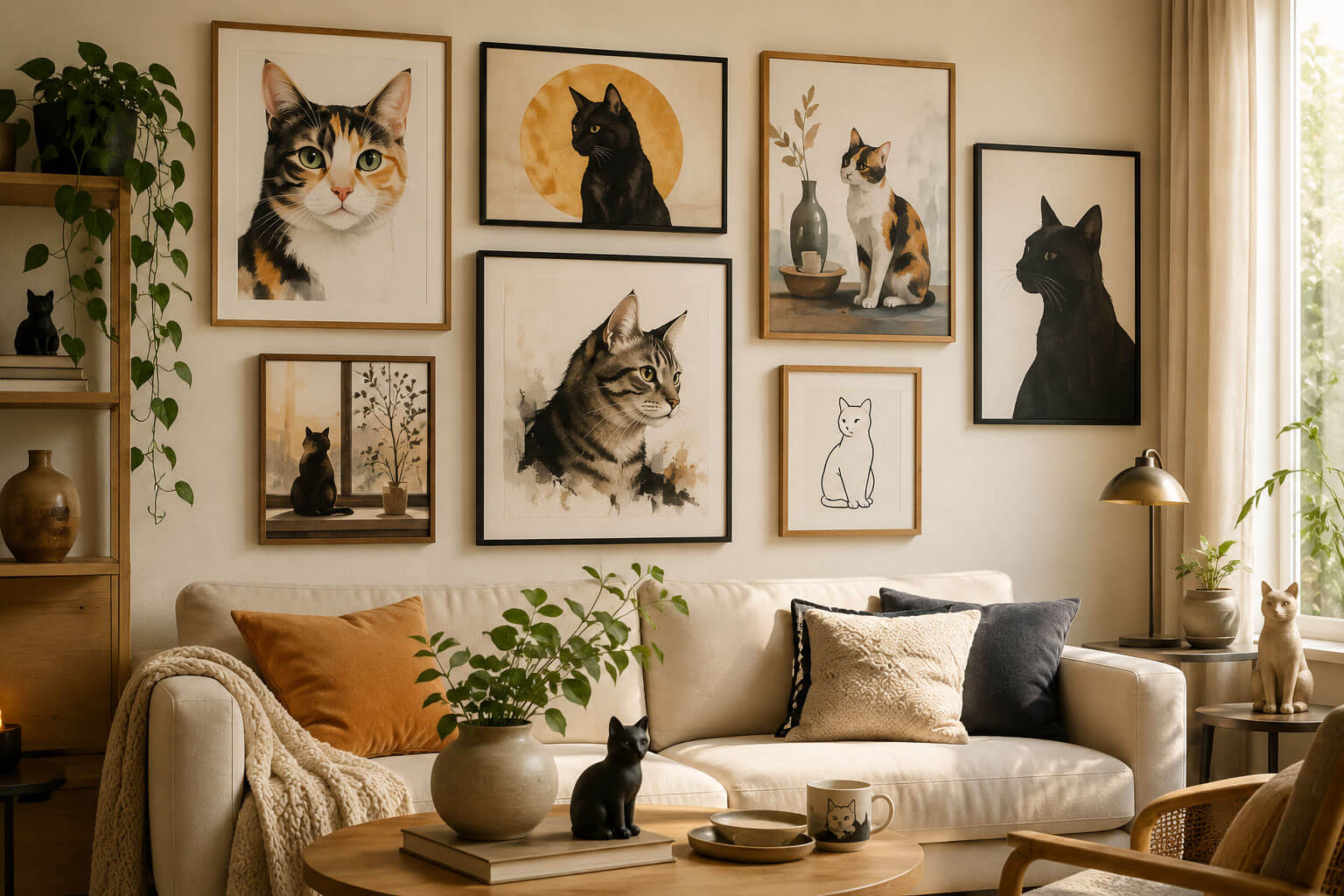
A practical, room-by-room guide to using cat art as a real home decoration strategy — including what to avoid if you share your space with an actual cat.
Cat art has quietly moved out of the “kitschy collectible” category and into the world of serious home decoration. Walk through any well-curated apartment, boutique hotel lobby, or design-forward café right now, and there’s a decent chance you’ll spot a cat somewhere on the wall — not a cartoon, but a moody oil-style portrait, a minimalist line drawing, or a sculptural silhouette perched on a shelf. Cat art has become a legitimate design tool, not a novelty.
This guide walks through everything you need to know to bring cat art into your home in a way that looks intentional rather than accidental: how to choose pieces that actually match your style, where to place them, mistakes that make cat art look cheap instead of chic, and — because so many cat art lovers are also cat owners — how to decorate with cat art safely when a real, live cat is sharing the room with it.
Why Cat Art Works So Well in Home Decoration
Cat art succeeds as home decoration for a reason that has nothing to do with trends: cats are visually striking animals. Their silhouettes are sculptural, their expressions are ambiguous and a little aloof, and their proportions lend themselves naturally to bold, graphic compositions. That’s part of why cat imagery has shown up in art history for thousands of years, from Egyptian bronze figures to Japanese ukiyo-e prints to mid-century illustration.
There’s also a practical design reason cat art works: it’s an easy way to inject personality into a room without committing to a loud color scheme or a permanent renovation. A single striking piece of cat art can become the personality of an entire wall, while everything else — furniture, paint, textiles — stays neutral and flexible.
Design tip: Think of cat art the way a stylist thinks of a statement accessory. One well-chosen piece does more for a room than five scattered, mismatched ones.
Types of Cat Art to Consider
Before you buy anything, it helps to know the full range of what “cat art” actually covers. It’s a much bigger category than most people assume.
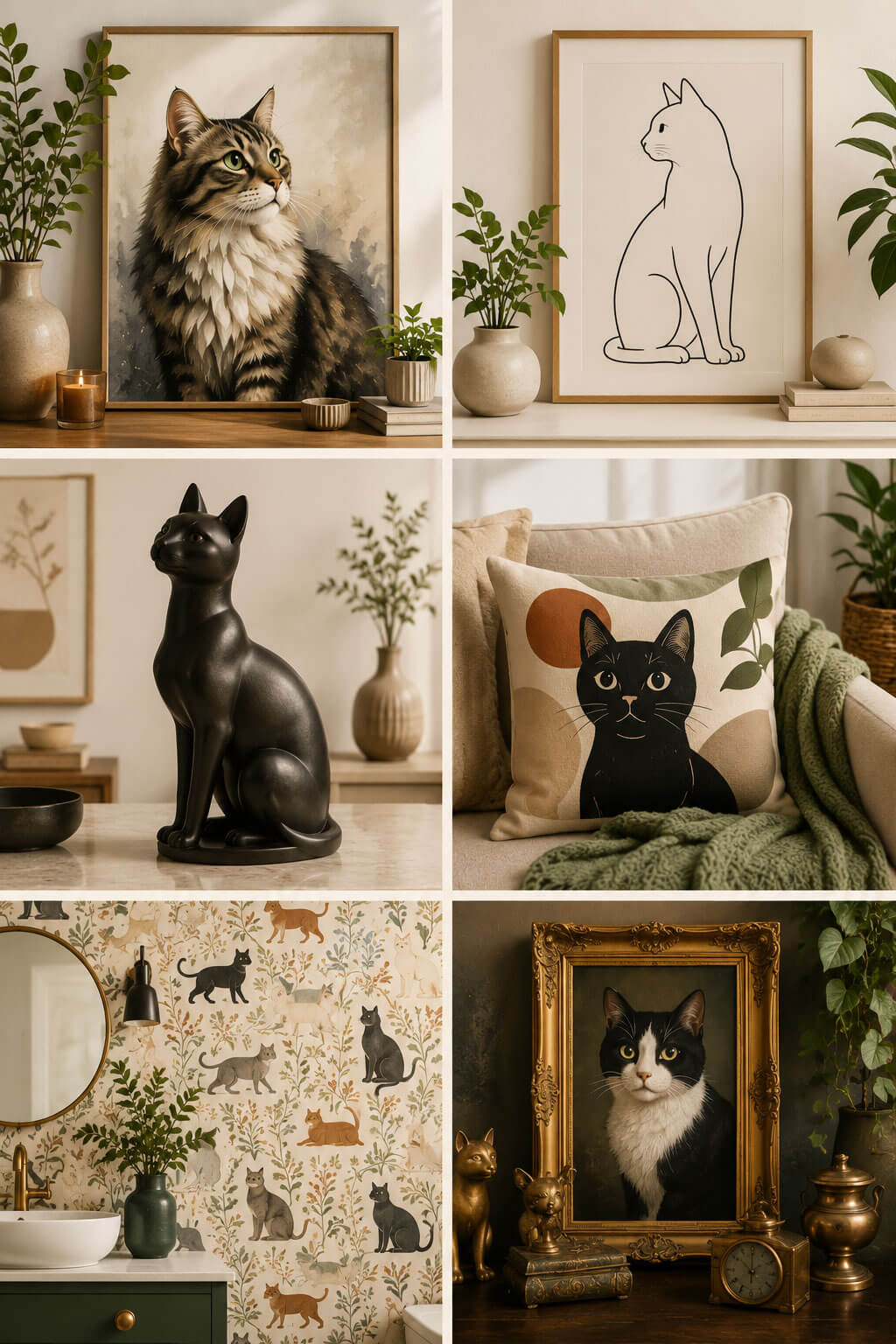
1. Paintings and fine art prints
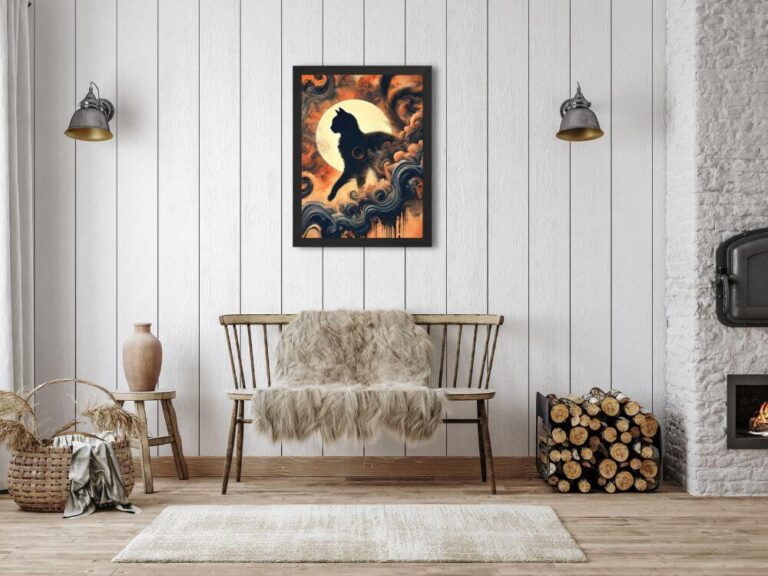
This is the most flexible category for home decoration purposes. You’ll find everything from realistic oil-style portraits to abstract, gestural interpretations of a cat’s form. Fine art prints are the most budget-friendly entry point, since you get the visual impact of an original painting without the price tag.
2. Minimalist line art
Single-line or continuous-line cat drawings have become one of the most popular styles in modern interiors because they’re subtle enough to work in almost any room, including bedrooms, hallways, and home offices, without overwhelming the space.
3. Sculptures and figurines
Three-dimensional cat art — ceramic, resin, wood, or metal — adds texture and depth that flat wall art can’t. A single well-placed sculpture on a console table or bookshelf can anchor an entire vignette. If you’re browsing options, this Amazon search for modern cat sculptures is a good place to compare styles and price points.
4. Textiles: tapestries, pillows, and throws
Cat art doesn’t have to hang in a frame. Woven tapestries, printed throw pillows, and blankets bring the same imagery into a room through fabric, which softens a space in a way that hard-edged wall art can’t. A cat-print throw pillow cover is one of the lowest-commitment ways to test the aesthetic before investing in larger pieces.
5. Wallpaper and decals
For a bolder statement, cat-patterned wallpaper or removable wall decals can transform an entire accent wall. This is a higher-commitment choice, so it works best in smaller spaces like powder rooms, reading nooks, or the inside of a closet.
6. Vintage and antique cat art
Flea markets, estate sales, and online vintage sellers are full of overlooked cat portraits from past decades. Vintage cat art tends to have a warmth and imperfection that mass-produced prints don’t, and it pairs beautifully with both traditional and eclectic home decoration styles.
How to Choose Cat Art That Actually Fits Your Home Decoration
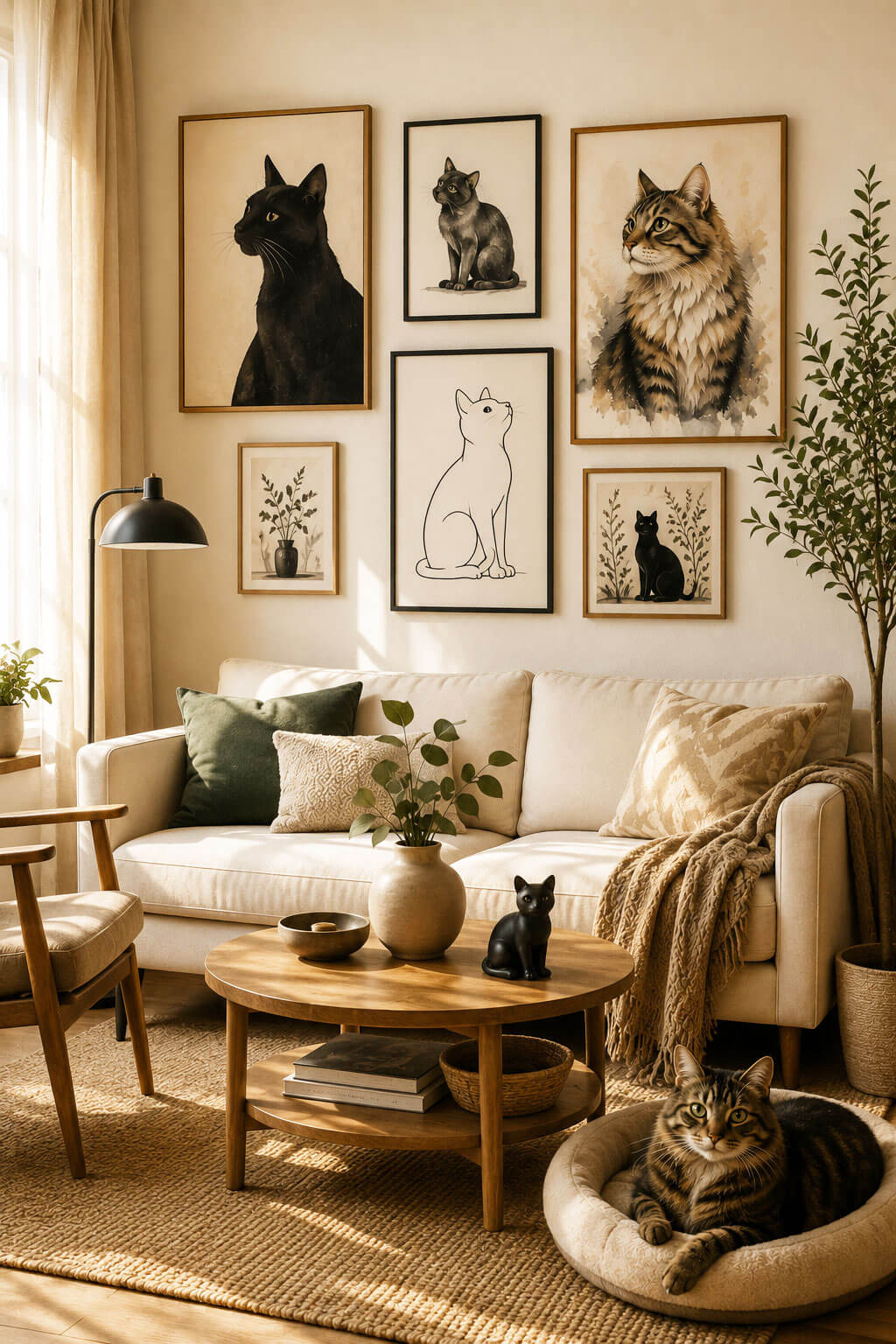
The biggest mistake people make with cat art isn’t buying too much of it — it’s buying pieces that don’t relate to anything else in the room. Here’s how to choose with intention.
Match the style, not just the subject
A photorealistic cat portrait in a heavy gold frame will look out of place in a Scandinavian-minimalist living room, just as a stark black-and-white line drawing can feel cold in a warm, maximalist bohemian space. Before buying, look at the art style the same way you’d evaluate a sofa or a rug: does its finish, color palette, and level of detail match the rest of your home decoration?
Consider scale first, subject second
A small 8×10 print on a large, empty wall reads as an afterthought. As a general rule, wall art should span roughly two-thirds of the width of the furniture beneath it (a sofa, console, or headboard). If you love a smaller piece, group it with two or three others in a gallery arrangement rather than hanging it alone on a big wall.
Let the color palette do the connecting
You don’t need every piece of cat art in your home to match, but pulling one or two colors from the artwork into your existing decor — a throw pillow, a vase, a lampshade — makes the piece feel like it belongs rather than looking like it was added last-minute.
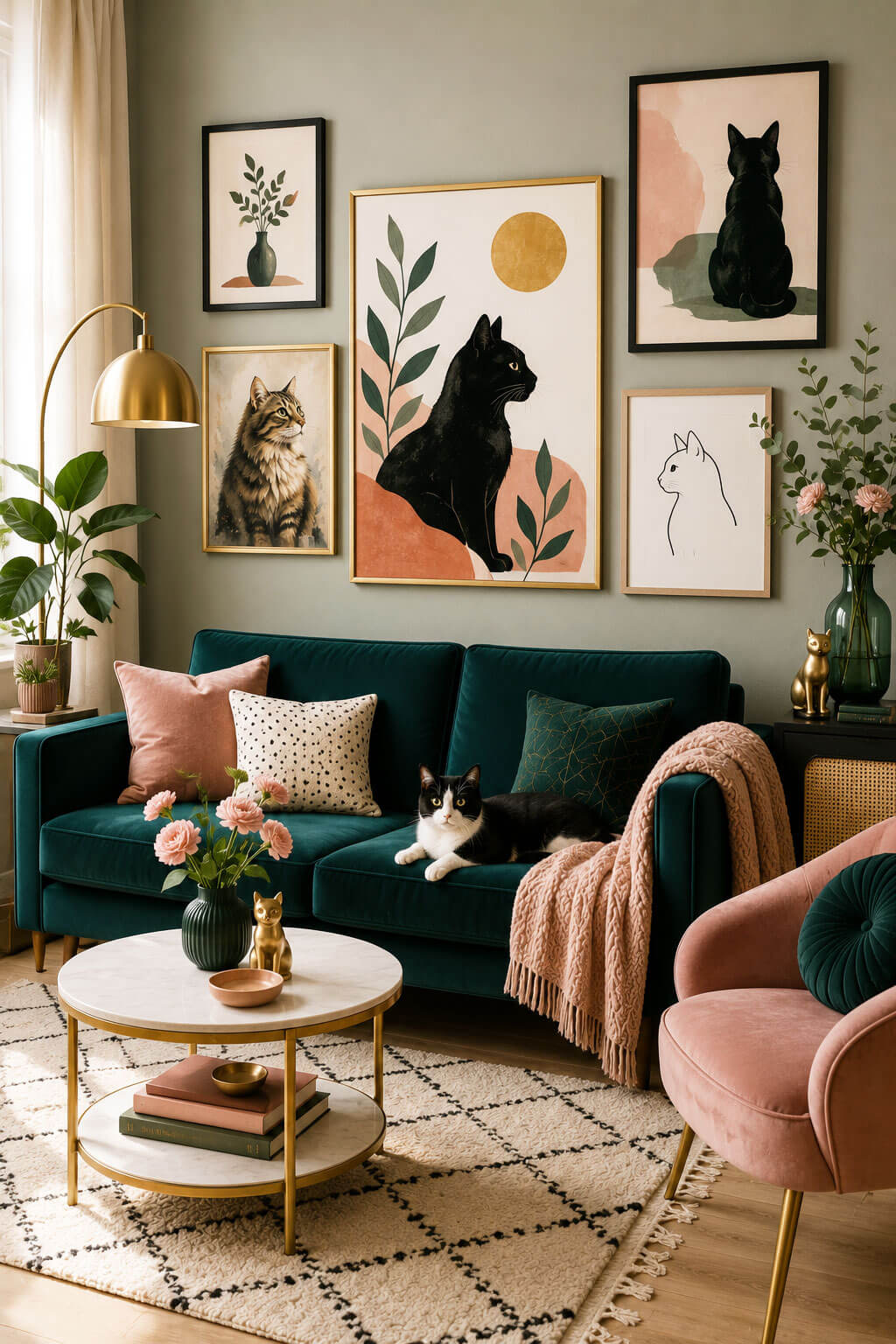
Mix cat art with non-cat pieces
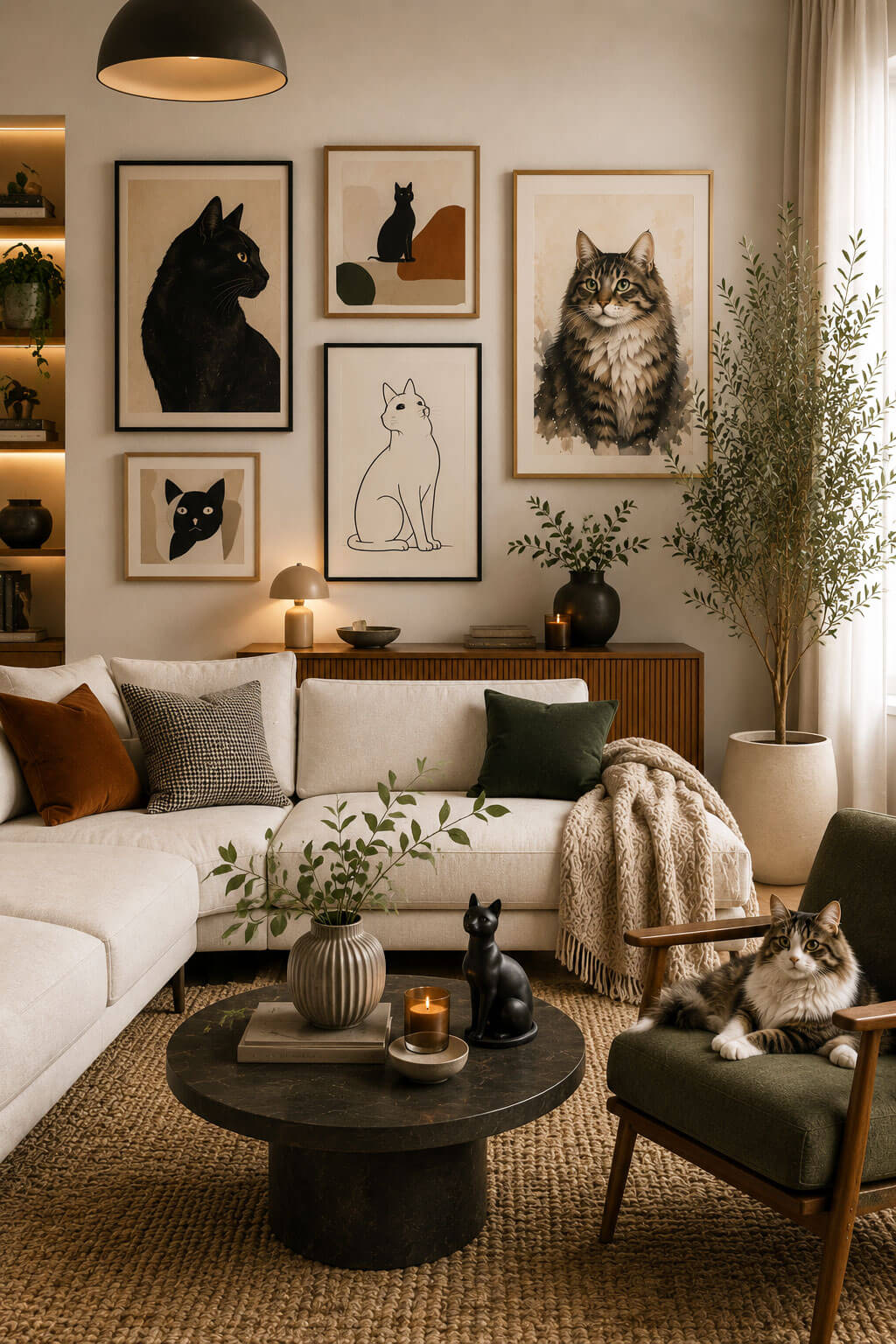
The most sophisticated way to display cat art is to treat it as one voice in a larger conversation. On a gallery wall, mix a cat portrait with botanical prints, abstract shapes, or family photos rather than filling an entire wall with cats. This keeps the room from feeling like a themed space and more like a genuinely curated one.
Where to Hang or Display Cat Art
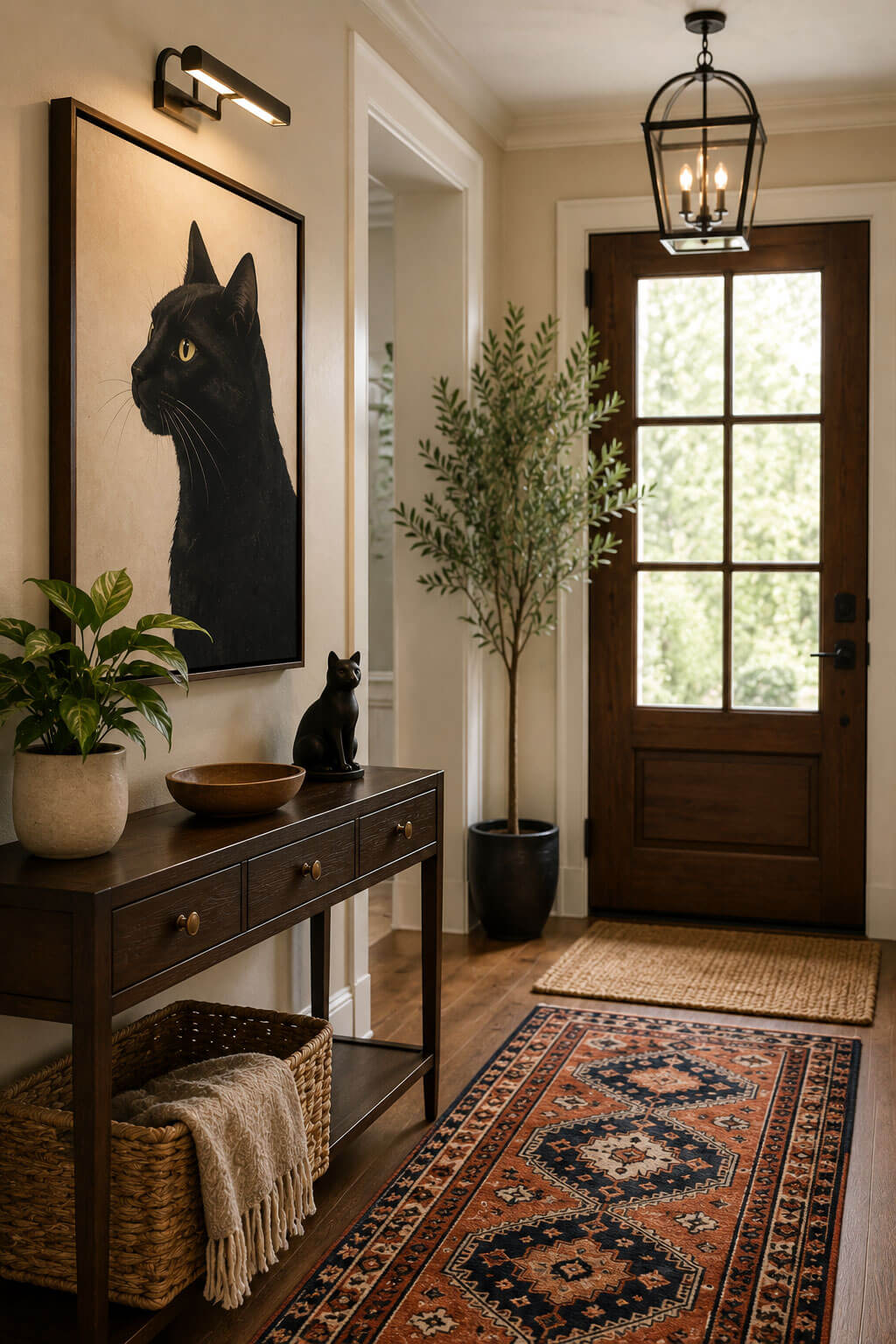
- Entryways: A striking cat portrait near the front door sets a playful, personal tone the moment someone walks in.
- Living room gallery walls: Cat art works beautifully as one piece among several in a curated gallery arrangement above a sofa or console.
- Home offices: A minimalist cat sketch or print adds warmth to an otherwise utilitarian space without becoming distracting.
- Bedrooms: Softer, muted cat art — watercolor or line drawings — works well above a headboard or on a nightstand as a smaller framed piece.
- Hallways: Long, narrow hallways are ideal for a series of smaller matching cat prints spaced evenly, creating rhythm as you walk through.
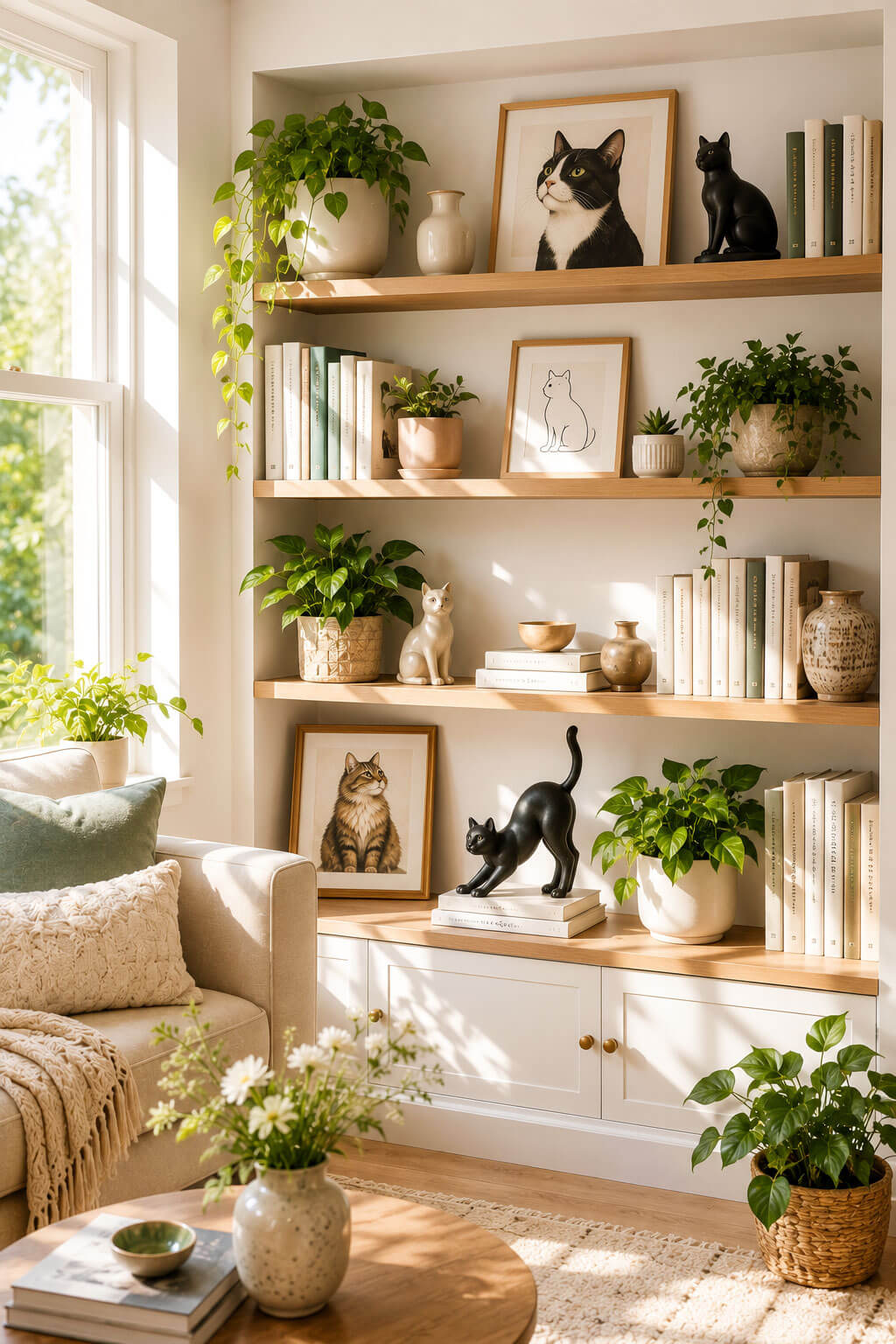
- Bookshelves and open shelving: Sculptures and small framed pieces can be layered in with books and plants for a lived-in, gallery-like effect.
Mistakes to Avoid When Decorating with Cat Art
- Going too theme-y. Filling every wall with cats turns a home into a novelty shop rather than a styled space. Treat cat art as an accent, not the entire decorating strategy.
- Ignoring frame quality. A great print in a flimsy, mismatched frame undercuts the whole effect. Reframing inexpensive prints in a cohesive frame style instantly elevates them.
- Hanging art too high. The classic mistake: art should generally be centered at eye level (about 57–60 inches from the floor to the center of the piece), not near the ceiling.
- Forgetting scale relative to furniture. Tiny art on a huge wall, or oversized art in a cramped hallway, both throw off the balance of a room.
- Buying only literal, cartoonish cat imagery. If your goal is sophisticated home decoration, lean toward artistic interpretations — line art, abstract shapes, fine art prints — rather than overly cute or cartoonish depictions, which can read as juvenile in an otherwise adult space.
- Mismatched color temperature. Warm-toned cat art (sepia, gold, rust) can clash with a cool, blue-gray room, and vice versa. Check undertones before you buy.
If You Actually Have a Cat: Decorating Safely and Smartly
Here’s the twist that a lot of cat art guides skip entirely: if there’s a real cat living in your home, decorating with cat-themed art requires a few extra considerations that have nothing to do with aesthetics and everything to do with your actual cat’s habits.
The core rule: your cat doesn’t know the art is “about” them. To a cat, a framed piece is just another object in their territory — something to jump toward, rub against, knock off a shelf, or scratch.
Choose secure mounting over leaning or resting pieces
Sculptures and framed art that simply lean against a wall or sit unsecured on a shelf are a real risk in a cat household. Cats jump, climb, and brush past furniture constantly, and an unsecured piece can be knocked over in a second. Always hang wall art with proper anchors, and for shelf-top sculptures, consider museum putty or a small amount of adhesive gel specifically designed to secure decor without damaging surfaces.
Skip glass frames near high-traffic cat zones
If your cat likes to climb bookshelves, window ledges, or cat trees near a piece of framed art, consider acrylic or shatterproof glazing instead of traditional glass, especially for larger pieces. It’s a small swap that removes a real safety hazard if the piece is ever knocked down. There are plenty of shatterproof, acrylic-glazed framed wall art options that give you the same look without the risk.
Be mindful of paint, dye, and material toxicity
Some cats chew, lick, or scratch decorative textiles and unsealed wood or ceramic pieces. When choosing cat art for a lower shelf, a cat tree topper, or anywhere within paw’s reach, look for non-toxic, pet-safe finishes and avoid pieces with small detachable parts (beads, string, dangling embellishments) that could be a choking hazard if your cat decides to investigate.
Keep string, cord, and hanging hardware out of reach
Wall hangings, macramé-style cat art, and tapestries often come with visible cords or fringe. Cats are drawn to dangling material, so tuck cords behind the frame, use closed hanging hardware, and avoid long fringe on pieces placed near cat furniture or windowsills.
Think about scent and cleaning products
If you’re refinishing, painting, or sealing a DIY cat art piece yourself, make sure any paints, varnishes, or adhesives are fully cured and odor-free before placing the piece anywhere your cat can access it. Some solvents and oil-based finishes remain harmful to cats’ respiratory systems for days after they appear dry to the touch.
Give your cat their own “art” too
A practical trick many cat-owning decorators use: place a scratching post, cat shelf, or perch near, but not directly under, a piece of cat art. It satisfies your cat’s instinct to climb and claim vertical space in that area, which reduces the odds they’ll target the art itself.
Budget-Friendly Ways to Get Started
You don’t need a large budget to bring cat art into your home decoration plan. A few realistic starting points:
- Start with a print, not an original. High-quality art prints deliver most of the visual impact of an original painting at a fraction of the price.
- Reframe what you already have. An inexpensive print in a well-chosen, cohesive frame instantly looks more expensive.
- Try one textile piece. A single cat art tapestry or wall hanging is an affordable way to add a large-scale statement without frame or glass costs.
- DIY it. A simple line drawing, a stenciled canvas, or even a curated collection of vintage cat postcards in a shared frame can look just as intentional as a purchased piece.
- Shop small and independent artists. Etsy and independent print shops often carry more distinctive cat art than big-box retailers, at comparable prices.
Quiz: What’s Your Ideal Cat Art Style?
Answer three quick questions and we’ll match you with the cat art style — and shopping starting point — that fits your home decoration best.
Final Thoughts
Cat art has earned a real place in modern home decoration — not as a novelty, but as a genuinely versatile design category that spans minimalist line drawings, sculptural pieces, textiles, and fine art prints. The key to making it look intentional rather than accidental is the same principle that governs good decorating in general: choose pieces that match your existing style, respect scale and placement, and mix cat art in with other elements rather than letting it take over a room.
And if you're one of the many cat art lovers who also happens to live with a real cat, a little extra planning around secure mounting, safe materials, and smart placement means you get to enjoy the art without turning it into your cat's next target. Done thoughtfully, cat art can be one of the most personal, distinctive touches in your entire home.