Maine Coon Cat Breed: The Complete Guide to Size, Personality, Care, and Costs
The Maine Coon cat breed is famous for its impressive size, shaggy water-resistant coat, and surprisingly gentle personality, and it regularly ranks among the most popular pedigreed cats in the United States. Often called the “gentle giant” of the cat world, this breed pairs a wild, woodland look with a sweet, people-loving nature that wins over first-time owners and lifelong cat lovers alike. A cat this big also comes with big needs, though, and knowing what to expect before you bring one home makes the difference between a joyful 15 years and a frustrating one.
In this guide you will learn where Maine Coons come from, how large they really get, what their temperament is like, and which health issues responsible owners should know about. We will also cover feeding, grooming, home setup, costs, and the most common mistakes new owners make, and you can take a short quiz to see whether this breed truly fits your lifestyle.
Quick answer
The Maine Coon is one of the largest domestic cat breeds, with adult males typically weighing 13 to 18 pounds and females 8 to 12 pounds. They are affectionate, social, playful, and usually good with children and other pets, but they need regular brushing, a roomy home, quality nutrition, and screening for inherited heart disease. Most live around 12 to 15 years.
Where the Maine Coon Comes From
The Maine Coon is considered one of the oldest natural breeds in North America, and it developed in the rugged, cold climate of the northeastern United States long before anyone thought of breeding cats for the show ring. Farmers and sailors in Maine valued these cats as skilled mousers, and the harsh winters shaped the traits we recognize today: a thick, layered coat, large tufted paws that work like snowshoes, and a bushy tail that can be wrapped around the body for warmth. The breed was already being exhibited in the 1800s, and an 1895 cat show in New York is often cited as an early highlight in its history. In 1985, it was named the official state cat of Maine.
You will often hear colorful origin stories, such as the tale that Maine Coons descend from raccoons or from cats that belonged to Marie Antoinette. The raccoon story is a myth, because cats and raccoons cannot interbreed, and it likely survived simply because the brown tabby coat and ringed, bushy tail resemble a raccoon’s. The most realistic explanation is that long-haired cats arrived with early European settlers and sailors and then mixed with local short-haired cats, with the climate doing the rest of the work over many generations.
Size and Appearance: Just How Big Do They Get?
Weight, length, and growth rate
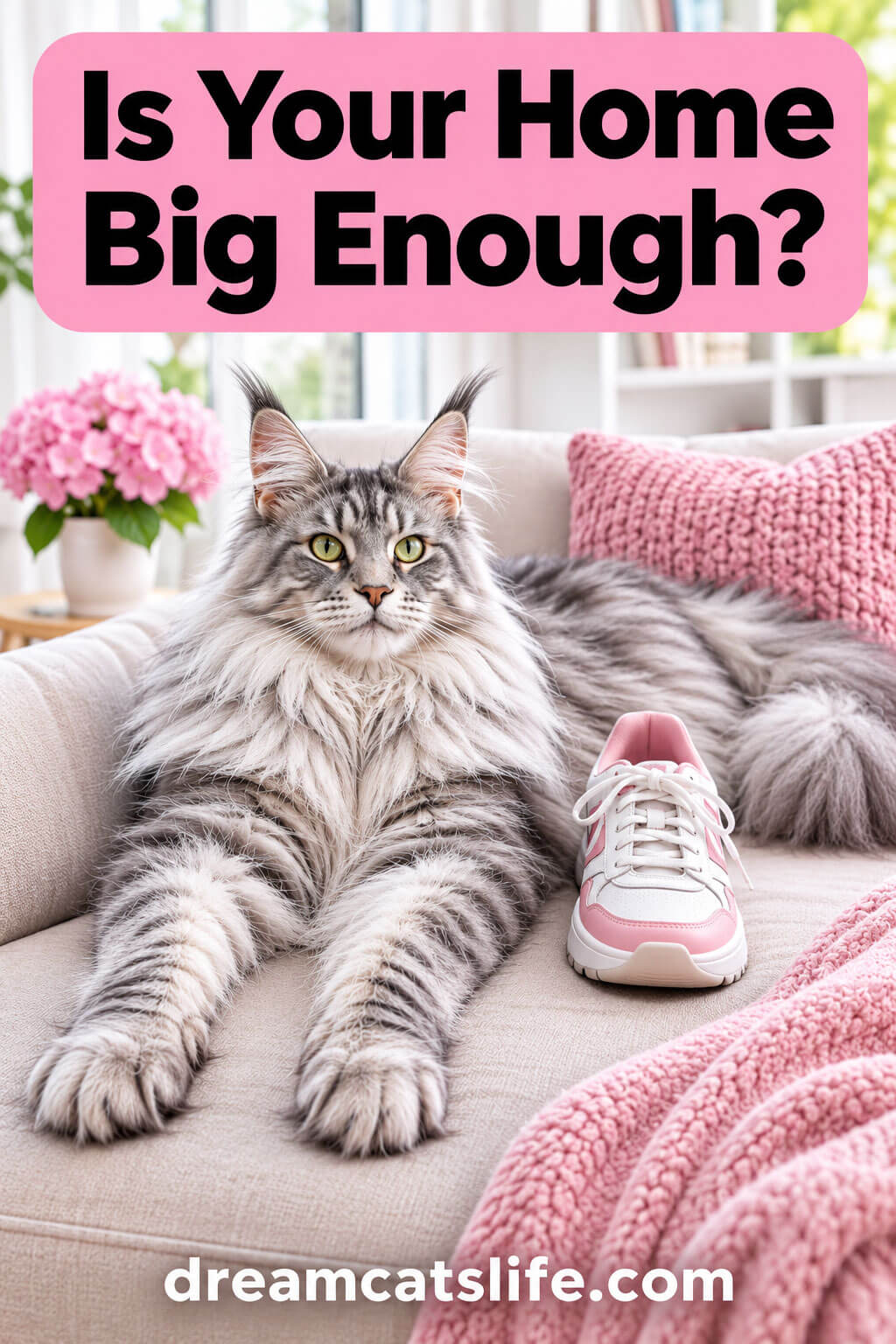
Adult males usually weigh 13 to 18 pounds, and some well-built individuals go higher, while females are typically smaller at 8 to 12 pounds. Measured from nose to tail tip, a full-grown Maine Coon can reach about three feet or more, and the tail alone is often as long as the body. What surprises many new owners is how slowly the breed matures. While most cats reach adult size within a year, a Maine Coon may keep growing until it is three to five years old, so a kitten that looks enormous at six months is still very much a work in progress.
Be cautious about the viral photos and marketing claims that promise “giant” cats of 25 pounds or more. A heavy Maine Coon is not automatically a healthy one, and extra weight puts stress on the joints and heart. A strong, well-muscled cat with a healthy body condition is always the goal, regardless of what the scale says.
Coat, colors, and signature features
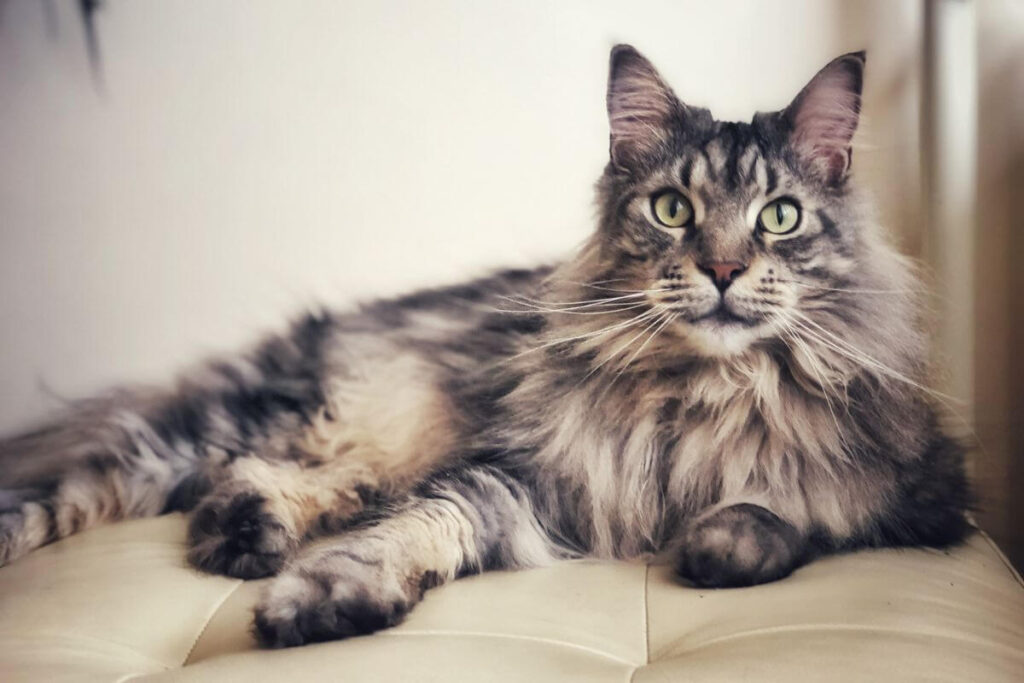
The coat is silky rather than woolly, longer on the belly, britches, and ruff, and shorter across the shoulders, which gives the breed its distinctive shaggy-but-elegant look. Other hallmarks include large, wide-set ears with tufts of fur, sometimes finished with lynx-like tips, a square muzzle, expressive eyes, and an often visible “M” marking on the forehead of tabbies. Maine Coons come in a wide range of colors and patterns, including brown tabby, black, white, red, silver, tortoiseshell, and smoke, and nearly all are accepted by the major registries.
Maine Coon Personality and Temperament
If there is one reason people fall in love with this breed, it is the personality. Maine Coons are friendly, curious, and deeply attached to their families, but they are rarely clingy in the way some breeds can be. Many prefer to be in the same room as you rather than on your lap, following you from kitchen to office and watching whatever you are doing with obvious interest. Owners often describe them as dog-like because many learn to fetch or walk on a harness, though every cat is an individual.
The breed is also known for its voice. Instead of a loud meow, a Maine Coon is more likely to produce soft chirps, trills, and chattering sounds that seem surprisingly delicate for such a large animal. They are intelligent, which is wonderful for training and play but also means they can learn to open cabinets, turn on faucets, or bat objects off shelves when they are bored.
Kids, dogs, and other pets
With proper introductions, Maine Coons usually get along well with respectful children, cat-friendly dogs, and other cats. Their patient, easygoing nature is a big part of the appeal, but size matters here as well: a young child should always be taught to handle a large cat gently and never to pick it up in a way that strains its back or hips. If you already have pets, introduce them gradually over several days or weeks using separate rooms, scent swapping, and short supervised meetings.
Do they like being alone?
Maine Coons are social, and they generally do not thrive when left alone for long stretches every day. A cat that works hard to get your attention, hunts your ankles, or becomes destructive may simply be lonely and under-stimulated. If you are away from home most of the day, a second cat, a window perch, and interactive toys can help a great deal, but be honest with yourself about whether your schedule suits this breed.
Is a Maine Coon Right for You? Take the Quiz
Beautiful photos make every Maine Coon look like the perfect pet, but the best match depends on your space, schedule, budget, and expectations. Answer the eight questions below to see how well this breed fits your lifestyle, along with a few personalized tips.
Is a Maine Coon Right for You?
8 quick questions. Be honest, because your cat will thank you!
Maine Coon Health and Lifespan
Maine Coons are generally robust cats, and many live 12 to 15 years, sometimes longer with excellent care. Like all purebreds, however, they are prone to a few inherited conditions, and a responsible owner learns about them early.
Hypertrophic cardiomyopathy (HCM)
HCM, a thickening of the heart muscle, is the most common heart disease in cats and the most important health concern in this breed. A specific gene mutation linked to HCM has been identified in Maine Coons, and reputable breeders test for it, but a negative genetic test does not guarantee a cat will never develop heart disease, because other causes exist. For this reason, many breeders also screen breeding cats with heart ultrasounds performed by veterinary cardiologists. Ask any breeder to show you these results for both parents.
Spinal muscular atrophy and hip dysplasia
Spinal muscular atrophy (SMA) is another inherited condition for which a DNA test exists, and breeders can use it to avoid producing affected kittens. Hip dysplasia, an abnormal development of the hip joint, also appears more often in Maine Coons than in many other breeds and can lead to stiffness or pain as a cat ages. Watch for reluctance to jump, limping, or a changed way of climbing stairs, and mention it to your veterinarian rather than assuming it is simply age.
Everyday health habits
Annual or twice-yearly vet checkups, dental care, parasite prevention, and weight management matter as much as genetics. Because heart and joint problems can be subtle, baseline exams and regular monitoring allow your vet to catch changes early. Any sudden lethargy, open-mouth breathing, or loss of appetite should be treated as an emergency.
Feeding Your Maine Coon
A large, slow-growing, muscular cat needs high-quality, protein-rich food that matches its life stage. Kittens grow for years, so ask your veterinarian how long to keep your cat on a growth-appropriate diet and when to transition to adult food. Many vets recommend a mix of wet and dry food, since wet food adds hydration and can help with urinary health, and a water fountain often encourages cats to drink more.
Because Maine Coons are big, owners sometimes assume they should eat unlimited amounts, which is one of the quickest routes to obesity. Measure portions, follow the feeding guidelines on the label as a starting point, and adjust with your vet’s guidance based on your cat’s body condition. You should be able to feel the ribs under a light layer of fat, and you should see a visible waist from above.
Grooming a Maine Coon Without the Stress
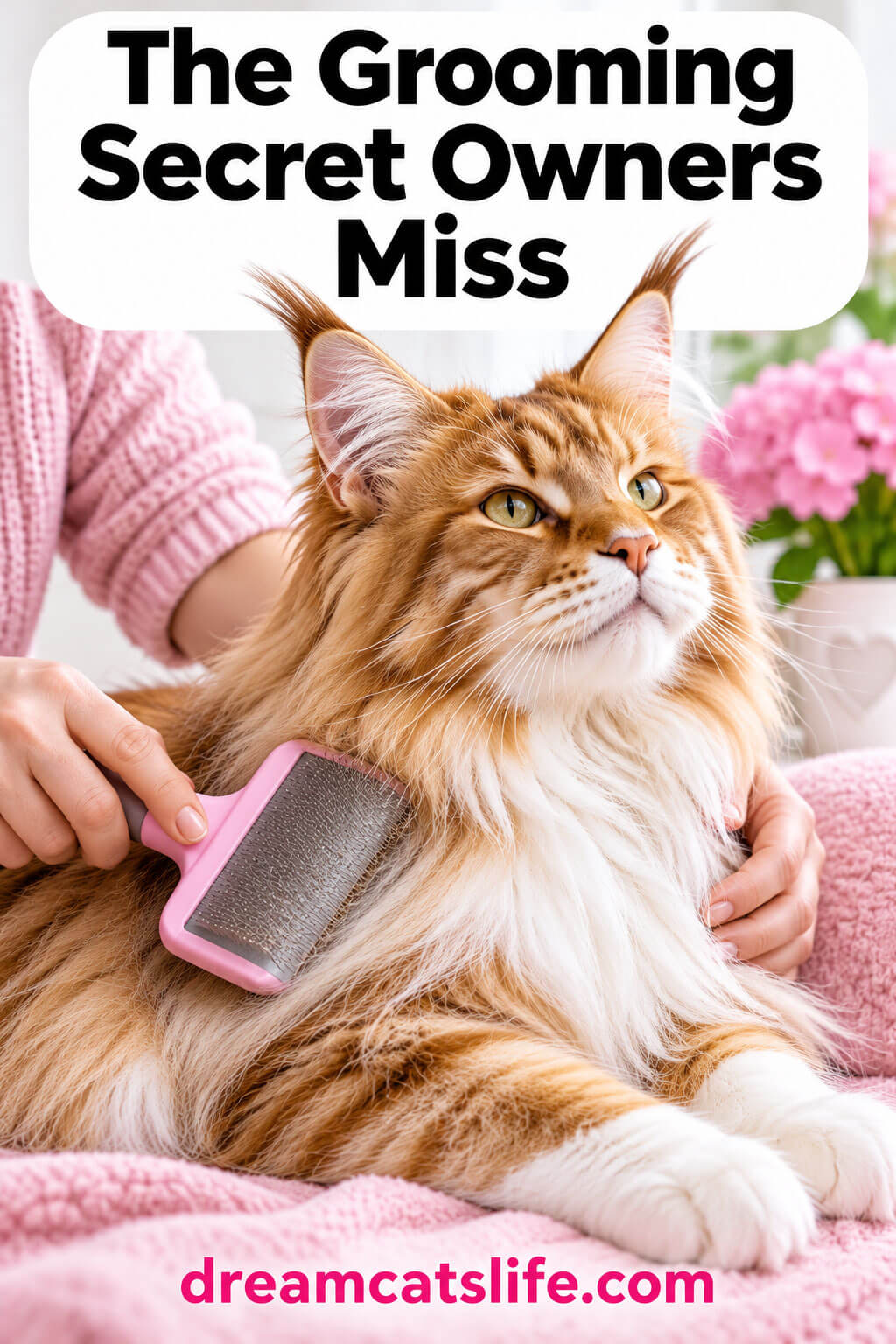
That luxurious coat is surprisingly manageable, because the fur has a silky texture that resists tangling more than you might expect. Even so, plan on brushing two to three times a week, and more often during spring and fall when your cat sheds its heavier coat. A slicker brush for long-haired cats works well on the body, while a stainless steel comb helps you check for mats in the places where they hide most often: behind the ears, under the front legs, along the belly, and around the britches.
- Start young. Short, positive sessions with treats teach kittens that brushing is pleasant.
- Work gently. Brush in the direction of hair growth, and never yank at a tangle, because pulling causes pain and teaches your cat to avoid you.
- Keep the rear clean. Trim or comb the fur around the hind end carefully, or ask a groomer, to prevent litter from sticking.
- Do not shave without a reason. The coat insulates against both cold and heat, so shaving is usually unnecessary unless a vet or professional recommends it.
Baths are rarely needed, but if you do bathe your cat, use a cat-safe shampoo and dry the thick coat thoroughly. Trim the nails every few weeks and check the ears for dirt.
Setting Up Your Home for a Large Cat
Standard cat gear is often too small for a Maine Coon, so it pays to buy extra-large supplies from the start rather than replacing them later. Here are the essentials to consider:
- A very large litter box. Look for an extra-large litter box for big cats that is roughly one and a half times the length of your cat, since a cramped box is a common reason for accidents.
- A sturdy cat tree. Choose a heavy-duty cat tree for large cats with a wide base and roomy perches that will not wobble when your cat lands on it.
- Tall scratching posts. A tall, sturdy sisal scratching post lets your cat stretch fully and protects your furniture.
- A water fountain. A stainless steel cat water fountain encourages drinking, and many cats prefer moving water.
A larger carrier and wide food bowls that do not crush whiskers are also worth buying. If you plan to walk your cat outdoors, a properly fitted harness introduced slowly indoors is far safer than letting a cat roam unsupervised, particularly given the risks from traffic, predators, and parasites.
Exercise and Enrichment
Maine Coons are playful well into adulthood, and they enjoy games that let them hunt, pounce, and think. Plan at least two short play sessions a day using wand toys, treat puzzles, or fetch with a lightweight toy, and let your cat “catch” the prey at the end so the game feels satisfying. Vertical space is just as important, so shelves, window perches, and tall trees satisfy their climbing instincts.
Cost and Finding a Maine Coon Responsibly
A kitten from a reputable breeder commonly costs $1,000 to $2,500 or more, depending on location, pedigree, and health testing, and ongoing costs for food, litter, vet care, and grooming supplies add up each year. Adoption is a worthwhile alternative: shelters and breed-specific rescues sometimes have Maine Coons or Maine Coon mixes, usually for a fraction of the price.
If you choose a breeder, look for someone registered with a recognized organization such as the Cat Fanciers’ Association (CFA) or The International Cat Association (TICA), and be ready to ask careful questions. A good breeder will welcome them and will:
- Provide health testing results for HCM and SMA for both parents.
- Let you meet the mother and see where the kittens are raised.
- Keep kittens until at least 12 weeks, with vaccinations and a written health guarantee.
- Ask you questions about your home and lifestyle.
Be wary of sellers who offer unusually low prices, refuse visits, or push you to pay quickly.
Common Maine Coon Owner Mistakes to Avoid
Even devoted owners can slip up, especially with a breed that looks so tough. These are the mistakes worth avoiding:
- Skipping heart screening. Buying from a seller who does not test for HCM or SMA risks heartbreak and large vet bills.
- Overfeeding. A big frame is no excuse for extra weight, which strains the joints and heart.
- Neglecting brushing. Mats can form quickly and cause skin irritation if left alone.
- Buying undersized gear. Small litter boxes and wobbly cat trees quickly become unusable.
- Leaving the cat alone too long. Boredom leads to stress, destructive habits, and loneliness.
Frequently Asked Questions
How big does a Maine Coon get?
Adult males typically weigh 13 to 18 pounds and females 8 to 12 pounds, and the body can reach about three feet in length including the tail. They may keep growing until age three to five.
Are Maine Coons good family pets?
Yes, they are typically gentle, social, and tolerant, which makes them a great fit for many families. Children should be taught to handle them gently, and introductions to other pets should be gradual.
Do Maine Coons shed a lot?
They shed moderately all year and more heavily during seasonal changes. Regular brushing keeps loose hair under control and prevents mats.
Are Maine Coons hypoallergenic?
No. Cat allergies are triggered mainly by a protein found in saliva and skin secretions, and no cat breed is truly hypoallergenic. If you are allergic, spend time with the breed before committing.
How long do Maine Coons live?
Most live around 12 to 15 years, and a healthy weight, regular vet care, and screening for conditions such as HCM can support a long life.
Can Maine Coons be left alone during the day?
They can manage standard work hours with enrichment, but they are social cats and do best with company, interactive toys, and plenty of attention when you are home.
Final Thoughts
The Maine Coon is a rewarding companion for people who can offer space, time, grooming, and thoughtful health care. Their combination of size, intelligence, and affection is hard to resist, and the right owner will find a loyal friend that follows them around, chirps hello, and curls up nearby. Take your time choosing a healthy kitten or adult cat from a responsible source, prepare your home for a big personality, and commit to the 12 to 15 years of care this magnificent breed deserves.
This article is for general information only and is not a substitute for professional veterinary advice. Always consult a licensed veterinarian about your cat’s health, diet, and care.