Can Cats Fall in Love? Understanding the Emotional Bonds Between Cats
If you have ever watched two cats curl up together on the sofa, wash each other’s ears and fall asleep with their tails intertwined, you have probably wondered whether you were witnessing something more than simple friendship. Can cats fall in love? It is one of the most common questions cat owners ask, and the honest answer is a little more interesting than a plain yes or no.
In this guide, we will look at what researchers and veterinary behaviorists know about how cats form attachments, how to recognize the signs of a truly bonded pair, how romantic behavior differs from mating instinct, and what you can do to help the cats in your home build warm, secure relationships. Along the way, you will also find practical tips for introducing cats to each other, supporting a cat who has lost a companion, and knowing when a relationship needs a little extra help.
Quick answer
Cats cannot be proven to feel romantic love the way people do, but they absolutely form deep, lasting emotional bonds with other cats and with their humans. These bonds show up as mutual grooming, sleeping in contact, seeking each other out and showing distress when separated, which is the closest thing the feline world has to love.
What Do We Mean by “Love” When We Talk About Cats?
Before we can answer the question, it helps to define the word. When people say they are in love, they usually mean a combination of deep affection, trust, a strong preference for one particular individual, and a desire to be close to that individual. Humans add language, imagination, and cultural ideas about romance on top of those feelings, and that is the part we cannot measure in cats because they cannot tell us what they are experiencing.
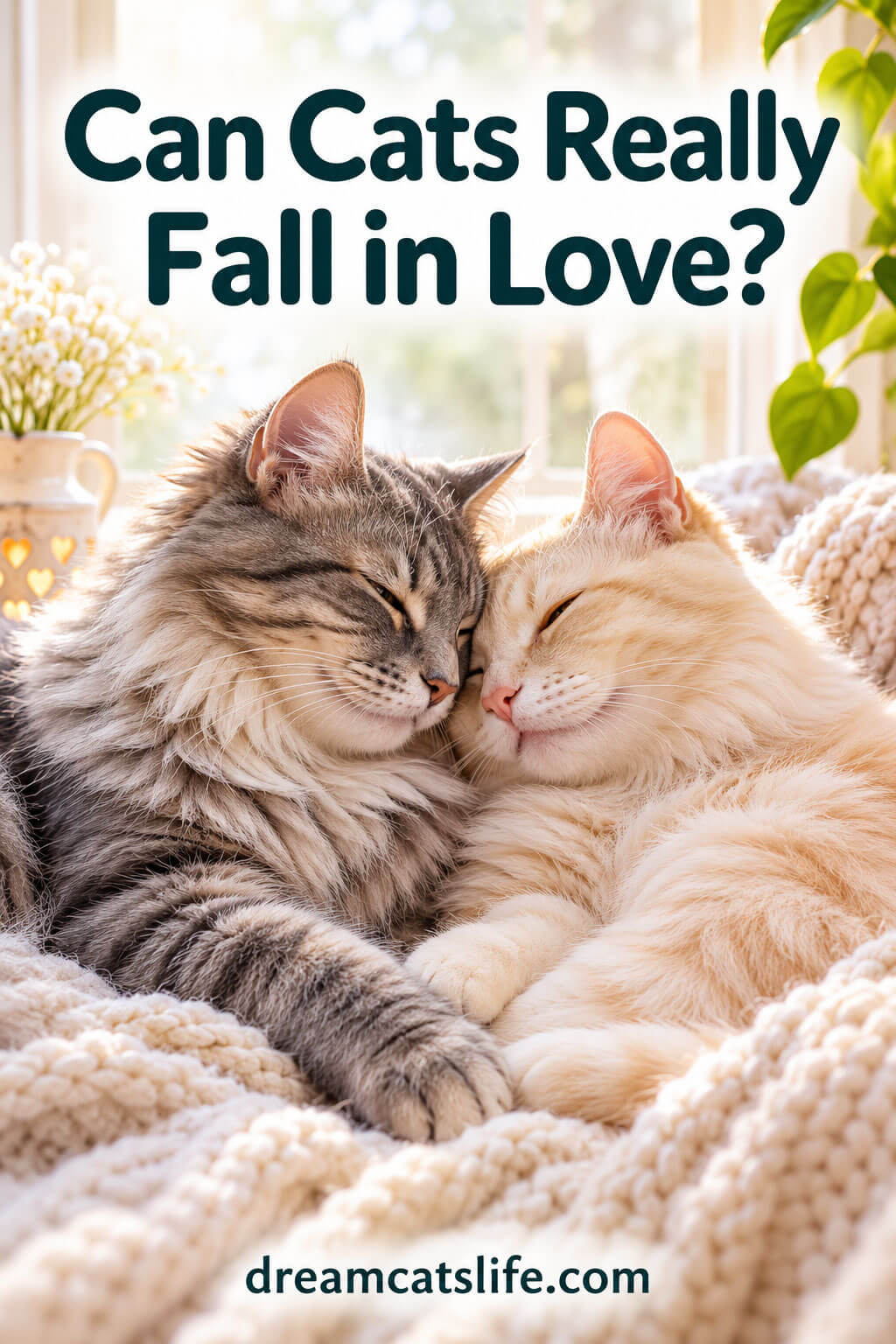
What we can observe, however, is behavior, and cat behavior shows many of the same building blocks that make up love. Cats choose particular companions, they actively seek out those companions, they relax in their presence, and some become visibly unsettled when separated from them. Scientists generally describe this as attachment or social bonding, and the evidence that cats are capable of it is strong. Whether you call it love or attachment is partly a matter of taste, but the emotional reality behind it is something every cat owner who has seen a bonded pair together will recognize.
What Science Says About Feline Attachment
For many years, cats were described as solitary and aloof, mainly because their wild ancestors hunted alone. That picture has changed considerably. Modern research shows that domestic cats are flexible social animals. They hunt alone, but they can live in groups, and in the right conditions they form close relationships, particularly when resources such as food, water and resting places are plentiful and they feel safe.
Cats and Their Humans
One of the best-known studies on this subject, published in the journal Current Biology in 2019 by researchers at Oregon State University, adapted a classic test used to study attachment in human infants and dogs. Cats were briefly separated from their caregivers, left with a stranger, and then reunited. Most of the cats in the study, roughly two thirds, showed a secure attachment style, meaning they were comforted by their caregiver’s return and then went back to exploring. This is a very similar pattern to what is seen in children and dogs, and it suggests that many cats really do see their people as a source of safety and comfort.
Another piece of research, from the University of Sussex and the University of Portsmouth, looked at the slow blink, the soft half-closed eyes many cats offer when they feel relaxed. Cats were more likely to approach a person who had slow-blinked at them first, which suggests that this gesture works as a friendly signal. If your cat slow-blinks at you across the room, it is a good sign that they feel comfortable and trusting around you, and you can slow-blink back to return the message.
Cats and Other Cats
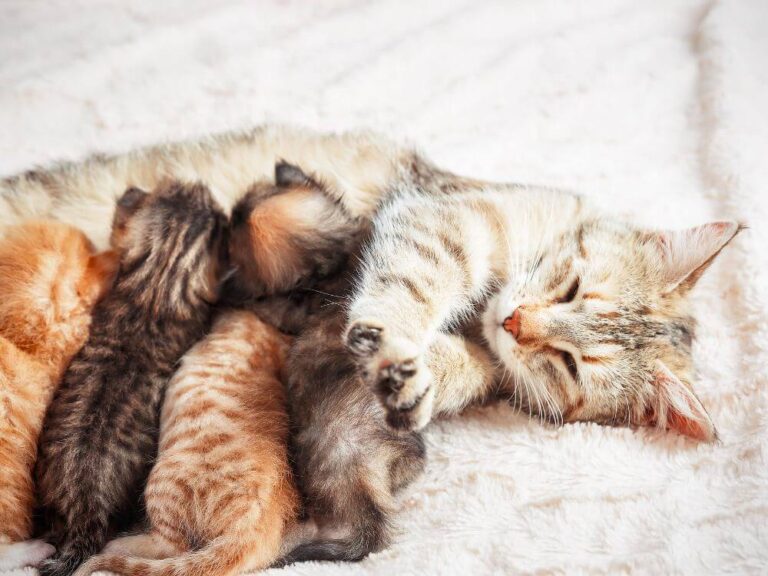
Research on bonds between cats is less extensive than research on cats and people, but behaviorists have been documenting these relationships for decades, especially in colonies of free-roaming cats. Within those groups, cats often form preferred associates, which are individuals they spend most of their time with, groom, rest beside, and greet in a friendly way. These relationships can last for years, and they are often strongest between littermates, mothers and daughters, or cats who were introduced at a young age. In homes, the same pattern appears: some cats become inseparable, while others simply tolerate each other politely, and a few never get along at all.
Signs That Two Cats Share a Genuine Bond
Because cats communicate with subtle body language, it can be hard to tell the difference between true friendship and a household truce. The following behaviors are the most reliable indicators that two cats have developed a real emotional connection, and the more of them you see together, the stronger the bond is likely to be.
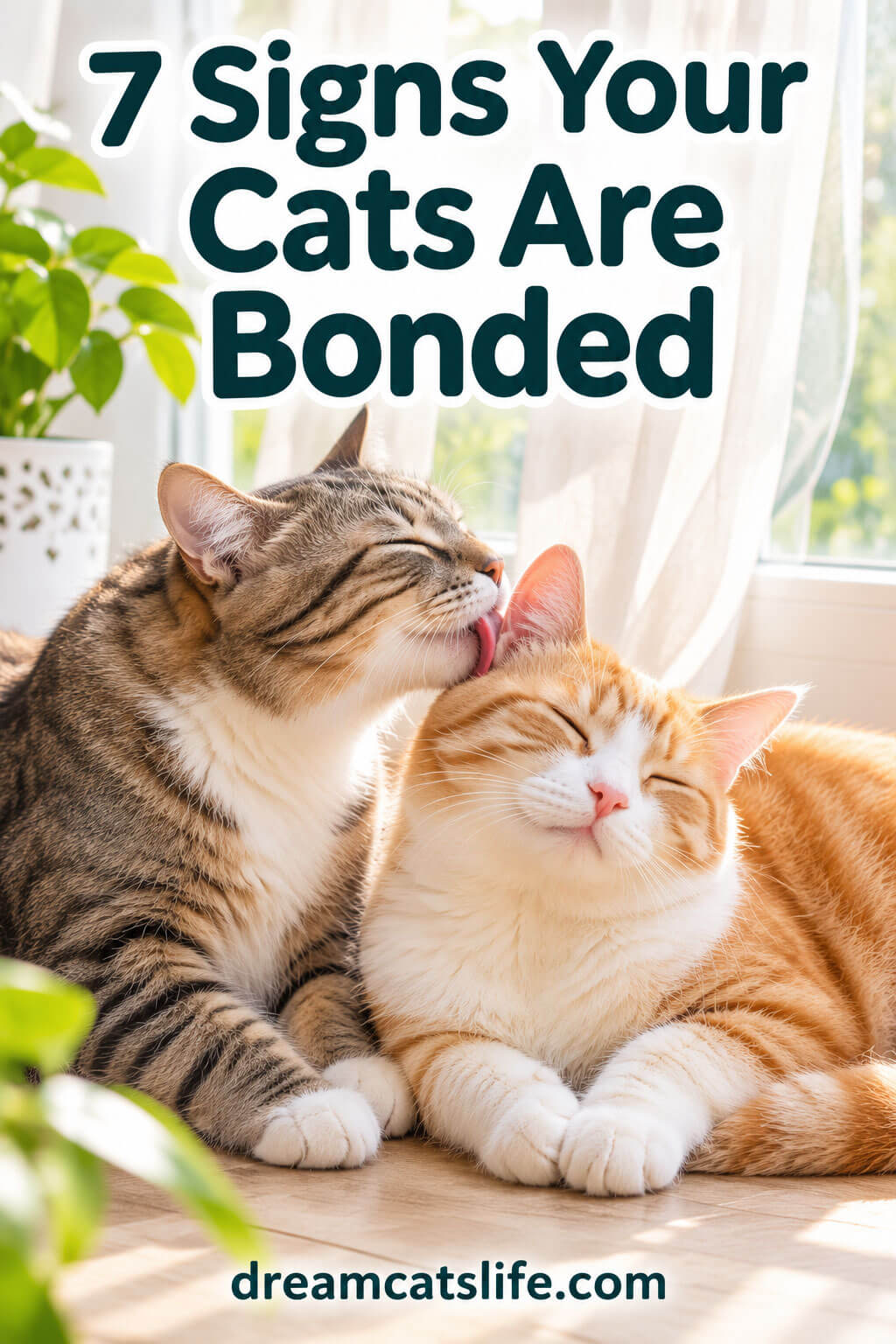
Mutual Grooming
Scientists call it allogrooming, and it is one of the clearest signs of affection between cats. A cat who spends several minutes carefully licking another cat’s head, neck or ears is doing far more than cleaning; she is reinforcing a social relationship and sharing a familiar scent. When grooming goes both ways, it is a strong sign of trust. Occasionally the grooming session may end with a playful nip, which is perfectly normal as long as the receiving cat does not appear stressed.
Sleeping in Contact
Cats are most vulnerable when they sleep, so choosing to nap pressed against another cat is a meaningful act of trust. Bonded cats often sleep touching, with paws draped over one another or bodies curled into a single furry circle. Cats who merely share a room usually choose separate beds, or they sleep close but not in contact, which is a sign of tolerance rather than deep affection.
Allorubbing and Tail-Up Greetings
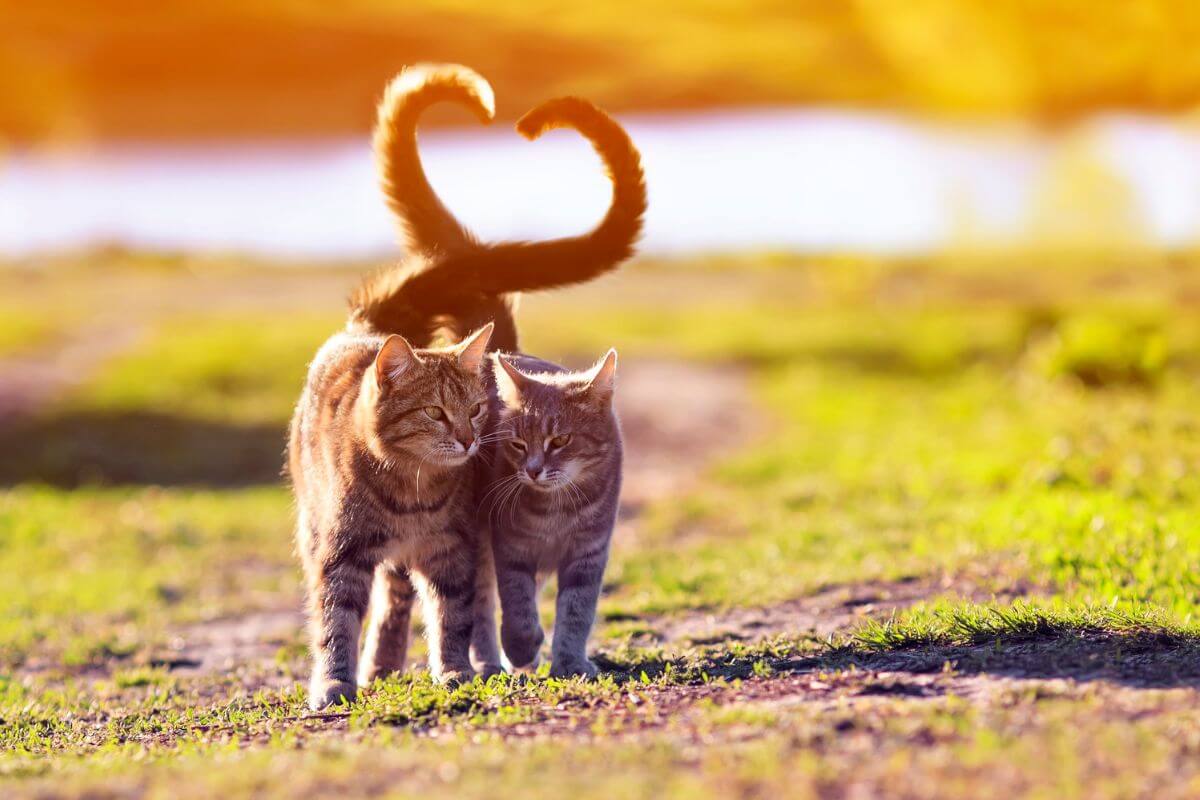
When cats rub their cheeks, flanks and tails against each other, they are blending their scents into a shared “group smell” that helps them recognize each other as family. A cat who approaches a companion with her tail held high, perhaps with a little curl at the tip, is communicating a friendly greeting, much like a wave or a hug. Cats who touch noses and then rub past one another are usually on very good terms.
Sharing Space and Following Each Other
Another subtle sign is how cats arrange themselves in a room. Bonded cats tend to choose each other’s company, following one another from room to room, sharing a window perch, or eating side by side without tension. They may also vocalize softly to each other with trills and chirps, and they often become visibly restless if one of them is away from home, for example during a visit to the vet.
Quick checklist: The strongest bonds usually include several of these signs together: mutual grooming, sleeping in contact, tails held upright during greetings, relaxed shared eating or resting, and a gentle, take-turns style of play.
Romantic Love vs. Mating Instinct in Cats
When people ask whether cats fall in love, they often have romance in mind, such as a male and a female cat who seem devoted to each other. In reality, feline mating behavior is driven largely by hormones and biology rather than by long-term partnership. Female cats who are not spayed go into heat several times a year, during which they become vocal, restless and attracted to nearby males. Males respond to the signals and may travel long distances to find a female, and after mating, the pair typically goes their separate ways. Male cats do not help raise the kittens, and female cats often mate with more than one male during the same heat cycle.
This does not mean cats are incapable of affection between the sexes, but it does mean that what looks like romance during mating season is mostly instinct. The long-term friendships that look most like love in our homes tend to occur between spayed and neutered cats, where hormones are no longer the driving force and companionship takes center stage. Many of the most devoted pairs are two males or two females, and some of them are not even related, which shows that personality and compatibility matter far more than gender.
It is also worth mentioning that spaying and neutering reduces the stress, roaming and territorial behavior that can strain relationships between cats. If you are hoping for a peaceful, affectionate household, talking to your veterinarian about the right timing for these procedures is one of the most helpful steps you can take.
Littermates, Bonded Pairs and Unlikely Friendships
Many shelters and rescues encourage adopters to take home bonded pairs, which are cats who have lived together and clearly prefer each other’s company. These cats often cope better with change, because they have a familiar friend to lean on when moving into a new home. Staff at shelters usually notice the signs quickly: the cats share a cage by choice, groom each other and become anxious when separated.
Littermates often develop the strongest relationships, since they spend the first weeks of life learning social skills from one another. Yet bonds are not limited to family. Cats of different ages, breeds and backgrounds sometimes form deep friendships, such as a confident adult cat who becomes a mentor to a shy kitten, or a senior cat who finds new energy in a gentle younger companion. There are also well-documented cases of cats forming close relationships with dogs and other household animals, although each introduction should be supervised carefully and paced to the individual animals.
On the other hand, not every cat wants a friend. Some cats were poorly socialized as kittens, some have had negative experiences with other cats, and some are simply more independent by nature. A cat who prefers to live alone is not unhappy or unloving; she just expresses her social needs differently, usually through a strong bond with her human family.
Do Cats Grieve the Loss of a Companion?
One of the most touching pieces of evidence for feline attachment is how many cats react when a companion dies or leaves the home. Surveys of cat owners, including one reported by the ASPCA in 2016, found that a large share of cats changed their behavior after losing a household companion. Owners described cats who ate less, slept more, became more vocal or began searching the house, and many also noticed that the surviving cat became clingier with people than before.
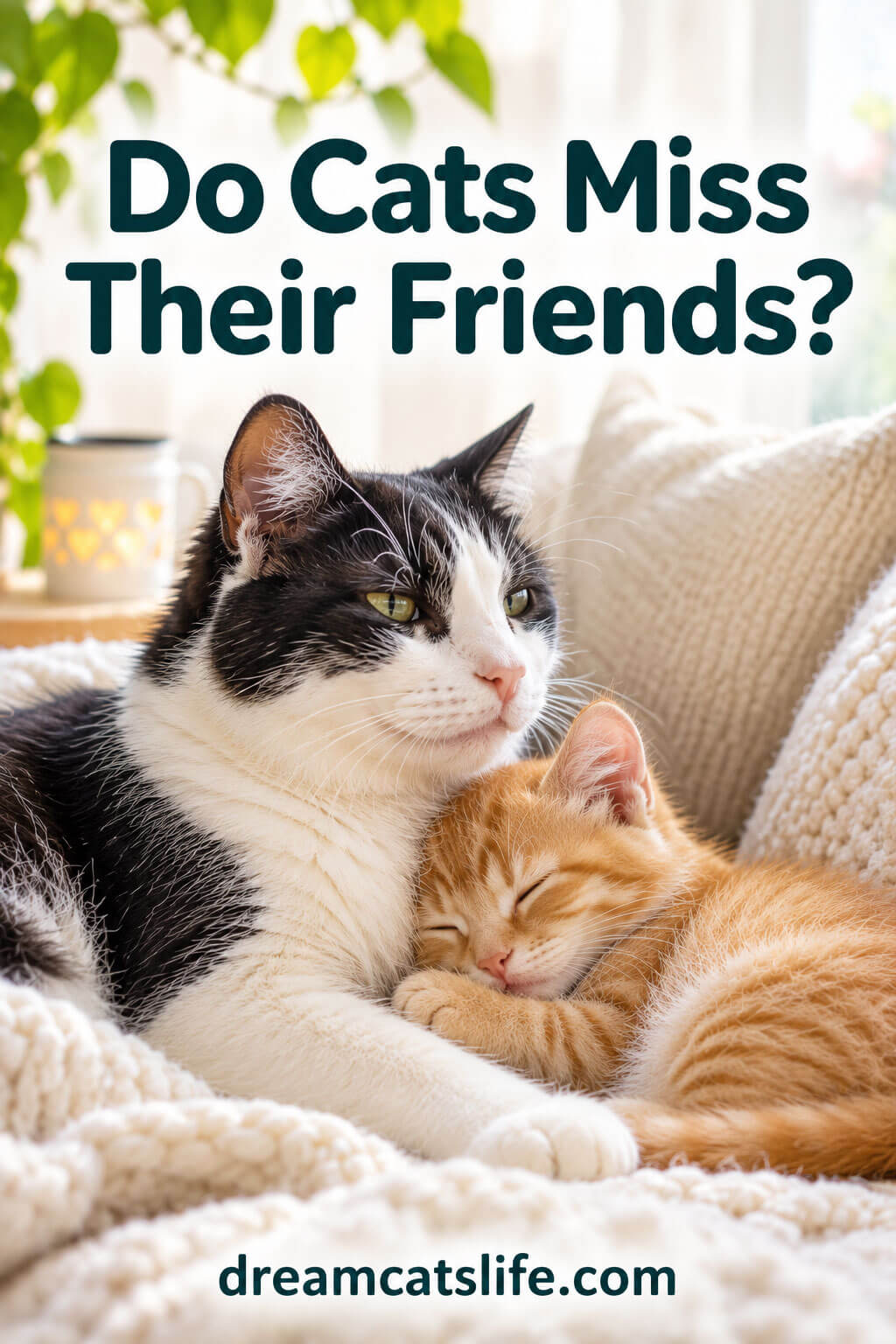
Because cats cannot explain what they feel, it is impossible to say for sure that this is grief in the human sense. Still, the pattern is consistent with the loss of an important social relationship, and it is wise to treat it with care. If your cat is mourning, keep her routine as steady as possible, offer extra gentle attention and play, and make sure she continues to eat and drink normally. Changes in appetite, litter box habits or energy level can also be signs of illness, so if they last more than a day or two, a visit to your veterinarian is the safest choice.
Some owners wonder whether they should adopt a new cat quickly to fill the gap. In most cases it is better to wait until your cat has settled, and then decide based on her personality rather than rushing into a replacement, since a new cat is a new relationship and not a substitute for the old one.
How to Help Cats Build Strong, Loving Bonds
The good news is that you can do a lot to encourage friendship between cats, or to deepen the connection between you and your own cat. The most important principle is patience, because cats rely heavily on scent, routine and a sense of control over their space, and they do not respond well to being forced together.
Introduce Cats Gradually
When bringing a new cat home, start by keeping her in a separate room with her own food, water, litter box and bed. Allow the cats to get used to each other’s scent first by swapping blankets or toys, and then by letting them sniff each other under the door. After several days of calm behavior, you can try short, supervised meetings with a baby gate or a cracked door, rewarding both cats with treats and praise for staying relaxed. A calming pheromone diffuser can help some cats feel more at ease during this stage, although it is not a replacement for a slow introduction. The full process can take anywhere from a few days to several weeks, and moving at the pace of the more nervous cat gives you the best chance of success.
Provide Plenty of Resources
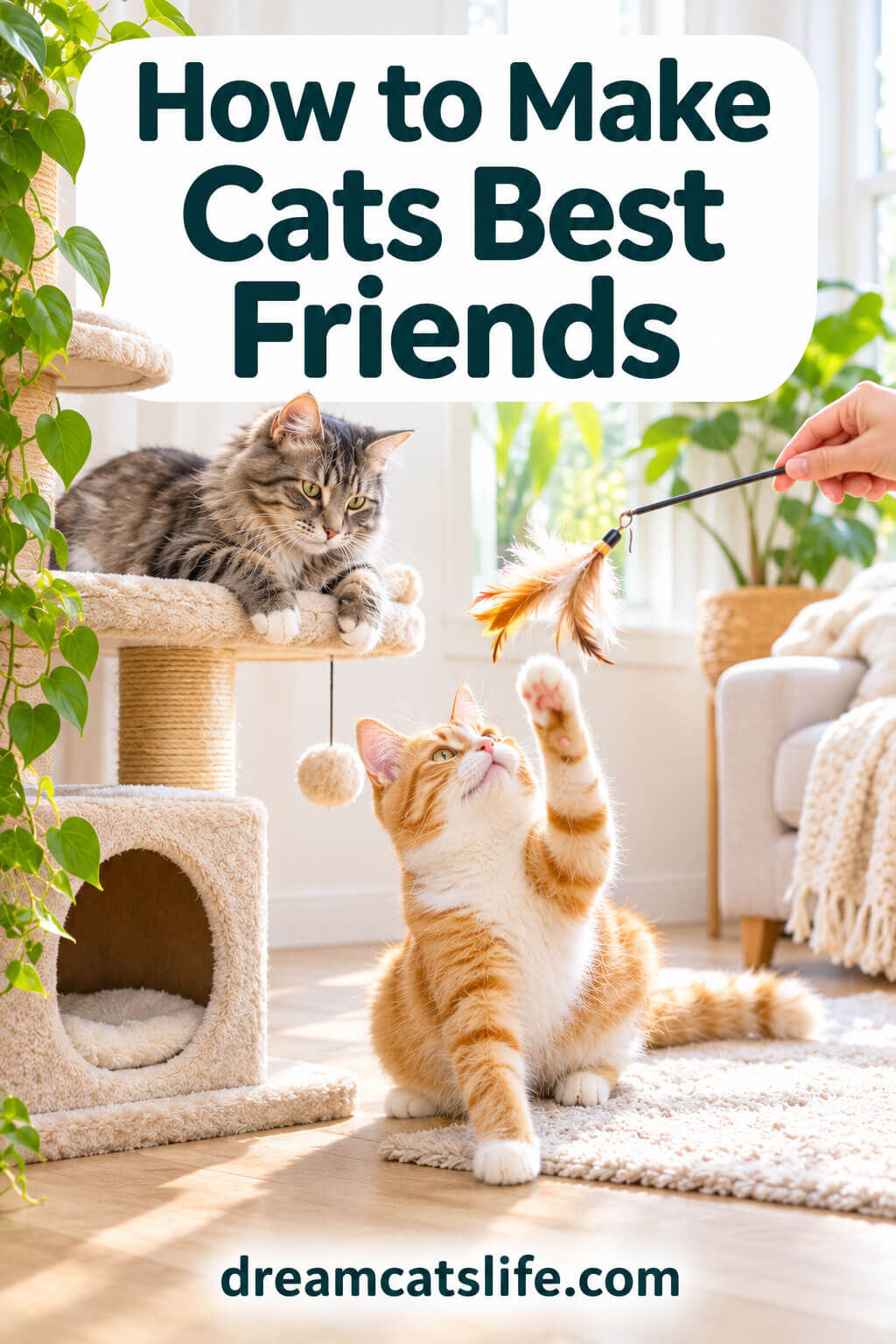
Competition is one of the main reasons cats fail to bond. To prevent it, aim to provide one more of each essential than the number of cats you have, which means an extra litter box, extra water bowls and several comfortable resting places. Vertical space is especially valuable, since it lets cats share a room without feeling cornered. A sturdy multi-level cat tree or a window perch gives each cat a place to observe the household from a safe height, and it often becomes the spot where friendships begin to form. If your cats are likely to nap together, a large, cozy bed big enough for two cats gives them an inviting place to snuggle.
Encourage Shared Play and Positive Experiences
Interactive play is a wonderful way to build positive associations between cats, as well as between cats and people. Using a wand toy lets two cats chase the same target from a safe distance, and it burns off energy that might otherwise turn into squabbles. Feeding time can also be turned into a bonding exercise by offering meals in separate bowls placed a comfortable distance apart, then gradually moving them closer over time. For cats who gulp their food or guard it, a puzzle feeder can reduce tension and keep mealtimes calm.
Nurture the Bond With Your Own Cat
Your relationship with your cat matters just as much as the relationships she has with other animals. Cats tend to bond most strongly with people who respect their boundaries, so let your cat approach you rather than grabbing her, and learn which kinds of touch she enjoys. A few minutes of play and gentle attention each day, offered consistently, can strengthen trust more than occasional long cuddle sessions. Talk to her in a soft voice, give her slow blinks, and notice the small ways she shows affection, such as head bunts, kneading, purring and following you from room to room.
Pro tip: Always let the cats set the pace. A relationship that develops naturally over several weeks is far more likely to last than one that is rushed into place on the first day.
Common Mistakes That Can Damage Feline Friendships
Even well-meaning owners sometimes make choices that make it harder for cats to bond. Being aware of the most common mistakes can save you a lot of stress and help your cats feel secure.
- Introducing cats too quickly. Letting cats meet face to face on the first day can lead to fear and defensive behavior, and it can take much longer to repair the relationship afterward.
- Misreading play fighting. Rough play is healthy when both cats take turns chasing and wrestling, but it becomes a problem if one cat is always hiding, screaming or trying to escape.
- Punishing hissing or growling. These are normal warning signals, and scolding a cat for using them can push her to skip the warnings and go straight to biting or scratching.
- Not providing enough resources. Limited litter boxes, bowls and resting places create competition, which is one of the most common causes of conflict in multi-cat homes.
- Separating bonded cats during a stressful event. If one cat needs to visit the vet, it can help to let the other cat sniff her on return, since scent changes can sometimes cause the friend to react with fear or aggression.
When a Cat Relationship Needs Extra Help
Sometimes cats who used to be close begin to quarrel, or a new introduction simply does not go as planned. Persistent hissing, stalking, blocking access to the litter box, urine marking or one cat constantly hiding are all signs that something is wrong. In some cases, there is a medical reason behind the change in behavior, such as pain, dental disease or an infection, so the first step should always be a check-up with your veterinarian.
If your cat is healthy and the tension continues, a certified cat behavior consultant or a veterinary behaviorist can help you design a personalized plan, which often includes restarting the introduction process from the beginning. It may feel like a step backward, but a careful reset is frequently the best way to rebuild trust, and many cats who seemed to dislike each other eventually become comfortable companions.
Frequently Asked Questions
Can cats fall in love with each other?
Cats can form deep, lasting emotional bonds with other cats, which are shown through mutual grooming, sleeping in contact and seeking each other out. Scientists cannot say whether this feels the same as human romantic love, but the attachment itself is real and easy to observe in bonded pairs.
Do male and female cats fall in love?
Mating behavior in cats is mostly driven by hormones and the female’s heat cycle rather than romance, and the pair usually does not stay together afterward. However, spayed and neutered cats of any sex can still form very close friendships that look a lot like love.
Do cats get sad when their cat companion dies?
Many cats show changes in appetite, sleep, vocalization and activity after losing a companion, and some become more affectionate with their humans. Since these changes can also point to illness, it is best to contact your veterinarian if they continue for more than a day or two.
How can I tell if two cats are bonded?
Bonded cats generally groom each other, sleep touching, rub against each other, greet with upright tails and share space calmly. Mutual play that involves taking turns is also normal, but if one cat always seems frightened, the relationship may be more tense than it looks.
Can cats fall in love with humans?
Research shows that most cats form secure attachments to their caregivers, using them as a source of comfort and safety in the same way that children and dogs do. Slow blinks, head bunts, following you around and purring beside you are all common signs of affection.
Should I adopt a second cat so my cat has a partner?
It depends on your cat’s personality, history and age. Some cats thrive with a companion, while others prefer to be the only pet, so it is wise to consider your cat’s temperament and to choose a gradual introduction process. Shelter staff and your veterinarian can help you decide whether a second cat is a good idea.
Final Thoughts
So, can cats fall in love? While we may never know exactly what a cat feels when she curls up beside her favorite companion, the evidence for deep emotional bonds is clear. Cats choose their friends, they comfort each other, they grieve when a companion is gone, and they form strong attachments to the people who care for them. Whether we call it love, attachment or simple devotion, it is a meaningful part of their emotional lives.
As a cat owner, the most helpful thing you can do is create a calm, safe and enriching home where those bonds can develop at their own pace. Provide plenty of resources, introduce new animals slowly, watch for the small signals your cats use to communicate, and be patient with relationships that take time. With a little understanding, you may find that the quiet affection between your cats, and between you and your cat, is one of the most rewarding parts of sharing your home with them.
This article is for general information only and is not a substitute for professional veterinary advice. If you are concerned about your cat’s health or behavior, please consult a licensed veterinarian or a certified animal behaviorist.